US Politics
Wyoming’s first new coal mine in decades to extract rare earths

Your support helps us to tell the story
From reproductive rights to climate change to Big Tech, The Independent is on the ground when the story is developing. Whether it’s investigating the financials of Elon Musk’s pro-Trump PAC or producing our latest documentary, ‘The A Word’, which shines a light on the American women fighting for reproductive rights, we know how important it is to parse out the facts from the messaging.
At such a critical moment in US history, we need reporters on the ground. Your donation allows us to keep sending journalists to speak to both sides of the story.
The Independent is trusted by Americans across the entire political spectrum. And unlike many other quality news outlets, we choose not to lock Americans out of our reporting and analysis with paywalls. We believe quality journalism should be available to everyone, paid for by those who can afford it.
Your support makes all the difference.
Read more
The developer of what would be the first new coal mine in Wyoming in decades is launching a potentially half-billion-dollar effort to extract rare earth metals from the fossil fuel that are crucial for tech products and military hardware.
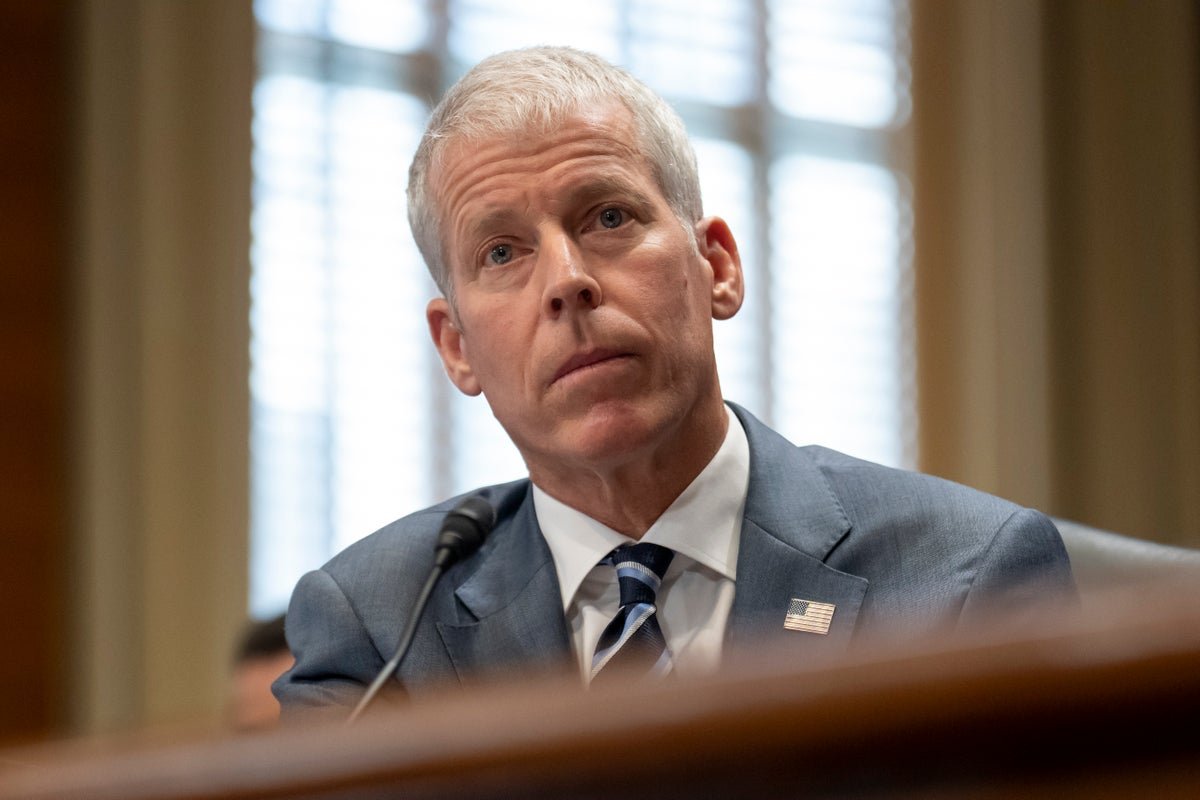
Energy Secretary Chris Wright, former West Virginia U.S. Sen. Joe Manchin, Wyoming Gov. Mark Gordon, and Wyoming’s congressional delegation were expected at a Friday groundbreaking ceremony for Ramaco Resources, Inc.’s Brook Mine outside Ranchester in northeastern Wyoming.
Wright’s involvement underscores President Donald Trump’s determination to advance fossil fuel projects and mining and reverse former President Joe Biden’s moves to support for renewable energy.
Administration officials on Monday moved toward selling federal coal leases in the top U.S. coal-producing region in northeastern Wyoming and southeastern Montana. On Thursday, officials announced a proposal in Utah that they said would be the first coal exploration project on U.S. Bureau of Land Management property since 2019.
Those moves came on the heels of legislation signed last week that lowered royalty payments for companies mining coal on public lands and mandated officials make available for potential mining an area greater in size than Connecticut.
Meanwhile, local officials in Utah hope the administration will support plans to build a railroad spur to boost oil drilling. A coalition of eastern Utah counties wants Trump’s Transportation Department to approve $2.4 billion in bonds for the 88-mile (140-kilometer) spur to export oil from the Uinta Basin, a project that may proceed after a U.S. Supreme Court ruling.
On Friday, the minerals capturing the administration’s attention were not just coal but rare earths — a family of 17 metallic elements with unusual properties that make them useful in modern technology, from electric car batteries and wind turbines to military targeting devices.
The only operating U.S. rare earths mine is at Mountain Pass in California. Nearly all of the nation’s supply comes from China, the source of nearly 90% of the world’s supply.
Rare earths aren’t especially rare but so scattered they are difficult to bring together in useful quantities.
Concern about continued access to them has been a focus of recent negotiations between China and the U.S., and led the Trump administration to try to encourage more production domestically.
“We would intend to mine it here in Wyoming, process it here in Wyoming and sell it to domestic customers including the government,” Ramaco CEO Randall Atkins said Thursday.
Manchin, who left office in January after not seeking re-election, joined the Ramaco board in April.
The new Brook Mine, though relatively small, offers a glimmer of optimism for Wyoming’s coal industry as potentially the state’s first new coal mine in 50 years. Massive, open-pit mines east of the Brook Mine supply around 40% of the nation’s coal but Wyoming coal mining has shrunk substantially since its peak over a decade ago, as utilities switch to renewable energy and power plants fueled by cheaper natural gas.
The Brook Mine has been in the works for over a decade, stalled in part by landowners worried about groundwater depletion. Atkins originally envisioned it as a source of subbituminous power plant fuel like the state’s other coal mines.
A public company with metallurgical coal mines in Appalachia, Ramaco in recent years received Department of Energy grants to develop coal into carbon-based products such as carbon fiber. This year, it got a $6.1 million grant from Wyoming to build a rare earth and critical minerals processing plant.
A consultant report released this week found that fully developing the mine and processing plant to extract rare earths would cost $533 million, a sum that could be recovered in five years if the elements in the coal prove profitable. Ramaco also would sell the processed coal as fuel, Atkins said.
Analysis by U.S. national laboratories show the Brook Mine coal contains valuable quantities of the rare earths neodymium, praseodymium, dysprosium and terbium, as well as the critical minerals gallium, scandium and germanium, according to a Ramaco letter to shareholders on July 1.
Neodymium and dysprosium are used in the permanent magnets of wind turbines, lanthanum in electric and hybrid car batteries. Yttrium and terbium have critical military uses, including in targeting devices.