
Education
Greeks and Turks square off over ownership of ancient, healing soup

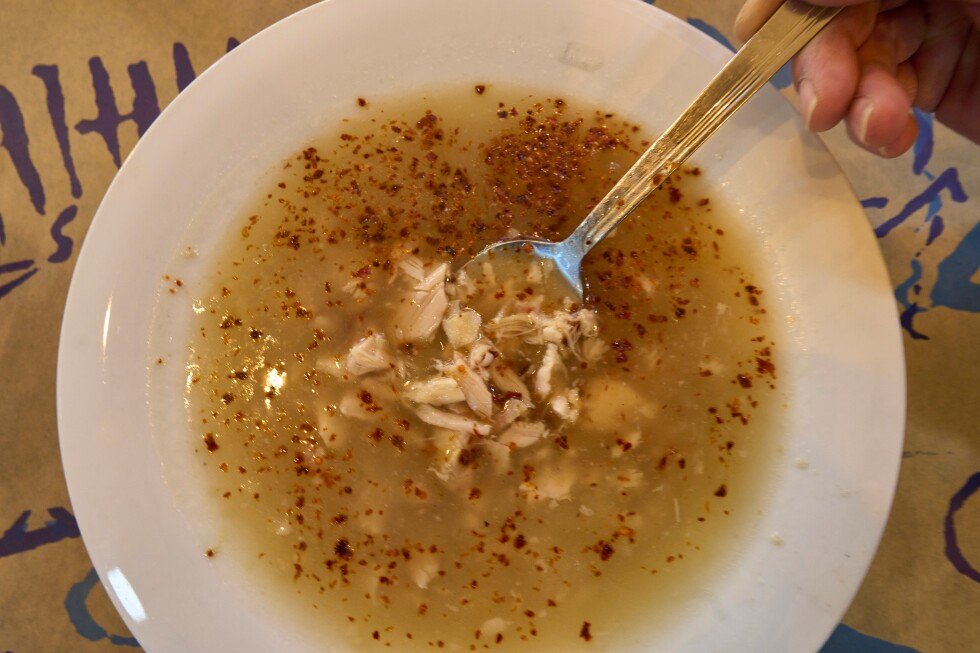
THESSALONIKI, Greece (AP) — It’s said that a bowl of soup made of bovine bellies and legs can cure ulcers, hangovers and an assortment of other ailments — if you’re courageous enough to try it.
And Dimitris Tsarouhas, the owner of a restaurant in the Greek city of Thessaloniki that specializes in “patsa” is striving to register the soup with UNESCO as a unique and traditional dish of Greece that harks back to the time of Homer’s epic poem “The Odyssey.”
That has conjured up a new dispute with age-old rival Turkey, which also claims the soup as its own. Greeks and Turks have been feuding over everything culinary from coffee, stuffed grape leaves and even the famous baklava — the legacy of life under centuries of Ottoman rule. Now, the Turks are up in arms that Greeks are taking sole credit for a soup they call “iskembe,” which according to them has been a cultural staple for centuries.
Tsarouhas told The Associated Press that he’s compiled a large and detailed file with the help of a local cultural organization and Lena Oflidis, the author of the only book that chronicles the soup’s history, to incorporate the delicacy as part of Greece’s cultural heritage.
A broth Penelope’s suitors coveted
Dozens of patrons show up at Tsarouhas’ restaurant at all hours — particularly at the crack of dawn — to enjoy patsa as many say the soup eases the stomach after a night of heavy drinking. It’s usually garnished with a sprinkle of seeds and a dash of hot peppers.
A bowl of the soup is usually prepared to the customer’s liking, particularly how the bovine legs are chopped — either coarse or fine, which is the usual morning preference.
“The bovine leg contains 33.4% pure, consumable collagen — that’s what helps greatly after surgery on the joints,” the 53-year-old restauranteur says, citing medical experts. “But it also cures ulcers and other stomach ailments caused by alcohol consumption.”
Inside the restaurant’s kitchen, the soup’s preparation is almost ritualistic, as chef Pantazis Koukoumvris works his knife in front of boiling cauldrons where the legs and bellies stew in their broth.
“This is where the art begins from the morning,” Koukoumvris says, drawing from his 22-year experience of patsa-making.
“We place the bellies and legs to boil, so that we can make the broth in the smaller pot,” he says, adding that the recipe was taken by the Byzantines from the ancient Greeks and passed on to the Ottomans.
Tsarouhas notes that the recipe for patsa is mentioned in “The Odyssey,” specifically the feast that Odysseus’ wife Penelope prepared for suitors on the day that her husband came back from his decadelong journey.
Tsarouhas said that it refers to bovine bellies filled with suet – animal fat used in cooking – and blood.
“If this isn’t patsa, then what else could it be?” he asks.
Although neighboring Turks are claiming the soup as their own invention, Tsarouhas isn’t worried. He says that they’re welcome to try if they can put their money where their mouth is.
“Nobody’s stopping them from trying,” he says. “We believe that we have all the tools to secure and certify it (patsa) as such. We don’t have anything to divide with our neighbors — rather the taste unites us.”
Turks flex culinary muscles
Unity in taste isn’t what Ali Turkmen has in mind. The 59-year-old Turkish restauranteur says the dish is historically and culturally specific to Turks, even though the soup — just like in Greece — is also a late-night and go-to comfort food after a boozy night.
“Just like with baklava and many other things, they want to claim it as their own,” Turkmen said of the Greek bid for ownership of the soup. “But it will probably be difficult for them to claim something unique to us. Because it’s been a staple in our culture for centuries. Tripe is something specific to Turks.”
Ali Ohtamis is in charge of the kitchen at Turkmen’s restaurant Alem Iskembe, an establishment that specializes in the soup in Istanbul’s Kiziltoprak neighborhood.
Ohtamis starts boiling the cow stomachs — or tripe – at 4 a.m. every day after the innards are cleaned and washed. It cooks for eight to nine hours, he said, after which the meat is cut to customers’ preference.
While both the Greek and Turkish soups are based on a rich, garlicky broth, the Turkish iskembe uses only tripe.
Turkish media have accused Greece of “appropriating” a dish that is nationally celebrated. The Onedio news portal reported that 17th-century traveler Evliya Celebi, in his “Book of Travels,” described vendors selling tripe and trotters soup in Istanbul, citing it as evidence that the soup has a 400-year history in Turkey.
Alem Iskembe customer Murat Pajik says in no uncertain terms that Turkey shouldn’t allow the Greek move.
“I don’t know exactly who is responsible, but measures need to be taken. Tripe soup is one of the dishes we should be promoting to the world,” Pajik said.
Engin Cakar said that the Greeks are fighting in vain to claim ownership.
“I don’t think Greece is doing the right thing. This tripe dish is from our grandfathers, our mothers,” he said.
Over in Greece, Christos Mousoulis sees it differently. A regular at Tsarouhas’ restaurant, he says that patsa has been made in the traditional way in Greek homes for generations.
“I don’t doubt that the taste of patsa, either Greek or Turkishm which I haven’t tried, may be similar, but we grew up with Greek patsa,” he says.
___
Suzan Fraser reported from Ankara, Turkey. Ayse Wieting and Mehmet Guzel in Istanbul, and Menelaos Hadjicostis in Nicosia, Cyprus, contributed to this report.