
Education
Minnesota schools could get more money from trust fund

What if Minnesota schools could get more funding without your taxes increasing by even a single cent?
Yes, it sounds too good to be true. But a proposal along those lines will be on ballots this fall.
With bipartisan backing from the Legislature, voters will be asked if the state constitution should be amended so that schools would receive more support from a fund that has been growing since Minnesota’s early statehood.
Established in 1858, the Permanent School Fund provides annual disbursements to every public school district in the state. The fund grew to $2.3 billion as of 2025.
As big as that figure is, Minnesota’s constitution caps how much schools can draw from the fund. So lawmakers and school groups are campaigning to amend the constitution in order to free up additional funding.
Why do schools need more Permanent School Funds?
The state’s distribution of these funds has remained essentially the same since the program’s inception, said Sen. Mary Kunesh, DFL-New Brighton. A former educator in her pre-Legislature life, Kunesh carried the constitutional amendment proposal through the Senate.
“I think everybody recognizes the need for additional funding for public schools, and this is one way to do it without putting an additional burden on our taxpayers,” she said.
Her companion bill author in the House, Rep. Spencer Igo, R-Wabana Township, agrees. Voting yes in November neither raises property taxes nor asks local residents to approve a levy or referendum, he said.
And, importantly, tapping more of the fund won’t deplete it, he added. A state task force, empowered to review the fund in 2024, calculated 8% average investment returns over the last decade, while distributions are capped at 2.5%.
Amending the constitution could raise distributions to about 4.5%, Igo said.
“Republicans and Democrats alike will be linking arms in saying, ‘Vote for this,’” he said. “The Legislature believes in it, too, and they believe in a bipartisan way. I think it’s the kind of policy Minnesotans want to see.”
How much more funding are we talking about here?
Current allocations vary based on school sizes. On the high end, the Minneapolis Public School District received nearly $2 million in 2025. More commonly, districts take in hundreds of thousands of dollars each year.
Although it’s not enough to entirely fund school budgets, an increase would make life easier for the many districts grappling with budget crunches. Schools averaged a 5.6% property tax levy increase this year, according to state data.
Levies and referendums, meanwhile, have been tough sells in Greater Minnesota districts, said Fred Nolan, interim executive director of the Minnesota Rural Education Education. Any bit of extra funding can relieve pressure.
“I suspect it will allow districts to not cut as much or reduce class sizes,” he said. “For the smaller ones it helps in minor ways to keep their funding going. Maybe they’re able to buy curriculum materials, maybe do teacher training, maybe bring in some new software.”
Schools would use the funding to address specific needs, Kunesh said. A district with 2,000 students receiving $95 per pupil instead of $65, for example, would get a $60,000 boost.
“It might save a teacher; it might save a program,” Kunesh said. “The nice thing about these funds is that those schools can and the district can choose to use those dollars in any way.”
What is the history of this fund?
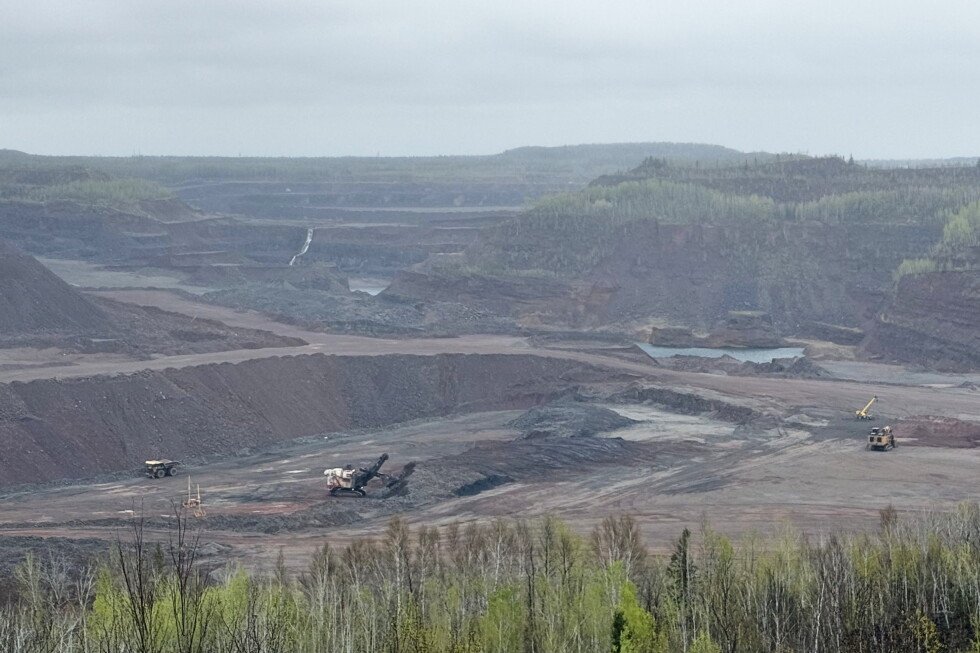
While investment growth is the main catalyst for the fund these days, it’s inextricably linked to school trust lands. The federal government granted these public lands, which currently cover millions of acres, mostly in northern Minnesota, upon statehood.
The idea behind this was to use land to fund education. Each township in Minnesota had acreage set aside for that purpose.
The land includes forests and both developed and undeveloped mineral deposits. Thus, money for the fund has historically come from timber, mining and other industries. Those activities still contribute to the fund, along with land sales over the last 160-plus years.
Some of the existing school trust lands are just about in Igo’s backyard, or at least in his district. The lawmaker has lofty ambitions for the fund.
“My dream for the school trust fund is one day we’ll see that be giving $300-$400 per pupil across this state, and our forefathers that founded our state can be smiling knowing that we actually accomplished the goal of funding public education,” he said.
Constitutional amendments require a majority of “yes” votes from all cast ballots in order to pass. Leaving the section blank counts as a “no” vote, which is why Igo, Kunesh and other proponents of the change will be educating voters on the question over the summer and fall.
Taking a question like this to the ballot isn’t out of the ordinary for the state. Minnesotans have voted on constitutional amendments 213 times, passing them on 120 of the occasions.
After his and Kunesh’s bills drew overwhelming support from lawmakers, Igo said he hopes voters follow suit on election day.
“No matter what side of the aisle you sit on, no matter which body you sit on at the Capitol, we look for the best way to support our students,” he said.
—-
This story was originally published by MinnPost and distributed through a partnership with The Associated Press.