US Politics
Trump hints at how he could arrest flag burners despite free speech protections

Your support helps us to tell the story
From reproductive rights to climate change to Big Tech, The Independent is on the ground when the story is developing. Whether it’s investigating the financials of Elon Musk’s pro-Trump PAC or producing our latest documentary, ‘The A Word’, which shines a light on the American women fighting for reproductive rights, we know how important it is to parse out the facts from the messaging.
At such a critical moment in US history, we need reporters on the ground. Your donation allows us to keep sending journalists to speak to both sides of the story.
The Independent is trusted by Americans across the entire political spectrum. And unlike many other quality news outlets, we choose not to lock Americans out of our reporting and analysis with paywalls. We believe quality journalism should be available to everyone, paid for by those who can afford it.
Your support makes all the difference.
Read more
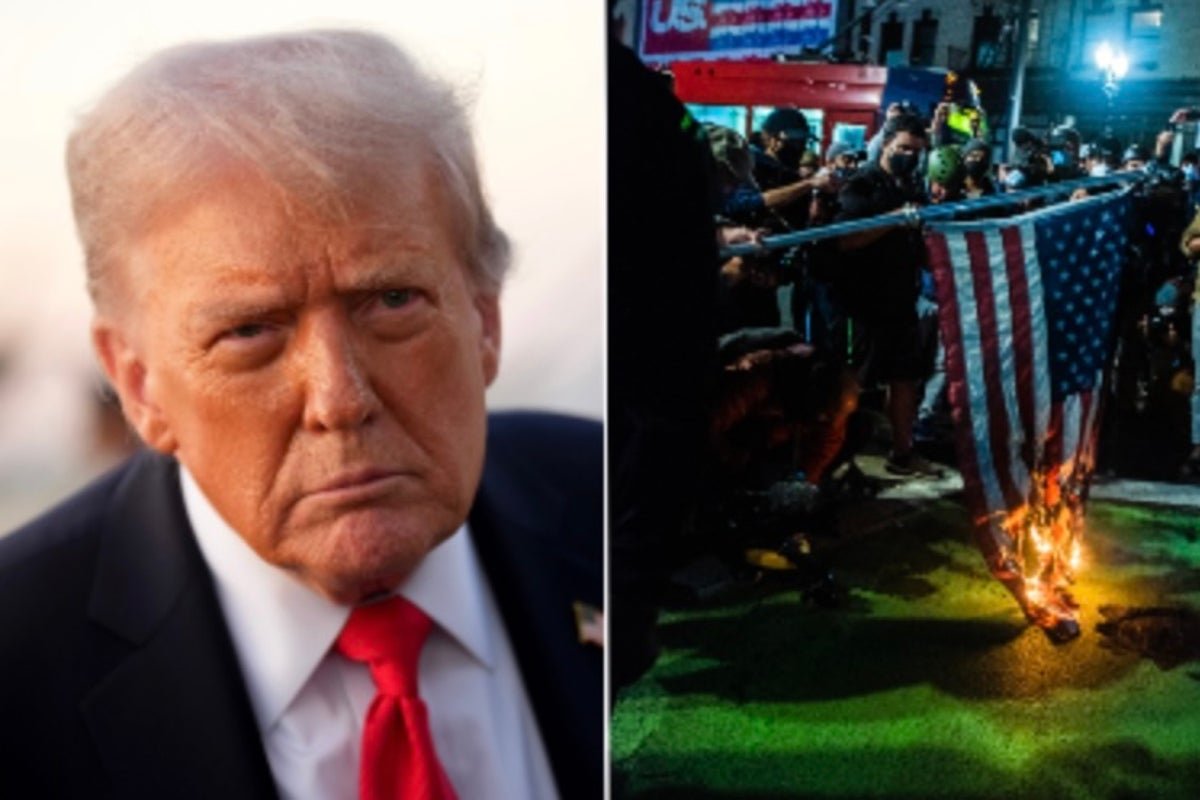
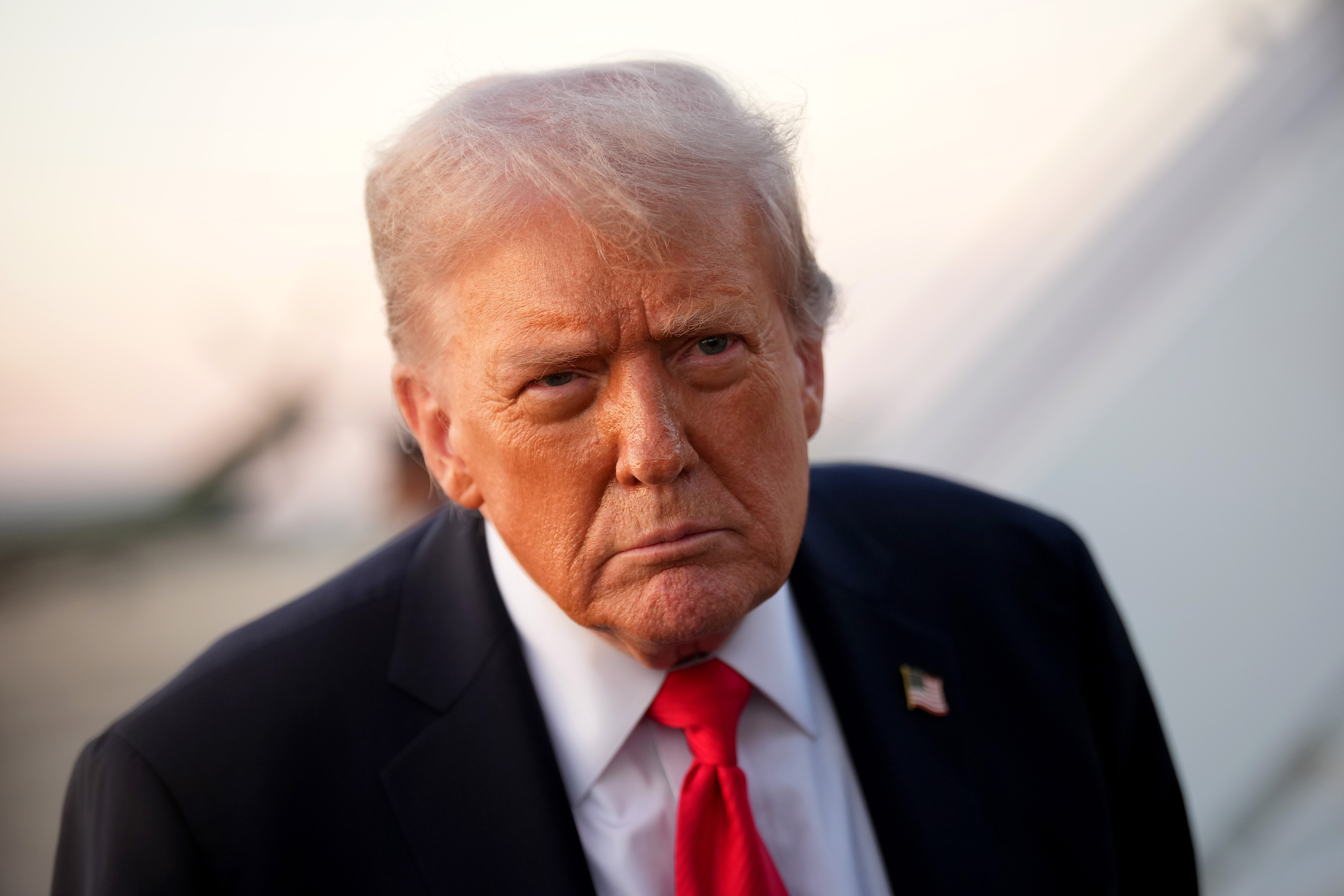
President Donald Trump has hinted at how he could arrest flag burners despite a decades-old Supreme Court ruling that the act is protected by free speech.
Trump told reporters Monday he would argue “incitement of violence” to go after those who burn the American flag.
“Freedom of speech means you can burn the American flag, which I think is horrible, but I noticed something over the last little while….it really causes unrest and violence when they burn the American flag,” he said.
Trump said he wants anybody who burns the American flag to “go to jail.”
open image in gallery
“You know what hasn’t been argued, and we’re going to be arguing, and I think, very soon, and that’s the violence,” he said. “I will say it incites violence.”
Last month, Trump signed an executive order to “restore respect and sanctity to the American Flag and prosecute those who incite violence or otherwise violate our laws while desecrating this symbol of our country, to the fullest extent permissible under any available authority.”
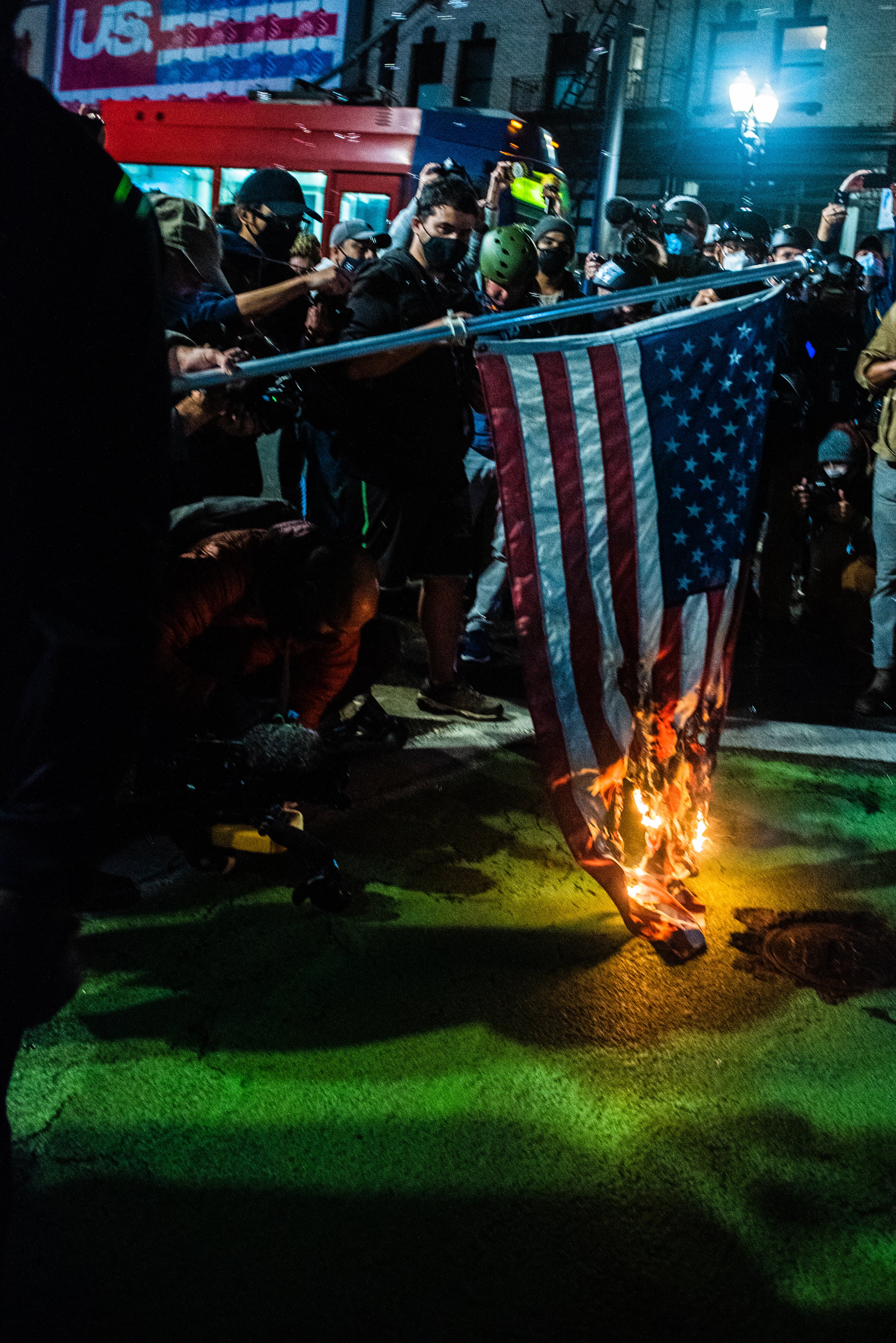
Hours after Trump signed that executive order, a man, who identified himself as a 20-year combat veteran, stood in Lafayette Square just outside of the White House and burned an American flag.
“I’m burning this flag as a protest to that illegal fascist president that sits in that House,” the demonstrator said while pointing to the White House, according to a video posted on social media by The Bulwark.
U.S. Park Police said, per NBC News, the man was arrested for violating a ban on lighting a fire in a public park.
open image in gallery
In 1989, the Supreme Court ruled in a 5-4 decision that flag burning is a form of “symbolic speech” protected by the First Amendment.
Gregory Lee Johnson had burned an American flag outside the 1984 Republican National Convention in Dallas, Texas, in protest of President Ronald Regan’s policies, according to a case summary from the U.S. courts.
Johnson was convicted of violating a Texas law prohibiting the desecration of the American flag if it was likely to incite anger.
The majority of the Supreme Court said freedom of speech protects actions Americans may find offensive, but their outrage alone does not justify suppressing free speech.