US Politics
ICEBlock creator sues Trump officials after Apple pulled app in ‘unconstitutional’ coercion scheme

Your support helps us to tell the story
From reproductive rights to climate change to Big Tech, The Independent is on the ground when the story is developing. Whether it’s investigating the financials of Elon Musk’s pro-Trump PAC or producing our latest documentary, ‘The A Word’, which shines a light on the American women fighting for reproductive rights, we know how important it is to parse out the facts from the messaging.
At such a critical moment in US history, we need reporters on the ground. Your donation allows us to keep sending journalists to speak to both sides of the story.
The Independent is trusted by Americans across the entire political spectrum. And unlike many other quality news outlets, we choose not to lock Americans out of our reporting and analysis with paywalls. We believe quality journalism should be available to everyone, paid for by those who can afford it.
Your support makes all the difference.
Read more
The developer who created a crowd-sourced map that lets users pinpoint the locations of federal agents in their neighborhoods is suing top officials in Donald Trump’s administration after his app was pulled from Apple’s App Store based on what he is calling a “torrent of threats and false claims.”
After a wave of publicity about the app, senior administration officials “launched a coordinated campaign of retaliation” against Joshua Aaron, who was threatened with criminal prosecution while the Department of Justice privately pushed Apple to remove the app from its platforms, his attorneys wrote in a federal lawsuit Monday.
Attorney General Pam Bondi and her deputies used their positions to “coerce a private platform to suppress First Amendment-protected expression,” attorneys added.
Threats from Trump administration officials to criminally investigate and prosecute Aaron were “intended and designed to chill Aaron and others from engaging in expressive activity — specifically, sharing information about publicly observable law-enforcement actions — and to deter technology companies and journalistic institutions from supporting, amplifying, or facilitating such speech,” they write.
The lawsuit names Bondi, Homeland Security Secretary Kristi Noem, Immigration and Customs Enforcement’s Acting Director Todd Lyons, and White House border czar Tom Homan, as well as 10 other unnamed officials.
open image in gallery
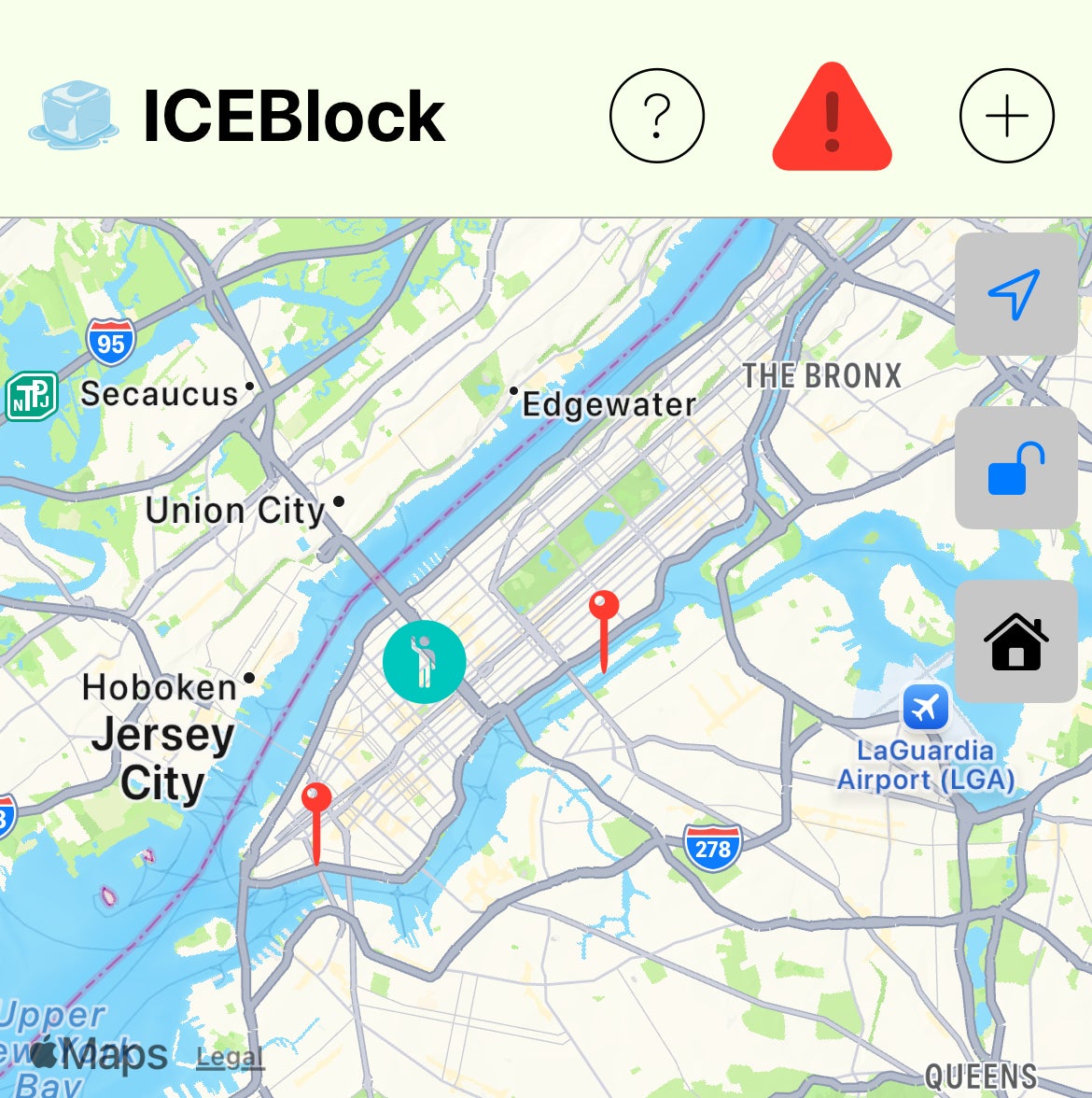
ICEBlock, described as “Waze for ICE sightings,” was downloaded more than 1 million times after its launch this year.
The bare-bones app effectively serves as an early-warning system for users, who can drop pins on a map to note the presence of federal agents in any given area. Users cannot send, receive or upload any photographs or any other media.
Following a surge in downloads and media coverage about the app, administration officials alleged Aaron was “inviting violence against law enforcement officers” merely because they “disagreed with the app’s content,” according to the lawsuit.
Bondi claimed that the app is “designed to put ICE agents at risk just for doing their jobs.”
She told members of Congress earlier this year that she spoke with Apple to “get the ICEBlock app taken down,” calling the app “reckless and criminal” because users were “posting where ICE officers lived.”
Bondi later walked back her statement and clarified that ICEBlock only informed users where ICE officers were seen working.
Nevertheless, Apple complied. The company told Aaron that the app’s “purpose” is to “provide location information about law enforcement officers that can be used to harm such officers individually or as a group.”
Aaron argues that Apple blocked his app after Bondi and other Trump administration officials unlawfully “coerced” the company in violation of his First Amendment rights.
“These threats were intended and designed to chill Aaron and others from engaging in expressive activity — specifically, sharing information about publicly observable law-enforcement actions — and to deter technology companies and journalistic institutions from supporting, amplifying, or facilitating such speech,” according to the lawsuit.
open image in gallery
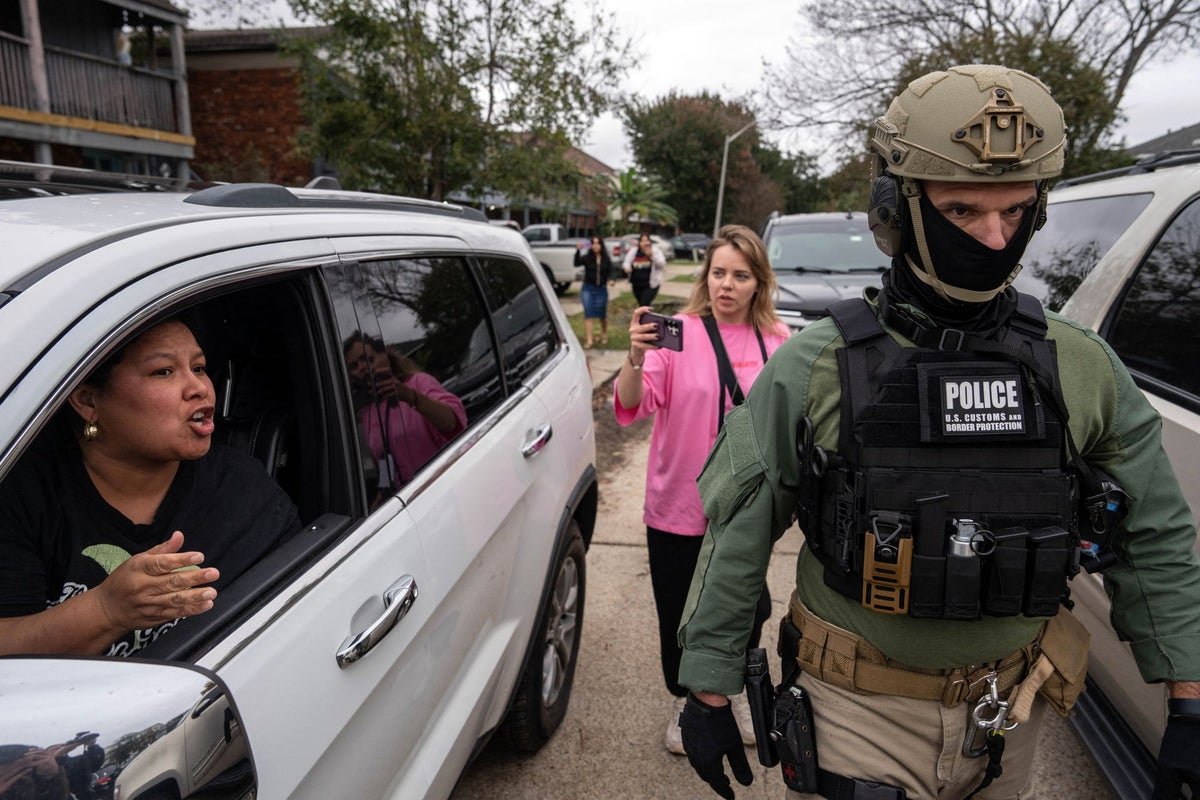
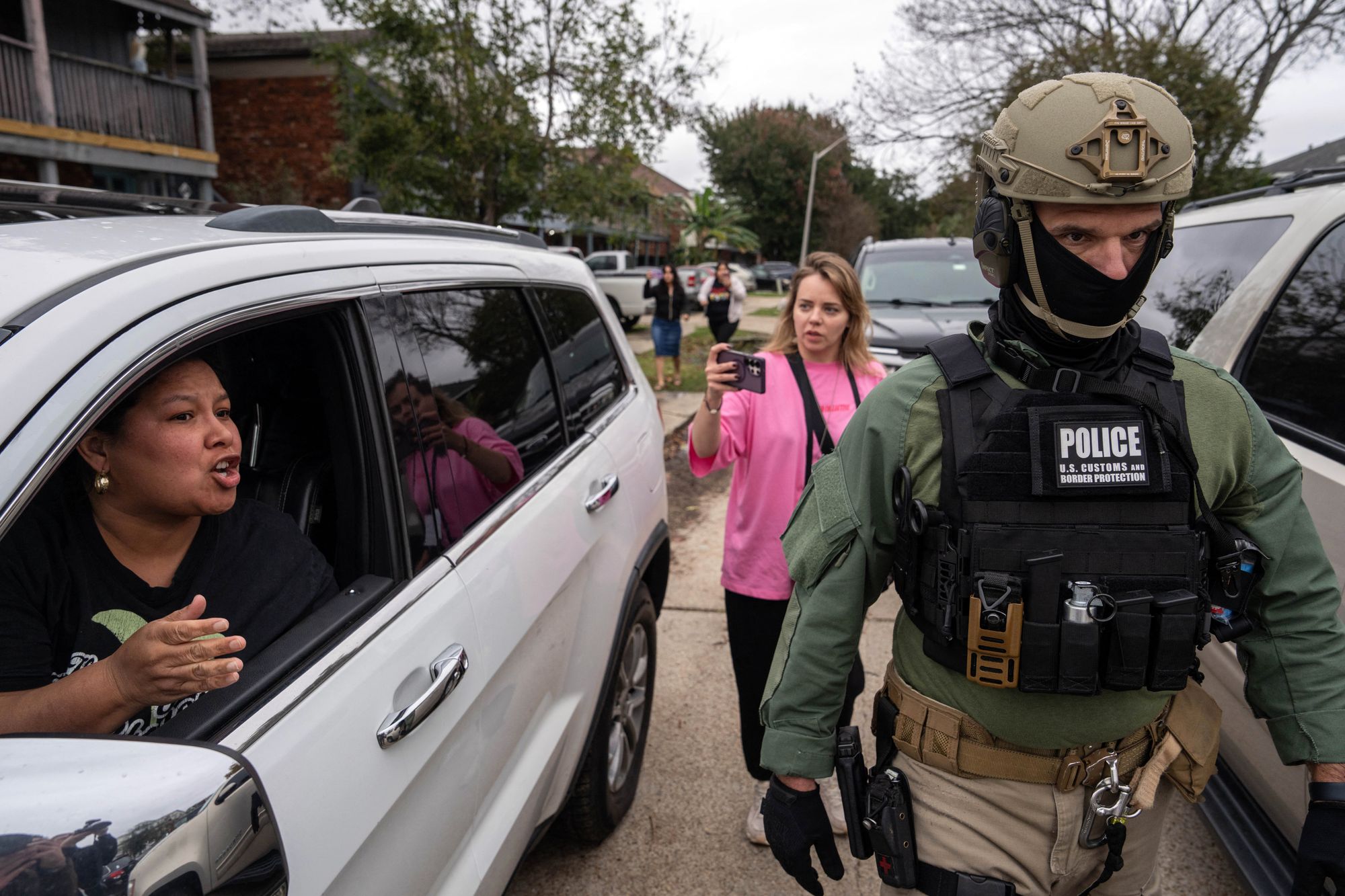
The administration’s surge of federal agents into cities across the country has been met with a spike in social media activity organizing against them.
Grassroots efforts on social media platforms are sharing legal information about ICE encounters and alerting users to their real-time locations.
The Justice Department has also pushed Facebook to remove a group where users alerted members to the presence of agents in Chicago, Bondi announced.
Facebook’s apparent submission to Trump comes after Meta CEO Mark Zuckerberg pledged that the platform would not “compromise” its content standards under “pressure from any administration in either direction.”
A spokesperson for Meta told The Independent at the time that the group violated the platform’s policies against “coordinated harm.”
Aaron’s lawsuit compares ICEBlock to other apps that crowdsource or track the locations of police officers, speed-trap cameras and other non-immigration law enforcement activities — none of which have been subject to Justice Department pressure.
Apple’s removal of ICEBlock appeared to be the first known instance of Apple removing a U.S.-based app in response to government demands. Apple removed more than 1,700 apps from its App Store in 2024 in response to foreign government requests, according to the company’s own reporting.
A spokesperson for the Justice Department declined to comment on the litigation and directed The Independent to the agency’s prior statements about the app.