Breaking News
Starbucks chases Gen Z nostalgia, betting $1 billion on plan to bring back the ‘third place’

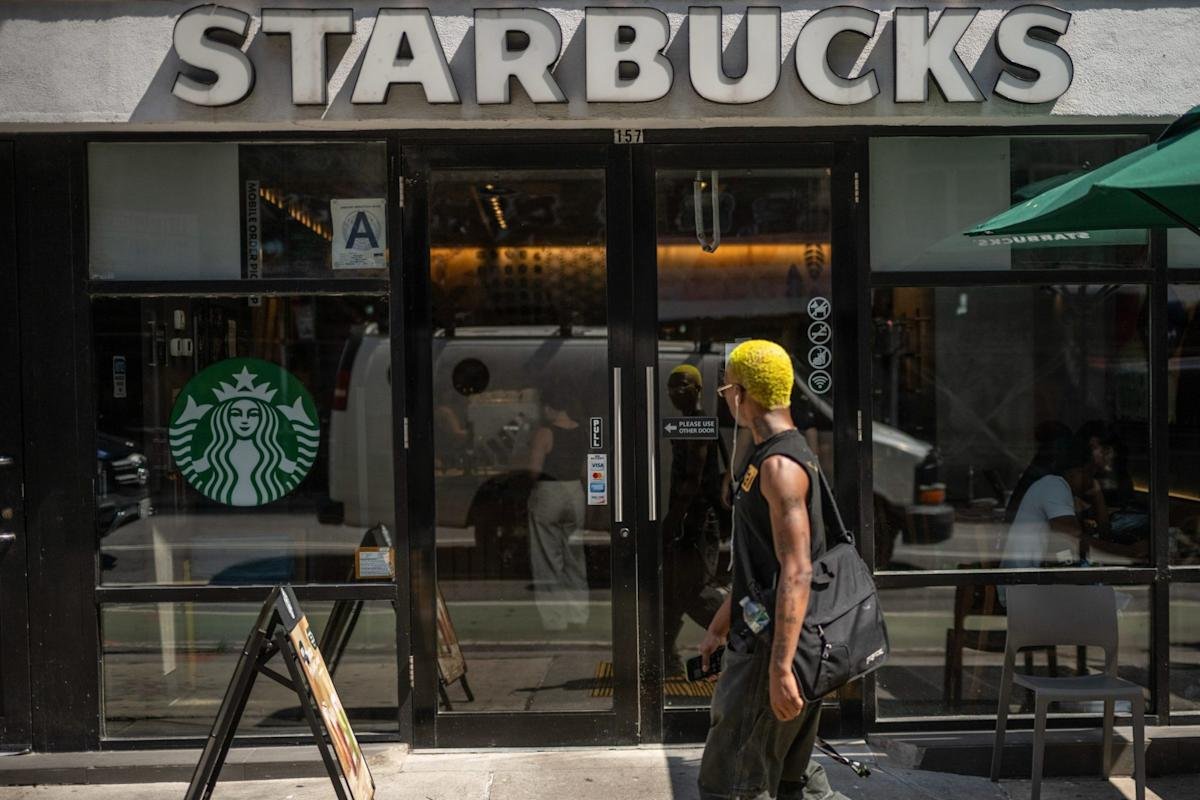
Starbucks is betting big on nostalgia.
On Thursday, the coffee giant unveiled a $1 billion restructuring plan that will shutter more than 100 North American cafés, cut 900 non-retail jobs, and remodel over 1,000 locations.
The reset, CEO Brian Niccol said, is about restoring warmth and comfort—an effort to re-create the “third place” he has championed since taking the helm last year, the hangout between home and work that first made Starbucks a global brand in the 1990s.
At the same time, Starbucks appears to be losing ground with Gen Z, something it tacitly admitted in its latest earnings, when it moved to shutter mobile-only “pickup” stores built for speed and “frictionless” transactions that it assumed would be catnip for a digital-native generation. Its market share among the cohort has slipped from 67% to 61% over the past two years, marking four consecutive quarters of declines, according to Consumer Edge.
Starbucks denies that they’ve lost traction with Gen-Z: during their recent quarterly earnings call, Niccol noted that their customer value perceptions are at near two-year highs, driven by gains among Gen Z and milennials who “make up half our customer base.”
However, arguably, like many restaurant chains, Starbucks misread the generation. Seeing their social awkwardness and preference for digital ordering, the company wrongly assumed it should structure its stores around those behaviors. But Niccol told analysts in July that the mobile-only format was “overly transactional and lacking the warmth and human connection that defines our brand.”
But Gen Z, Niccol is betting, craves that old Starbucks feeling the same way it pines for a “’90s kid summer.”
Dubbed by some as the loneliest generation, they’re gravitating instead toward quirky, local coffee shops that double as community hubs and cultural signifiers—the kind you would see on shows like Friends or How I Met Your Mother, Consumer Edge data show.
Niccol thinks the answer is in the original Starbucks innovation of the “third place.”
The idea of the “third place” comes from urban sociologist Ray Oldenburg’s 1989 book The Great Good Place, which argued that society needs gathering spots beyond home and work. Cafés, pubs, gyms, the nail salon—all count.
Starbucks worked hard to epitomize that term; its CEO at the time Oldenburg’s book was first published, Howard Schultz, used it so often on radio shows and in interviews that people assumed he invented it.
“Starbucks was notable for spacious, comfortable seating in the early days,” Karen Christensen, an author and collaborator of Oldenburg’s, told coffee newsletter The Pourover. “It was the usual place to find a seat and Wi-Fi and electricity in a strange city, and a common place to meet friends.”