
President
Lula and Flávio Bolsonaro clash over US tariffs on Brazilian products before elections

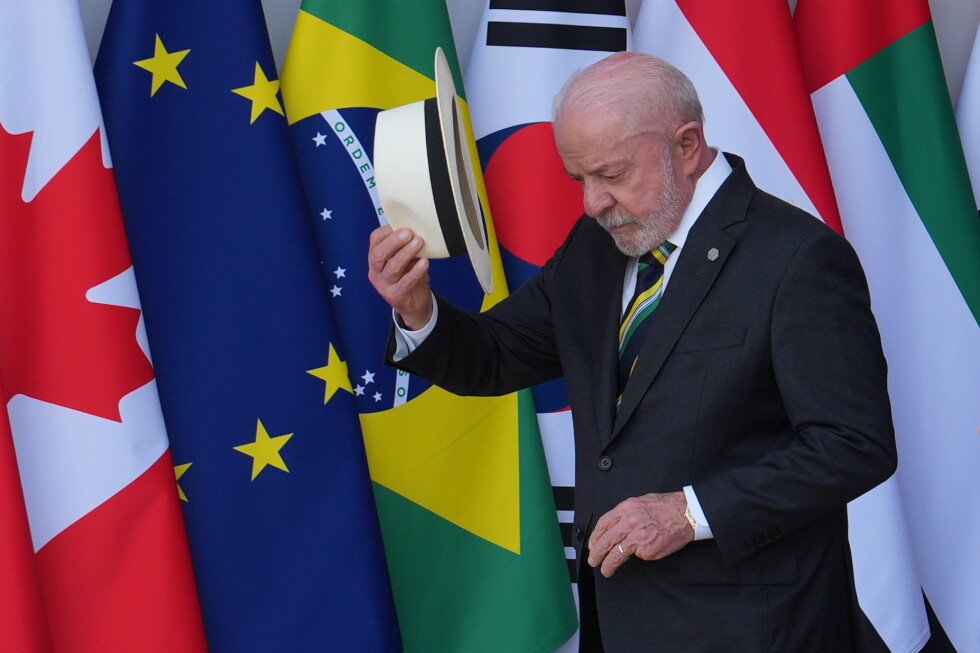
RIO DE JANEIRO (AP) — Brazil’s President Luiz Inácio Lula da Silva and his rival Sen. Flávio Bolsonaro clashed over U.S. tariffs this week, as both sought to discourage the Trump administration from following through with its proposal of applying taxes of 25% on Brazilian products despite an extensive U.S. trade surplus.
The two top candidates for October’s presidential election traded barbs over their responses, suggesting that they believe how they are perceived as handling the deeply unpopular U.S. tariffs will be a key factor in the vote.
While Sen. Bolsonaro, son of former President Jair Bolsonaro, emphasized that the tariffs would strengthen Lula, Brazil’s government rebuked the argument that its trade policies are unreasonable, discriminatory or burdensome to U.S. commerce.
The Trump administration first imposed a 50% tariff on Brazilian imports last July, citing a “witch hunt” against Jair Bolsonaro, who was on trial at the time for attempting a coup despite his 2022 electoral defeat to Lula and was later convicted.
In his letter, U.S. President Donald Trump also accused Brazil of unfair trade practices and said he had directed U.S. Trade Representative Jamieson Greer to initiate an investigation, which led the office to charge Brazil with lax anti-corruption enforcement and unfair tariffs, among other things, in June. The U.S. has had a goods trade surplus with Brazil for years.
After relations between the two countries appeared to warm following meetings between Lula and Trump last year, the U.S. proposal to impose tariffs in June led to a renewed souring of relations, with Lula warning the U.S. leader against meddling in the country’s elections.
Impact on public opinion before elections
The move prompted Lula to again defend Brazil’s sovereignty, a discourse that last year struck a chord and gave Lula an unexpected boost of popularity.
Flávio Bolsonaro himself pointed to the impact on public opinion in the document he sent to the office of United States Trade Representative (USTR) on Wednesday.
“Brazilian public polling shows that the incumbent government’s electoral position has strengthened during precisely the periods when U.S. tariff pressure has been most salient,” he wrote in the document, which included graphs of the polls, adding that the proposed tariffs would hand the government a “political victory.”
Bolsonaro also said the findings of the USTR investigation can be “reaffirmed in full even as implementation is suspended,” suggesting that tariffs be postponed.
Lula called the document “yet another act of treason against the fatherland.”
Jair Bolsonaro’s other son Eduardo, who lives in Texas, was convicted this year for illegally lobbying the U.S. government to threaten Brazilian officials to stop his father’s trial.
“It is unacceptable that the Bolsonaro family, with its sellout policies, seeks to submit Brazil to the interests of the United States,” Lula said Thursday on X. “There has never been, nor is there, any justification for a tariff hike now or later.”
Three hours later, Flávio Bolsonaro said on X that Lula is the only “one who wants the tariff hike against Brazilian products” and announced he is returning to the U.S. next week to reinforce the demand that the additional tariffs not be applied.
In response to the USTR’s investigation, Lula’s government rejected, among other grievances, the argument that its PIX instant payment system unfairly disadvantaged competing electronic payment services. It said its practices are lawful, neutral and promote competition.
Lula and Flávio Bolsonaro have also clashed over the Trump administration’s decision to classify two of Brazil’s main organized crime groups — First Command of the Capital, known as PCC, and Red Command — as terrorist organizations.
Sen. Bolsonaro supported the move, which some experts saw as a U.S. attempt to interfere in the election. Lula has argued the designation is inappropriate because the groups seek profit rather than political change.
Earlier this week, the U.S. announced sanctions targeting companies and individuals for their links to PCC and called it “the largest transnational criminal organization in the Western Hemisphere.”
___
Follow AP’s coverage of Latin America and the Caribbean at https://apnews.com/hub/latin-america