US Politics
Trump backs down on Europe tariffs threat over Greenland after reaching ‘framework of a future deal’

Your support helps us to tell the story
From reproductive rights to climate change to Big Tech, The Independent is on the ground when the story is developing. Whether it’s investigating the financials of Elon Musk’s pro-Trump PAC or producing our latest documentary, ‘The A Word’, which shines a light on the American women fighting for reproductive rights, we know how important it is to parse out the facts from the messaging.
At such a critical moment in US history, we need reporters on the ground. Your donation allows us to keep sending journalists to speak to both sides of the story.
The Independent is trusted by Americans across the entire political spectrum. And unlike many other quality news outlets, we choose not to lock Americans out of our reporting and analysis with paywalls. We believe quality journalism should be available to everyone, paid for by those who can afford it.
Your support makes all the difference.
Read more
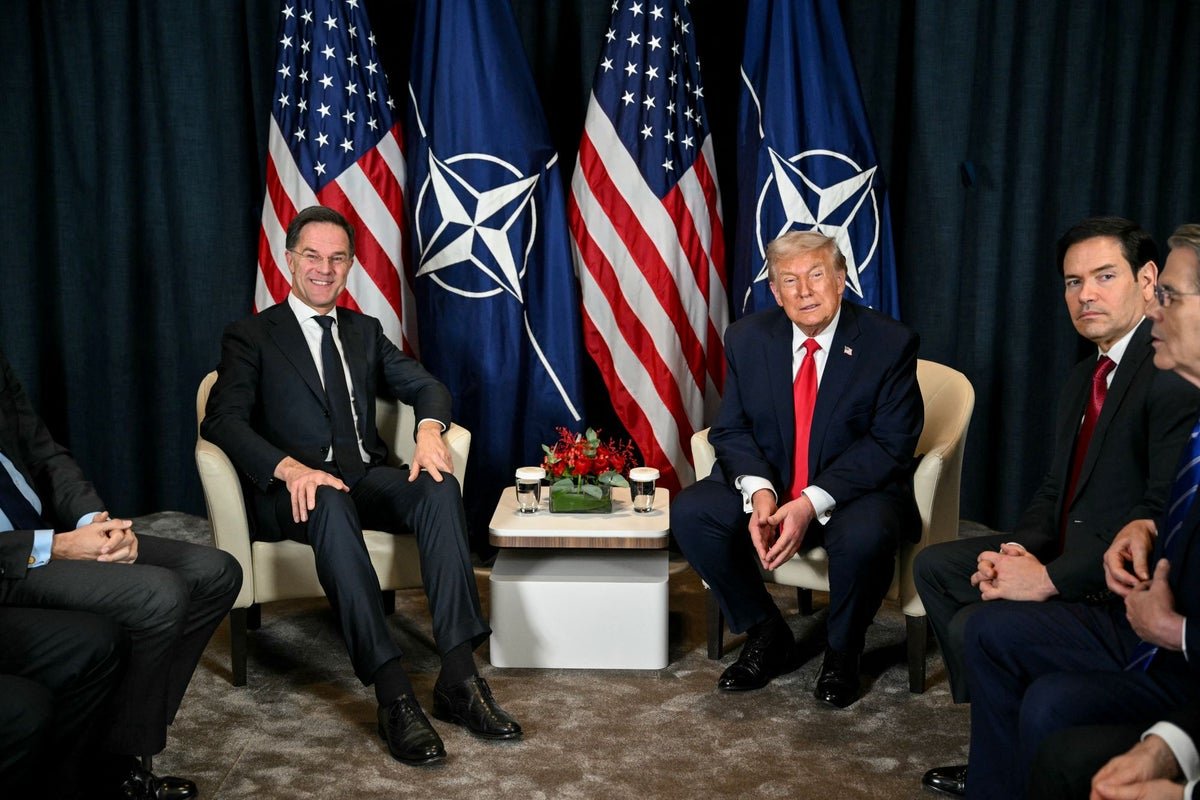
President Donald Trump has reversed course and abandoned plans to impose tariffs on a group of close U.S. allies that had objected to his push to acquire Greenland after what he described as a “very productive” meeting with NATO Secretary-General Mark Rutte.
Writing on Truth Social, Trump said American and NATO representatives had “formed the framework of a future deal with respect to Greenland and, in fact, the entire Arctic Region” based on discussions held in the closed-door meeting at the World Economic Forum in Davos, Switzerland.
He said the “solution” would be “will be a great one for the United States of America, and all NATO Nations” if it is “consummated.”
“Based upon this understanding, I will not be imposing the Tariffs that were scheduled to go into effect on February 1st,” he added.
He later told CNBC that he’d lifted the tariff threats because “we have pretty much the concept of a deal” he described as “a little bit complex” and “a very good deal for the United States” having to do with “the security, great security, strong security and other things.”
The president’s announcement came just hours after Trump delivered a bellicose speech to WEF attendees in which he said he would not seek to annex Greenland with military force but called for “immediate negotiations” aimed at a deal for the U.S. to acquire the Arctic territory, which both Danish and Greenlandic authorities have said is not for sale.
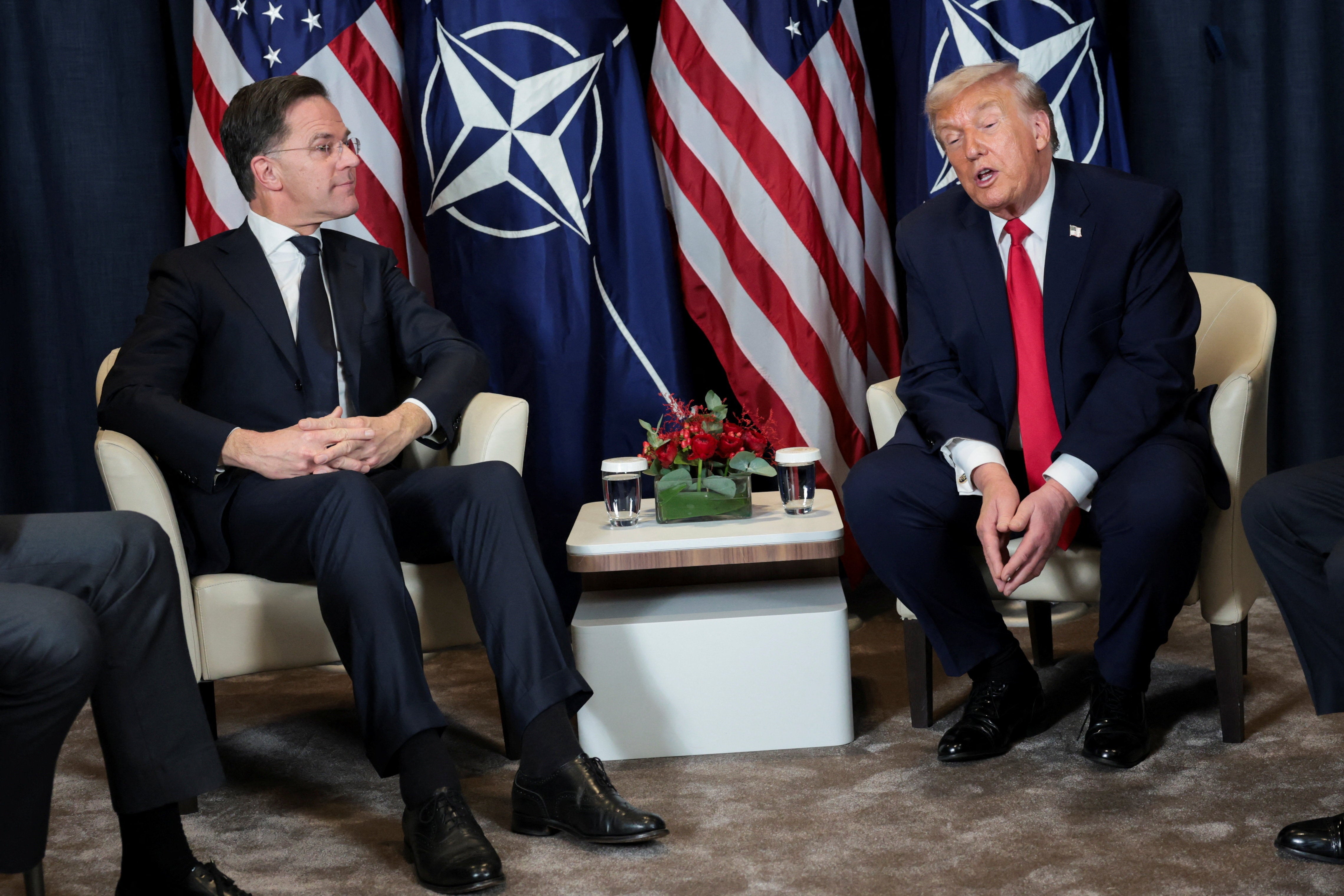
He also said the U.S. would be “unstoppable” in any attempt to seize the island but disclaimed any interest in doing so.
“I don’t want to use force. I won’t use force. All the United States is asking for is a place called Greenland … It’s the United States alone that can protect this giant mass of land, this giant piece of ice, develop it and improve it and make it so that it’s good for Europe and safe for Europe and good for us,” Trump said.
“And that’s the reason I’m seeking immediate negotiations to once again discuss the acquisition of Greenland by the United States.”
He also suggested America needed “right title and ownership”to properly defend the island even though the U.S. renounced any claim to Greenland in exchange for being permitted to purchase what are now the U.S. Virgin Islands as part of a 1917 treaty and later entered into a 1951 defense agreement with Denmark allowing unlimited basing rights.
The speech came after a week of tensions that stretched America’s strained relations with her NATO allies to a breaking point, with Trump and his aides arguing that the U.S. should take control of Greenland and questioning Denmark’s centuries-old claim to the island while refusing to rule out seizing it by force.
In response, a group of NATO nations — Norway, Sweden, France, Germany, Britain, the Netherlands and Finland — sent troops to Greenland for defense exercises aimed at refusing American claims that the 32-member bloc was incapable of defending the island — with the clear implication that Denmark and those nations would defend Greenland against the U.S. if need be.
Trump reacted by threatening to impose a ten percent tariff on each country’s exports to the U.S. on February 1 and raise it to 25 percent in June “until such time as a Deal is reached for the Complete and Total purchase of Greenland.”
The American president’s threats had drawn widespread condemnation from NATO leaders, including Prime Minister Sir Keir Starmer, who told the House of Commons on Wednesday that he would “not yield” to Trump on the matter, days after he called the pressure campaign “completely wrong.”
The row continued over the weekend as a slew of European diplomats leaked a text message Trump had sent to the Norwegian prime minister complaining that he was looking to take Greenland in part because the Norwegian Nobel Committee’s decision not to award him the Nobel Peace Prize had freed him from having to “think purely of peace” and Trump posting text messages purportedly from French President Emmanuel Macron in which Macron said he did “not understand” the American president’s actions.
By the time Trump took the stage in Davos on Wednesday morning, his belligerence and disdain for America’s longtime allies had brought tensions within the Western alliance to a breaking point, with one NATO leader — Canadian Prime Minister Mark Carney — drawing a standing ovation on Tuesday after a speech which described Trump’s threats as part of “a rupture” marking the end of the post-Second World War era underpinned by American hegemony and a U.S.-led security umbrella for Western democracies.
“Every day we’re reminded that we live in an era of great-power rivalry,” Carney said. “That the rules-based order is fading. That the strong can do what they can, and the weak must suffer what they must.”
The Canadian leader further warned that “middle powers must act together” because they’d be “on the menu” if they didn’t find a place “at the table.”
More follows…