US Politics
What is plenary authority, the dictator phrase that caused Stephen Miller to stop talking during CNN interview

Your support helps us to tell the story
From reproductive rights to climate change to Big Tech, The Independent is on the ground when the story is developing. Whether it’s investigating the financials of Elon Musk’s pro-Trump PAC or producing our latest documentary, ‘The A Word’, which shines a light on the American women fighting for reproductive rights, we know how important it is to parse out the facts from the messaging.
At such a critical moment in US history, we need reporters on the ground. Your donation allows us to keep sending journalists to speak to both sides of the story.
The Independent is trusted by Americans across the entire political spectrum. And unlike many other quality news outlets, we choose not to lock Americans out of our reporting and analysis with paywalls. We believe quality journalism should be available to everyone, paid for by those who can afford it.
Your support makes all the difference.
Read more
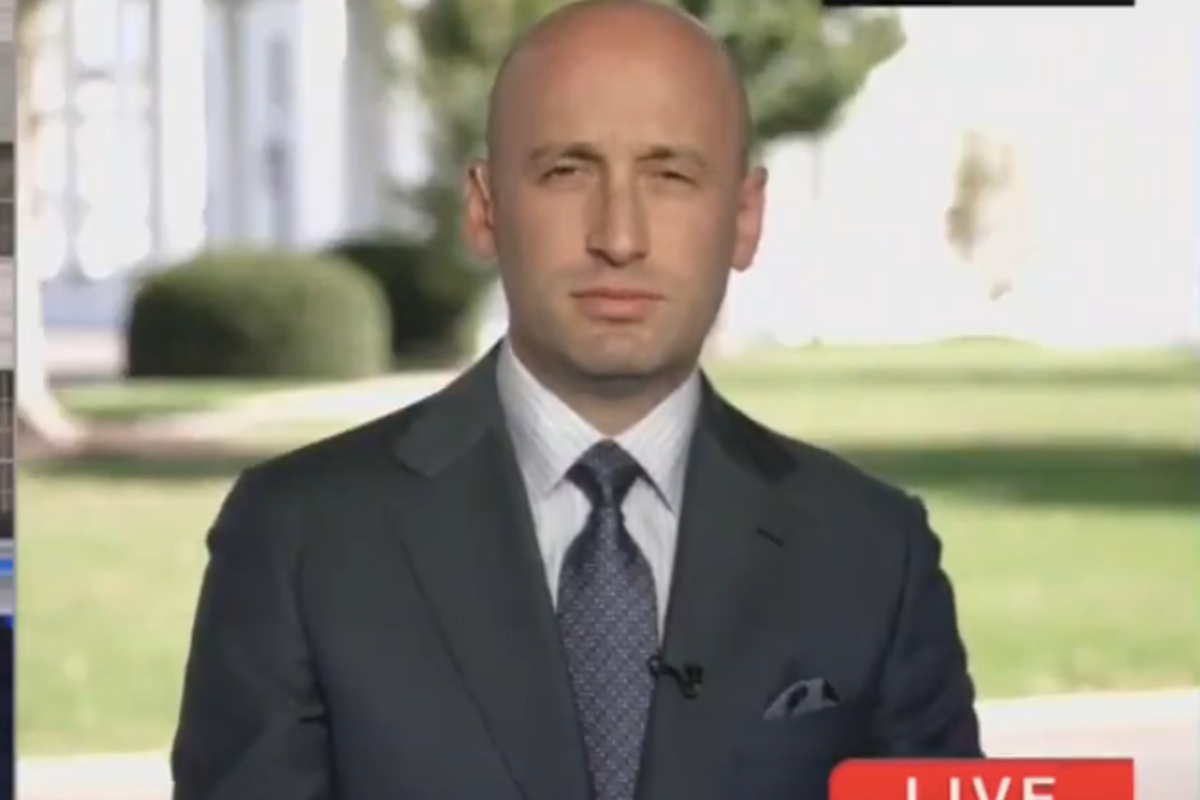
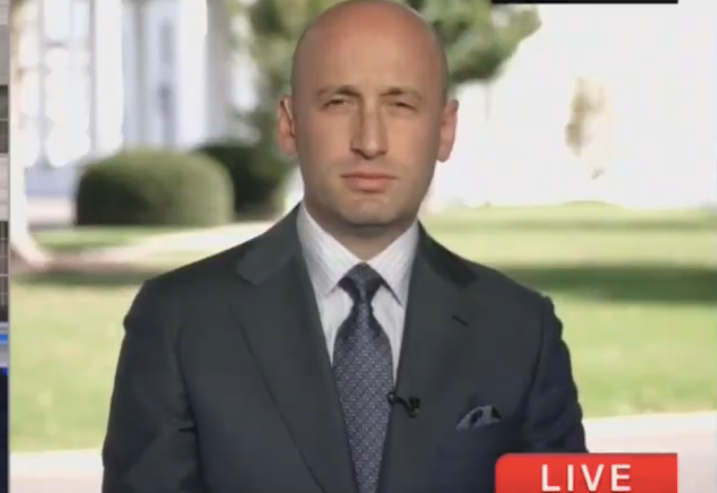
White House Deputy Chief of Staff Stephen Miller raised eyebrows during a live CNN interview this week after claiming that President Donald Trump had “plenary authority” during a conversation about the deployment of the National Guard in Oregon.
Video of Miller’s statement has gone viral – not only due to Miller’s controversial assertion – but because of the way he suddenly cut himself off mid-sentence, leaving his statement incomplete.
Trump having “plenary authority” suggests the president has assumed total power over the decision to deploy the National Guard in some states. It is unclear whether Miller paused due to technical difficulties or stopped himself after apparently realising the implications of what he was saying.
What is Plenary Authority?
Plenary authority refers to a single government official having absolute power on a particular matter.
According to Cornell Law School’s Legal Information Institute, in the U.S., it is recognised as “complete power over a particular area with no limitations”.
In the context in which Miller was speaking, his assertion that Trump has “plenary authority” has potentially significant ramifications.
The U.S. presidential system – like many other systems of government around the world – is built on the constitutional principle of “the separation of powers,” a structure designed to prevent any single branch of government from holding unchecked authority by dividing power among the executive, legislative, and judicial branches.
While plenary authority suggests absolute power, the U.S. system of separation of powers uses checks and balances to ensure that no branch, including the president, can exercise complete control.
Just before Miller turned silent, he referred to “Title 10 of the U.S. code”, which sets out the conditions for deployment of the National Guard.
Part of the law he appears to be referring to sets out that the president may deploy the National Guard, if he considers, among other things, that “rebellion against the authority of the United States make it impracticable to enforce the laws” via usual means.
Other considerations include the “invasion” of the country.
Previous cases where the Trump administration has used this as a defense – in California and Oregon – have failed, as judges ruled that these conditions had not been met and that the use of the National Guard was unwarranted.
Concern over how Trump has used the powers afforded to the presidency sparked the mass “No Kings” protests across more than 2,000 cities earlier this year.
Tens of thousands of people marched to send Trump the message that they won’t tolerate “kings, tyrants, or dictators.”
This came after Trump said “I don’t feel like a king” and complained that he had to “go through hell” to get anything done under the constitutional system.
Plenary authority, with its sweeping, unchecked assumption of power, has previously been compared to the powers to rule by decree forced through by the governments of dictators, including Benito Mussolini and Adolf Hitler.
Boris Sanchez chalked Miller’s silence up to ‘crossed wires’
The moment came when CNN anchor Boris Sanchez asked Miller if the Trump administration would abide by a legal ruling that blocks the deployment of the National Guard in Oregon.
“You’ve called the district judge’s ruling, blocking the deployment of National Guard in Oregon, ‘legal insurrection.’ Does the administration still plan to abide by that ruling?” Sanchez asked.
Miller said, “Well, the administration filed an appeal this morning with the 9th Circuit. I would note the administration won an identical case, in the 9th Circuit, just a few months ago, with respect to the federalizing of the California National Guard. Under title 10 of the U.S. code, the president has plenary authority, has…”
“Stephen? Stephen? Hey Stephen, can you hear me?” Sanchez asked, as Miller stood there motionless and blinking for around 15 seconds, before the camera feed of Miller was cut, and Sanchez said, “It seems there’s a technical issue”.
The show then cut to a break and later resumed the interview with Miller. Sanchez told the audience, “wires got crossed”. Neither Sanchez nor Miller mentioned Trump wielding “plenary authority” again.
The Independent has contacted the White House for comment.