
President
Senate passes Russia sanctions bill pushed by late Sen. Lindsey Graham

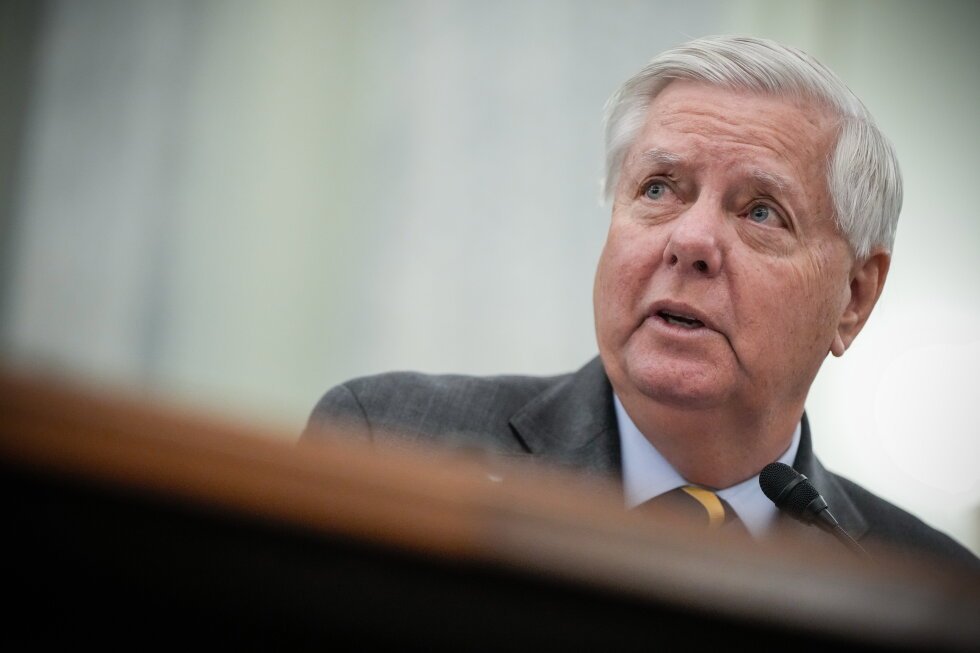
WASHINGTON (AP) — The Senate overwhelmingly approved a punishing Russian sanctions package Friday, the result of a yearlong campaign by the late Sen. Lindsey Graham to reinforce U.S. support for Ukraine and try to force President Vladimir Putin’s hand as the grinding war drags on.
The bipartisan legislation, which passed 86-11, would penalize countries that continue to buy Russian oil, gas and other exports seeking to deprive Putin of revenues fueling the war. It comes after Ukrainian President Volodymyr Zelenskyy visited the Capitol last week following Graham’s funeral, met with senators from both parties and watched from the gallery as the Senate took the first procedural votes.
“Today, President Zelenskyy is watching from Ukraine — and Putin is watching from Moscow,” said Sen. Richard Blumenthal, D-Conn., who had worked with the late South Carolina senator on the package.
“I would like to think Lindsey Graham is watching, too,” he said. “Today we say to the people of Ukraine: You are not alone. And today we say to Vladimir Putin: You will not conquer Ukraine.”
The sweeping show of force from the Senate is the most substantial move yet during President Donald Trump’s second term to shift the dynamic of the four-year war, which has now churned longer than World War I. Congress has struggled to ensure the flow of U.S. funding and munitions to Ukraine, but Trump has given a nod to the package, which includes his push for sanctions on Iran, pressuring the House to pass and send it for his signature.
Graham and Blumenthal had announced a deal with the White House on the sanctions legislation on July 10 after more than a year of negotiations with the White House. Graham, who had just returned from Ukraine, died suddenly the next day, likely from an aortic tear.
The bipartisan package allows the president to impose tariffs on the world’s top five purchasers of Russian oil or natural gas, including China and India. It provides exceptions for countries that import less than 15% of their natural gas from Russia and are taking steps to reduce those imports.
The legislation also includes sanctions on Putin, senior Russian political and military leaders, Russian financial institutions and Russian energy projects. It would expand U.S. sanctions to target older, reflagged oil tankers that Russia uses to circumvent existing U.S. sanctions on Russian oil and energy revenues. The bill also allows the White House to waive sanctions or restrictions if the president certifies to Congress that it’s in the national interest.
Democrats and some Republicans have been wary of giving Trump broad authority to slap tariffs on imports that have spiked prices for goods, worried about inflationary costs for Americans. Those voting against the final package were mostly progressive Democrats.
Sen. Darline Graham, R-S.C., who was appointed by the state’s governor to fill her brother’s seat, said she was honored to carry on his work. “This legislation hits Putin where it hurts,” she said.
Bill sends ‘a moral signal’ to Ukraine and its allies
Zelenskyy told senators during last week’s private meeting at the Capitol that Ukraine is making gains in the war, but still needs more help from the U.S. He publicly thanked them for the sanctions package.
Republican Sen. Todd Young of Indiana, who attended the meeting, said the sanctions legislation “is important as a moral signal to a country that is weary and tired, though holding its own.”
New Hampshire Sen. Jeanne Shaheen, the top Democrat on the Foreign Relations Committee, said advancing the legislation now, ahead of Russia’s own elections, will put pressure on Putin to seriously revisit prospects for a peace deal. And she warned that every time the U.S. backs away from tough actions, Russia ramps up its attacks.
“If we can’t shut down the funding for the war machine that Russia is using against Ukraine, then they’re going to keep at it,” she said.
Ukraine’s foreign minister Andrii Sybiha expressed gratitude to the Senate in a post, and said that with U.S. support, “Together, we are bringing a lasting peace closer.”
Some say the bill would give Trump too much tariff power
The Senate defeated an amendment by Republican Sen. Rand Paul of Kentucky and Democratic Sen. Ron Wyden of Oregon that would have removed the new tariff authority for Trump. Paul says it would be too costly for taxpayers, while Wyden and other Democrats say they don’t want to give Trump any new authority to impose tariffs.
“We’ve got folks who are walking an economic tightrope here in America,” Wyden said.
Sen. Raphael Warnock, D-Ga., who had held up passage of the package over the tariff authority, said he received a written commitment from the Trump administration through U.S. Trade Representative Jamieson Greer that ensures guardrails. The tariffs would be lifted once the countries are no longer on the lists of those purchasing Russian oil and gas, or helping to evade sanctions, he said.
“We should not have to choose between putting a check on Putin’s aggression and putting a check on this president’s tariffs regime,” Warnock said. If Trump “oversteps his power, we will see him in court.”
Package next goes to the House
While the Senate momentum puts pressure on the House to act as soon as lawmakers return to session at the end of August, top Democrats still warn against handing Trump too much power in the Russia sanctions package.
Rep. Gregory Meeks, the top Democrat on the House Foreign Affairs Committee, said the bill as is gives Trump too much authority to “weaponize” tariffs in ways that do little to deter Russia, but hurt Americans back home.
“It would allow President Trump to dodge holding Russia accountable and impose yet more tariffs in his destructive trade wars, leaving Americans to foot the bill,” Meeks said.
He said the tally on the Paul-Wyden amendment, 32-64, demonstrates the demand among lawmakers to make changes to the package.
The House had already passed a separate measure in June that would provide aid to Ukraine and sanction key segments of the Russian economy. That Meeks-led package from Democrats drew bipartisan support from Republicans, overriding objections from GOP leaders.