
Breaking News
Ozone hole ranked as 5th smallest in more than 30 years, according to new research

The ozone hole over the Antarctic is significantly smaller in 2025 than in previous years, ranking as the fifth-smallest it’s been since 1992, according to a new report by NOAA and NASA scientists.
The ozone hole reached its greatest one-day extent for 2025 in early September, measuring 8.83 million square miles, about 30% smaller than the largest hole on record in 2006.
Ozone hole over Antarctica grows to one of the largest on record, scientists say
The so-called “ozone hole” is not an actual hole in the planet’s ozone layer, but rather a large region of Earth’s stratosphere with extremely low ozone concentrations.

NASA – PHOTO: This illustration shows the size and shape of the ozone hole over the South Pole on the day of its 2025 maximum extent.
NOAA and NASA scientists emphasize that recent findings show efforts to limit ozone-depleting chemical compounds can have a significant impact.
The regulations are established by the Montreal Protocol, which went into effect in 1992. Subsequent amendments are driving the gradual recovery of the ozone layer, which remains on track to fully recover later this century as countries worldwide replace harmful substances with safer alternatives.
More than one-third of Americans live in places with unhealthy levels of air pollution: Report
“This year’s hole would have been more than one million square miles larger if there was still as much chlorine in the stratosphere as there was 25 years ago,” said Paul Newman, a senior scientist at the University of Maryland system and longtime leader of NASA’s ozone research team.
For decades, chlorofluorocarbons (CFCs) and other ozone-depleting compounds were widely used in aerosol sprays, foams, air conditioners and refrigerators, causing significant reductions in ozone levels.

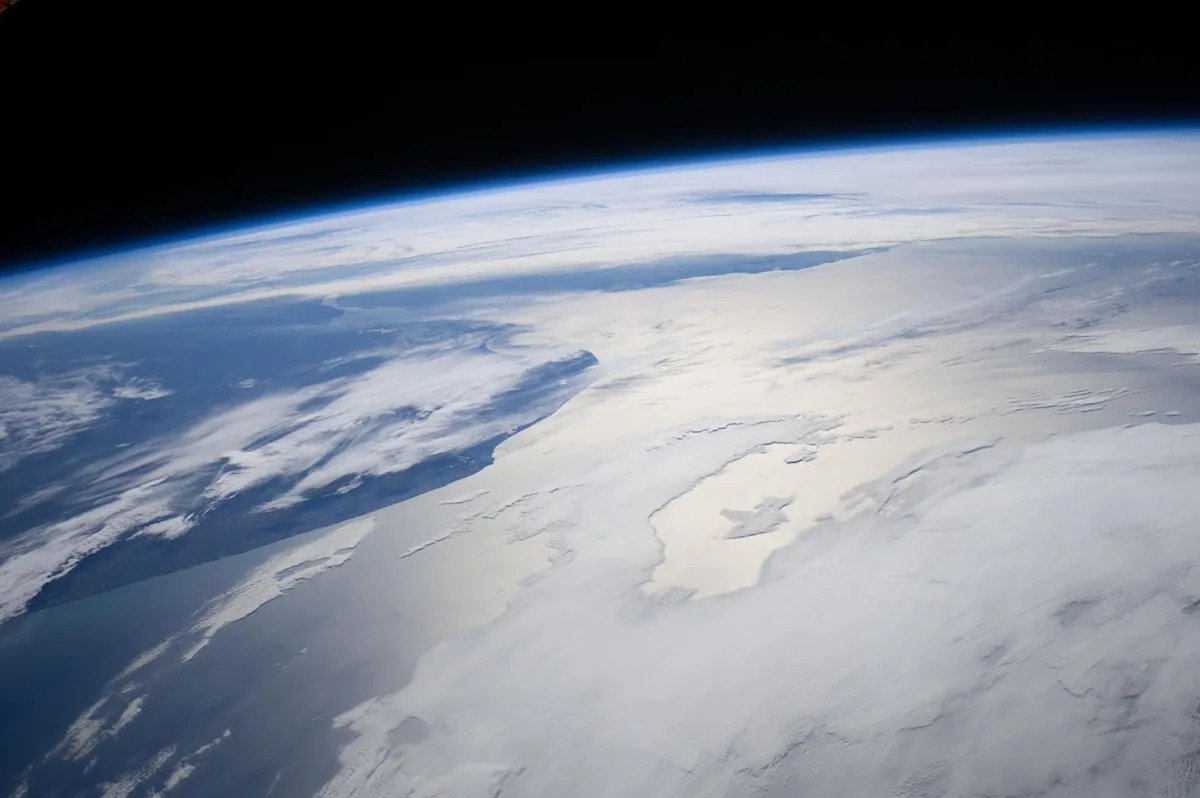
NASA – PHOTO: Earth Observation taken during a day pass by the Expedition 40 crew aboard the International Space Station (ISS).
Natural factors, such as temperature and atmospheric circulation, also influence ozone concentrations and are likely to have contributed to a smaller ozone hole this year, according to researchers.
Earth’s ozone layer acts as a planetary sunscreen, shielding humans, animals and plants from harmful ultraviolet radiation. When ozone levels drop, more UV rays reach the surface, increasing the risk of adverse health and environmental impacts such as crop damage, skin cancer, and cataracts.