
President
Donalds says bill would stop AI data centers from hiking utility costs

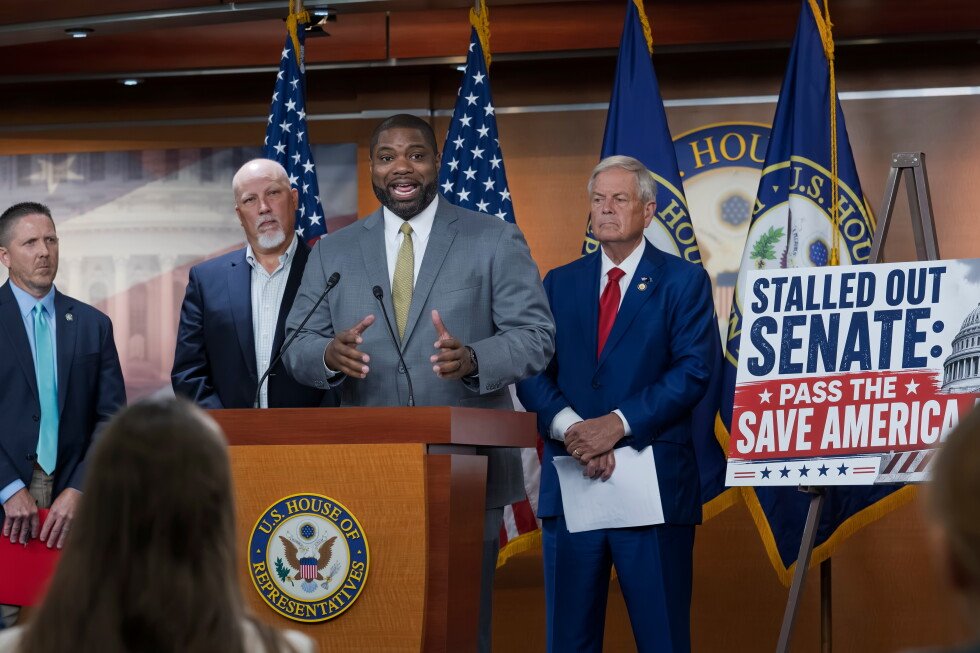
WASHINGTON (AP) — Byron Donalds, a Republican congressman running for Florida governor, on Monday announced legislation intended to prevent artificial intelligence data centers from driving up utility costs, the latest sign of a political backlash over the new technology.
The proposal, if passed by Congress, would require data centers to obtain all their electricity and water needs from private sources, rather than the power grid or public water systems. The idea aligns with an earlier, voluntary initiative from President Donald Trump.
“If you talk to these guys who are building these data centers, if it means that they have to pick up the utility costs, they’re more than willing to do it,” Donalds said in an interview with The Associated Press. “It’s in their interest to make sure that we can construct these centers, and I think the number one way you address and mitigate the concerns that people are having is to just ensure their utility bills aren’t going up in the process.”
Donalds’ proposal is noteworthy coming from a candidate backed by pro-AI political action committees and Trump. The legislation comes during a rapid nationwide buildout of data centers to match growing demand for artificial intelligence systems. Major technology firms at the heart of the AI boom have quickly become some of the world’s most valuable and watched companies, while the Trump administration has aligned itself with the industry’s major players.
Several major tech companies developing AI infrastructure have committed to agreements with the Trump administration to cover the expenses of building new power sources rather than shifting the burden to residential households. But given the expected increase in demand, it’s unclear if the voluntary agreement is legally enforceable.
The furious pace of construction and high stakes of the technology have raised concerns among many Americans. In Florida, more than 20 counties and municipalities have voted to reject the construction of major data centers, while others have banned their construction for at least a year. Residents and local leaders often cite concerns over increased utility bills, disruption of local communities and environmental damage as major reasons for the pauses.
“These companies have been a step behind and didn’t realize how quickly the ground was shifting under their feet,” said Matt Gorman, a Republican strategist. Gorman said that progressive climate activists and conservative populists have both seized on the data center issue, requiring tech firms to “tell a better story” and address concerns from across the political spectrum.
“This is a full-court effort here,” Gorman said. “If you don’t tell that story, you’re going to have it mandated on you from lawmakers of both parties.”
Donalds is running to succeed Florida Gov. Ron DeSantis, a fellow Republican who in May signed legislation that required large-scale data centers to pay their own energy and water costs entirely. Donalds, should he be elected governor, said he’d focus on improving efficiency among data centers and moving the facilities away from population centers.
“We just want to make sure that if they do get built, they’re being built efficiently while protecting ratepayers and protecting Florida’s water,” Donalds said. “The real public policy question for the country and for states is how are we going to generate baseload power for future energy demands, whether it’s for hyperscale data centers or for anything else.”
James Fishback, a far-right Republican candidate for governor, has made opposition to data centers a center of his primary challenge to Donalds. And David Jolly, a former congressman and the leading Democratic gubernatorial candidate, this month called for a moratorium on the construction of data centers.
Travis Fisher, a fellow at the Cato Institute, said public companies usually push for the best deals to access public utilities. He said any willingness to pick up a bigger tab for energy and water reflects the political pressure facing tech firms.
“They are very afraid that they’re going to, I’d say, lose their social license to operate, as if they’re basically going to get run out of town or banned,” said Fisher.