
President
America In Focus: US inflation cooled in June, but AI build-out poses latest threat

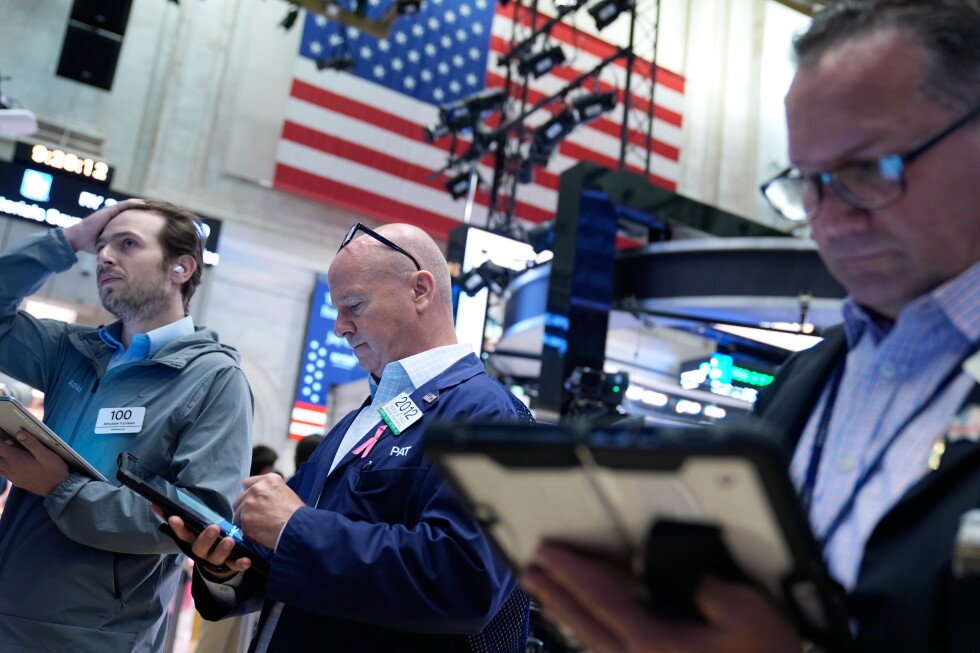
The economy, inflation and how those forces could impact the lives of Americans were front and center over the past week. Trips to the grocery store and gas station are more painful than they were last year, and rising costs are impacting the decisions of both households and businesses.
Here’s a snapshot of prominent economic data and news that occurred over the past week and what it potentially means for you.
Massive AI build-out poses latest inflation threat
American consumers — and the Federal Reserve — are being hit with another high-cost headache.
The gusher of investment in data centers — likely topping $700 billion this year — to power artificial intelligence has made memory chips, computer processors, and other equipment, as well as electricity, more expensive. Economists expect it will continue to push up inflation at least through the end of this year.
While it won’t be as large a spike as occurred in 2021-2023, when inflation peaked at 9.1%, massive AI spending is likely to keep prices rising more quickly than the Federal Reserve would like. Such increases could lead the central bank to lift its key interest rate later this year to cool spending and bring down inflation. Higher rates from the Fed often boost borrowing costs for auto loans, mortgages, and business loans.
US inflation cooled in June
U.S. inflation cooled last month as the cost of gas, clothes, and used cars fell, providing some relief to consumers, while underlying price pressures also cooled more than expected.
Prices dropped 0.4% in June from May, the largest monthly drop in four years, the Labor Department said Tuesday. On a yearly basis, inflation declined to 3.5%, down from a year-over-year gain of 4.2% in May and lower than many economists expected.
Yet oil prices rose for a second day Tuesday as the United States renewed attacks on Iran and President Donald Trump announced a new blockade in the Strait of Hormuz, a key shipping route for about one-fifth of the world’s oil. And many Americans have soured on the economy after five years of elevated inflation, posing a risk to Trump and Republicans in the upcoming midterm elections.
Average 30-year US mortgage rate climbs, highest level in nearly a year
The average long-term U.S. mortgage rate climbed this week to its highest level in nearly a year, driving up borrowing costs for prospective homebuyers.
The benchmark 30-year fixed rate mortgage rate rose to 6.55% from 6.49% last week, mortgage buyer Freddie Mac said Thursday. One year ago, the average rate was 6.75%.
Higher mortgage rates can add hundreds of dollars a month in costs for borrowers, limiting homebuyers’ purchasing power at a time when affordability challenges continue to sideline many aspiring homeowners.
Retail sales rise modestly amid economic uncertainty
Shoppers slowed their spending in June from May amid continuing economic uncertainty and fading benefits from generous government tax refunds.
Retail sales rose 0.2% in June, after being up a revised 1% in May, according to the Commerce Department’s report released on Thursday.
Excluding business at gas stations, retail sales were up 0.7%
Business at clothing and accessories stores slipped 0.3%, while online sales rose 1.9% fueled by spending surrounding Amazon’s Prime Day event, which was held from June 23 through June 26.
US producer prices fall, but outlook is cloudy
U.S. wholesale inflation fell from May to June on plunging energy prices, but intensifying hostilities with Iran are clouding the outlook.
The Labor Department reported Wednesday that its producer price index — which captures inflation before it reaches consumers — dropped 0.3% from May. Compared to a year earlier, wholesale prices were up 5.5% in June, decelerating from a 6% increase the month before. Gasoline prices plunged 12% in June but are still up nearly 43% from June 2025, pushed higher by the Iran war.
Excluding volatile food and energy prices, so-called core wholesale prices were up 4.7% from June 2025 and 0.2% from May.
US unemployment claims decline, fewest in 10 weeks
Filings for unemployment benefits fell last week to the lowest level in 10 weeks as U.S. layoffs remain historically low.
The number of Americans applying for jobless aid in the week ending July 11 dropped by 8,000 to 208,000, the Labor Department reported Thursday. That’s well below the 219,000 new applications forecast by analysts surveyed by the data firm FactSet.
Weekly filings for unemployment benefits are considered a proxy for layoffs and are close to a real-time indicator of the health of the U.S. job market.
In its more comprehensive June jobs report earlier this month, the government reported that employers pulled back on hiring in June, adding only 57,000 jobs. That’s less than half the previous month’s total and a sign that companies remain cautious about adding to their head counts.
Global sell-off for AI stocks deepens
More sell-offs for computer chip companies and other winners of the artificial-intelligence technology boom yanked stock markets lower Friday. Oil prices, meanwhile, continued to climb because of the war with Iran.
The S&P 500 dropped and was on track to close out its first losing week in the last three and just its third losing week in the last 16. The Dow Jones Industrial Average and the Nasdaq composite fell.
Chip stocks once again were at the center of the weakness. They’ve been under pressure for weeks on worries that their prices shot too high and that voracious demand for computer memory and processors may not be sustainable if AI ends up not producing as much profit and productivity as promised.