
President
Warsh declines to say if he has spoken with Trump since becoming Fed chair

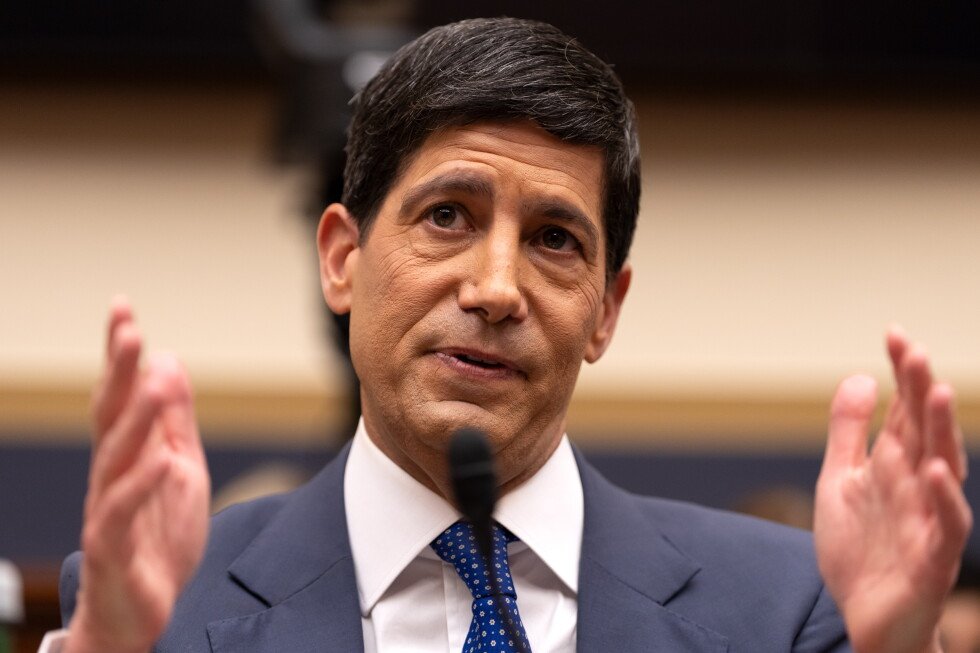
WASHINGTON (AP) — Federal Reserve Chair Kevin Warsh on Wednesday navigated a series of thorny questions from senators on issues such as the impact of AI on inflation, what contacts he has had with President Donald Trump, and how the central bank will determine the persistence of inflation, without providing many specifics.
Warsh has said since taking office seven weeks ago that he would provide less guidance about the Fed’s next interest rate moves than his predecessors. Yet he has frustrated many Fed-watchers by largely avoiding explanations of how the central bank might respond more generally to potential economic changes.
“I don’t view a one-time change in prices as necessarily being inflationary, because I think there’s a supply response,” he said in answer to a question on the impact of massive investment in AI infrastructure. “Will it increase measured prices over the course of the next 12 months? I suspect it will be. Whether that’s inflationary or not, that’s up to the Federal Reserve, and we’re going to have something to say about that.”
The cost of computer memory and processing chips has soared as high-tech firms have spent hundreds of billions of dollars on data centers and computing equipment. Companies such as Apple, Microsoft, and Dell said they have had to raise prices on laptops, tablets, and video game consoles as a result.
According to the minutes of the Fed’s last meeting June 16-17, “many” of the 19 officials on its rate-setting committee said that the “ongoing strong demand for AI infrastructure would likely sustain upward pressure on prices for technology products and electricity.” The committee has been sharply divided over whether to raise rates later this year.
Inflation data downplayed
In his second day of congressional testimony, Warsh also downplayed positive inflation data released Tuesday and Wednesday that could make his job as Fed chair easier. As inflation fades, it reduces pressure on the Fed to raise its key interest rate to cool borrowing and spending.
The government said earlier Wednesday that wholesale inflation slowed in June, a day after consumer prices were reported to have fallen from May to June for the first time in six years. On a yearly basis, inflation cooled to 3.5% last month from 4.2% in May.
“Any central banker would be happy to have data going in the right direction,” he said, but “these are all imperfect measures of the state of underlying inflation.”
Instead, Warsh said he would look to a task force he has created to study the sources of data the Fed uses. He suggested the task force could come up with ways that government statistical agencies “could do a better job in an evolving economy.” Warsh announced the formation of five task forces last week, which will also consider the Fed’s inflation framework, the impact of AI on jobs and productivity, and the Fed’s ownership of trillions of dollars of government bonds.
Warsh did sketch out one standard the Fed would use when evaluating whether inflation was becoming a persistent problem: It will consider whether prices are rising in more than a just a particular category, such as oil and gas, and affecting “the generalized price level.”
Yet when asked by Sen. John Kennedy, a Republican from Louisiana, how the Fed will determine whether inflation is “temporary or permanent,” Warsh said, “You use five task forces to get to the big and hard questions.”
Questions about whether Warsh has spoken with Trump
Separately, Warsh reiterated that he would act independently as Fed chair and resist any political pressure from Trump, who has often demanded lower interest rates. But he did not directly answer whether he has communicated with Trump since his appointment.
“I don’t want to be in the business of sharing discussions that the president and I have,” Warsh said in response to a question from Sen. Chris Van Hollen, a Democrat from Maryland.
“I will tell you what I’ve said to the president repeatedly and said to the Treasury Secretary: They chose an independent guy to do the job and that’s exactly what I plan on doing,” he added.
Trump repeatedly attacked Warsh’s predecessor, Jerome Powell, for not cutting interest rates deeply enough, and his administration even pushed an investigation into brief Senate testimony by Powell on a building renovation by the Fed, raising widespread concerns about the future of the Fed’s independence.