
Education
Big Ten Conference bans pro football players from playing at its schools

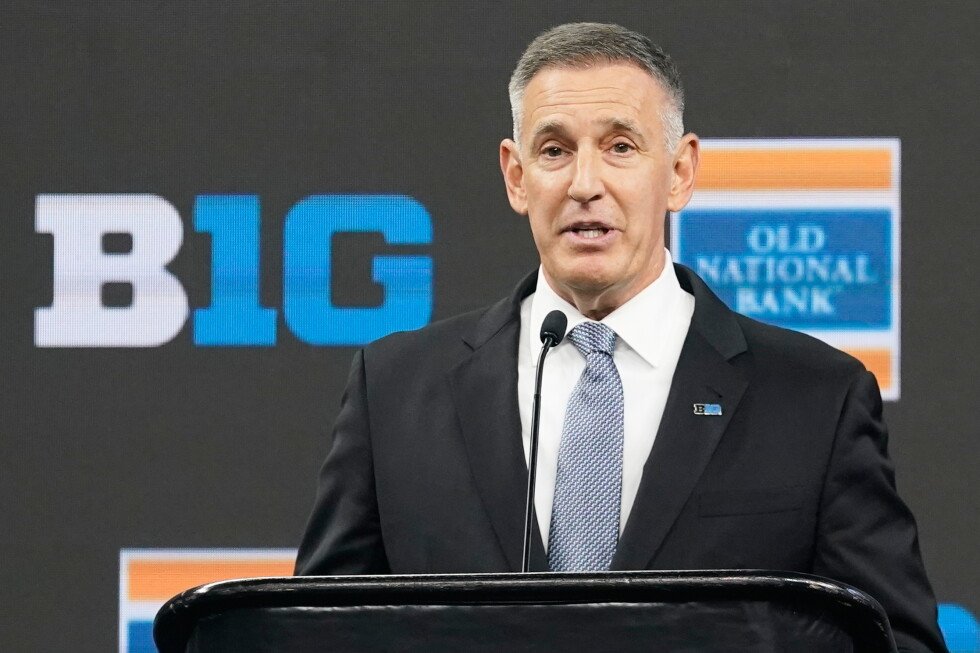
The Big Ten became the first conference Tuesday to adopt a rule barring football players who have signed professional contracts from returning to play at its 18 member schools as college sports finds itself mired in lawsuits and chaotic disputes over eligibility.
The move came a day after the agent for former Mississippi tight end Dae’Quan Wright said Wright could be heading to No. 11 LSU thanks to a state-level court order allowing him and others an unexpected fifth year of eligibility despite a NCAA rule change in June impacting players who graduated from high school in 2022. The NCAA is battling that one and other similar lawsuits around the country.
The Big Ten said its administrators unanimously approved the rule to prohibit football players who have signed a professional contract, were on a professional roster at any point or declared for the NFL draft as an underclassman without withdrawing, from maintaining eligibility for athletic competition. It did not rule out restrictions in other sports like basketball.
A head coach who plays a former pro will be suspended 50% of the season and his school will be fined, the Big Ten confirmed.
AP AUDIO: Big Ten bars football players with pro contracts from returning to play amid NCAA eligibility chaos
One major college football conference doesn’t want players returning from the pros. Correspondent Bruce Morton reports.
The topic is a hot one around college athletics. Wake Forest athletic director John Currie, chairman of the Atlantic Coast Conference ADs group for the upcoming season, said his colleagues planned to discuss the issue Wednesday.
“I don’t think anybody in our league likes the idea of taking away opportunities from existing college students and graduating high school players, which is exactly what is happening when a school signs a player out of an NFL camp to their team,” Currie wrote in a text message to The Associated Press.
Duke coach Manny Diaz said the Power Four conferences need to present a unified front. The Big 12 and Southeastern Conference have not announced steps, though the SEC ripped the potential for pros back in college in a statement late Monday.
“I think you’ll see more leagues start to govern themselves since we’re having such a hard time finding it at a national level,” Diaz said. “I think everyone understands it’s absolutely absurd. We can enjoy the fact that the players can benefit financially from playing in college now. At the same time, recognize the ultimate truth that we’re not a professional sports franchise. We are a collegiate, scholastic school activity, and we’ve got to rein that in.”
Agent Drew Rosenhaus told the AP on Monday that Wright had been waived by the Cleveland Browns and, if he clears waivers, will join Lane Kiffin’s roster at LSU. Wright played two seasons for Kiffin at Ole Miss.
Wright was among a group of players who sued in a Louisiana court, saying the new NCAA rule granting five years of eligibility to most athletes should apply to him and others who were not “grandfathered” into the rule, which did not include the high school Class of 2022.
“Over 100 athletes in multiple sports were cleared and said you could go play. That’s a court order,” Kiffin said Tuesday on “The Pat McAfee Show” on ESPN. “If you think back on all the different court orders of great players that were granted — whether that’s Diego Pavia or, now, Trinidad (Chambliss) that were allowed to play a sixth year, we followed all court orders. I think you get into a really interesting situation as a conference if you’re now saying, ‘Well, we’re not going to follow this court order.’’ These kids that a court says can go anywhere, we’re going to say, ‘No you can’t.’”
The situation has drawn sharp criticism among coaches in college and the NFL. Los Angeles Rams coach Sean McVay said reversing the college football-to-NFL pipeline was mind-boggling.
“I don’t know enough about it, other than the fact guys that can be in NFL camps, if it doesn’t go down for them, they can go back to college,” McVay said. “I mean, I feel like I took a freaking gummy. I don’t even understand it. It’s true. I mean, looking at this stuff, I’m like, surely that’s not real. But I just try to stay in my lane. But I would say it’s very unique and it’s very different.”
TCU coach Sonny Dykes, whose team plays North Carolina on Saturday in Ireland, said eligibility issues are out of control.
“”It’s a rudderless ship right now,” he said. “My question is, OK, you go and you take 10 guys off of an NFL roster and play them, who’s going to tell you that you can’t? Who’s in charge? What are they going to do? Your guess is as good as mine. I mean, I don’t know who’s in charge of football anymore. I applaud the Big Ten for doing that. I think that showed some leadership.”
Diaz said players returning from the NFL would be taking roster spots belonging to players who have gone through summer conditioning and preseason camp.
“I think there’s morale issues, there’s real-life consequences,” he said. “This is not pro sports where we just have the waiver wire and we just cut a dude and bring a dude in.”
In its statement, the SEC said it opposes professional athletes returning to play college sports.
“College athletes, not professional athletes, have been at the heart of the Southeastern Conference,” the SEC said. “Individuals who choose to leave college athletics, sign professional playing contracts, and compete professionally should not then be permitted to return to college competition. Allowing that to occur will blur the line between college and professional sports, create significant competitive equity concerns and reduce opportunities for high school and current college athletes.”
The SEC concluded its statement by calling on Congress to pass a bill regulating college sports.
It’s not the first time this summer that a major conference has been prompted to act against a lower-court order. A Texas judge cleared the way for quarterback Brendan Sorsby to play at Texas Tech despite his admission to gambling in what usually leads to an NCAA ban. Texas Tech supported the move, saying it was important for Sorsby’s mental health, but other members of the Big 12 Conference and the Big 12 itself indicated strong opposition and Sorsby eventually decided against trying to play again in college.
The NCAA last week won a temporary stay of a federal judge’s order that would have granted thousands of athletes an extra season of eligibility but the litigation has not stopped. Diaz said an overriding problem was seeing college sports legislated by individual judges whose rulings tend to benefit the interests of local universities. T
“You wouldn’t run any other type of corporation, organization, anything else the way we’re being run right now,” he said. “And so I hope the leagues do step up because somebody has to right now, because when there’s a vacuum, this is what you see.”
___
AP Sports Writers Aaron Beard and Stephen Hawkins and AP freelance writer Dan Greenspan contributed to this report.
___
Sign up for Top 25 poll alerts here, visit the Top 25 here and see AP’s full college football coverage here