
Education
Nashville HBCU Fisk University Launches $900M Campus Transformation

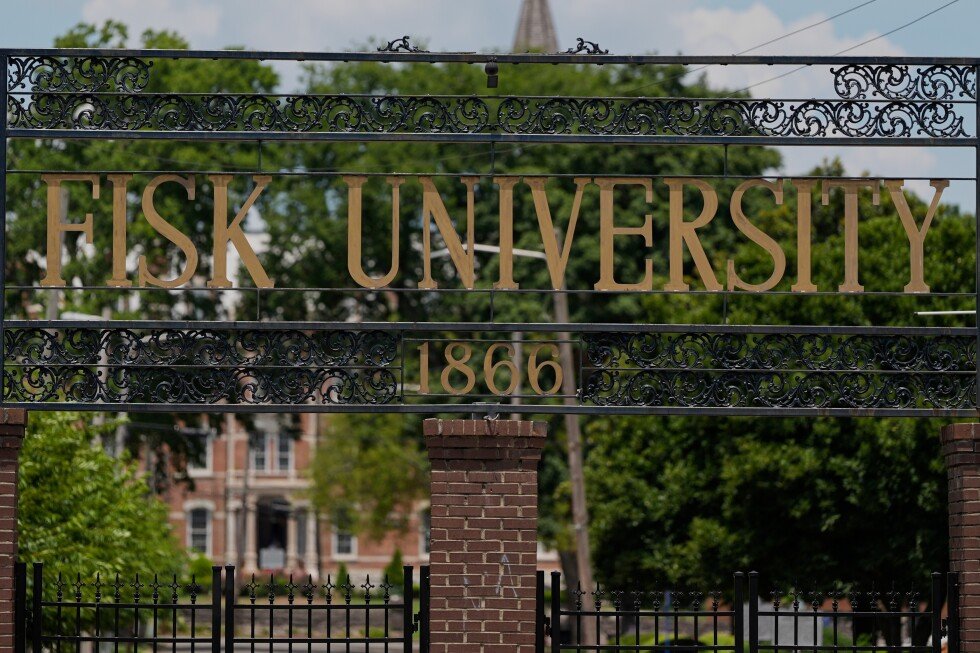
Fisk University President Agenia Clark on Thursday announced a $900 million plan to remake the historically Black university’s North Nashville campus, complete with a 100,000-square-foot data and technology center.
Details remain limited as the 160-year-old university, once home to civil rights luminaries like John Lewis and Ida B. Wells, embarks on the project, dubbed Quantum Leap. Fisk plans to renovate three residence halls and build at least five major projects: the data center, an annex for the John Lewis Center for Social Justice, a 120,000-square-foot sports arena, a 45,000-square foot student center and an 80,000-square-foot annex to the Carl Van Vechten Gallery.
Fisk is submitting the proposal to Metro for approval, Clark said.
The push comes amid a groundswell of opposition to data centers around the country, with residents expressing concerns about air and water quality, strain on power infrastructure and noise. More than 70 percent of Americans oppose constructing data centers for artificial intelligence in their community, according to newly released Gallup polling.
“If, along the way, we had identified instances where a project of this nature would do harm, we wouldn’t be here today,” Clark told reporters after the announcement, adding that the theme of the project is “do no harm.”
Asked whether Fisk has a partner for the data center, Clark said she is “not in a position to talk about that today.”
Don Hardin, owner of project and construction management firm Don Hardin Group and a partner on the Fisk project, said the team studied the impacts of data centers across the country “because we want to make sure we do it right.”
He said that Nashville Electric Service has assured the group that there is sufficient capacity to handle the data center’s electricity needs without increasing power bills for neighbors. Hardin also said the data center, at 30 megawatts, will be “fairly small” compared to other centers.
“We’re going to do everything we can to make sure we answer questions, make the campus feel comfortable, students feel comfortable and the community feels really good about what we’re doing in terms of noise mitigation, water consumption and energy usage,” Hardin said.
At an event in Fisk’s Jubilee Hall — joined by Mayor Freddie O’Connell, state and local lawmakers, Fisk faculty and students and philanthropic and business executives — Clark said the facility “will adhere to environmental standards, taking advantage of the most current technologies, that will not affect the quality of life for the residents of (ZIP code) 37208.”
Information about the financing of the overall project also remains limited.
“Every single piece of this master plan has a different financial model to it,” she said. “There will be fundraising. I can assure you that.”
Hardin said there is a list of priority projects and that projects will commence “as opportunities come about.” The annex at the John Lewis Center is likely first up and could be complete within two years. He said the data center is not expected to generate the revenue to complete the other projects.
“We look forward to being a vibrant partner to the state, to the city, and more importantly to you, as we strive to assure that Fisk’s history is here to stay, but its future is also an integral part of the city’s next decades,” Clark said.
___
This story was originally published by the Nashville Banner and distributed through a partnership with The Associated Press.