US Politics
Wall Street sell-off: London market plummets amid fears of US recession

Your support helps us to tell the story
From reproductive rights to climate change to Big Tech, The Independent is on the ground when the story is developing. Whether it’s investigating the financials of Elon Musk’s pro-Trump PAC or producing our latest documentary, ‘The A Word’, which shines a light on the American women fighting for reproductive rights, we know how important it is to parse out the facts from the messaging.
At such a critical moment in US history, we need reporters on the ground. Your donation allows us to keep sending journalists to speak to both sides of the story.
The Independent is trusted by Americans across the entire political spectrum. And unlike many other quality news outlets, we choose not to lock Americans out of our reporting and analysis with paywalls. We believe quality journalism should be available to everyone, paid for by those who can afford it.
Your support makes all the difference.
Read more
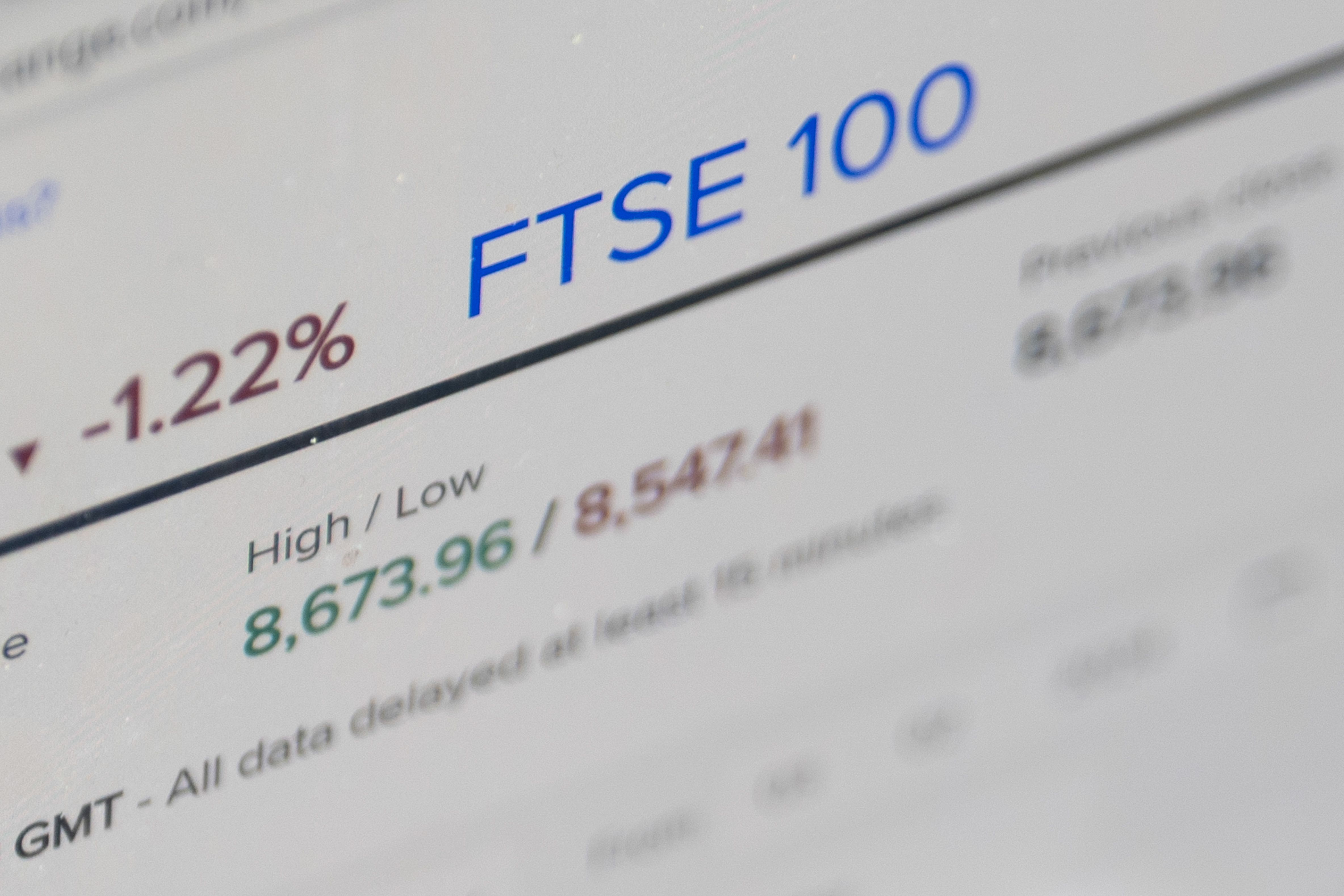
Global markets have tumbled amid renewed recession fears, with a significant sell-off across US markets impacting London’s FTSE 100.
It fell 79.66 points, a 0.92 per cent drop, closing at 8,600.22 on Monday.
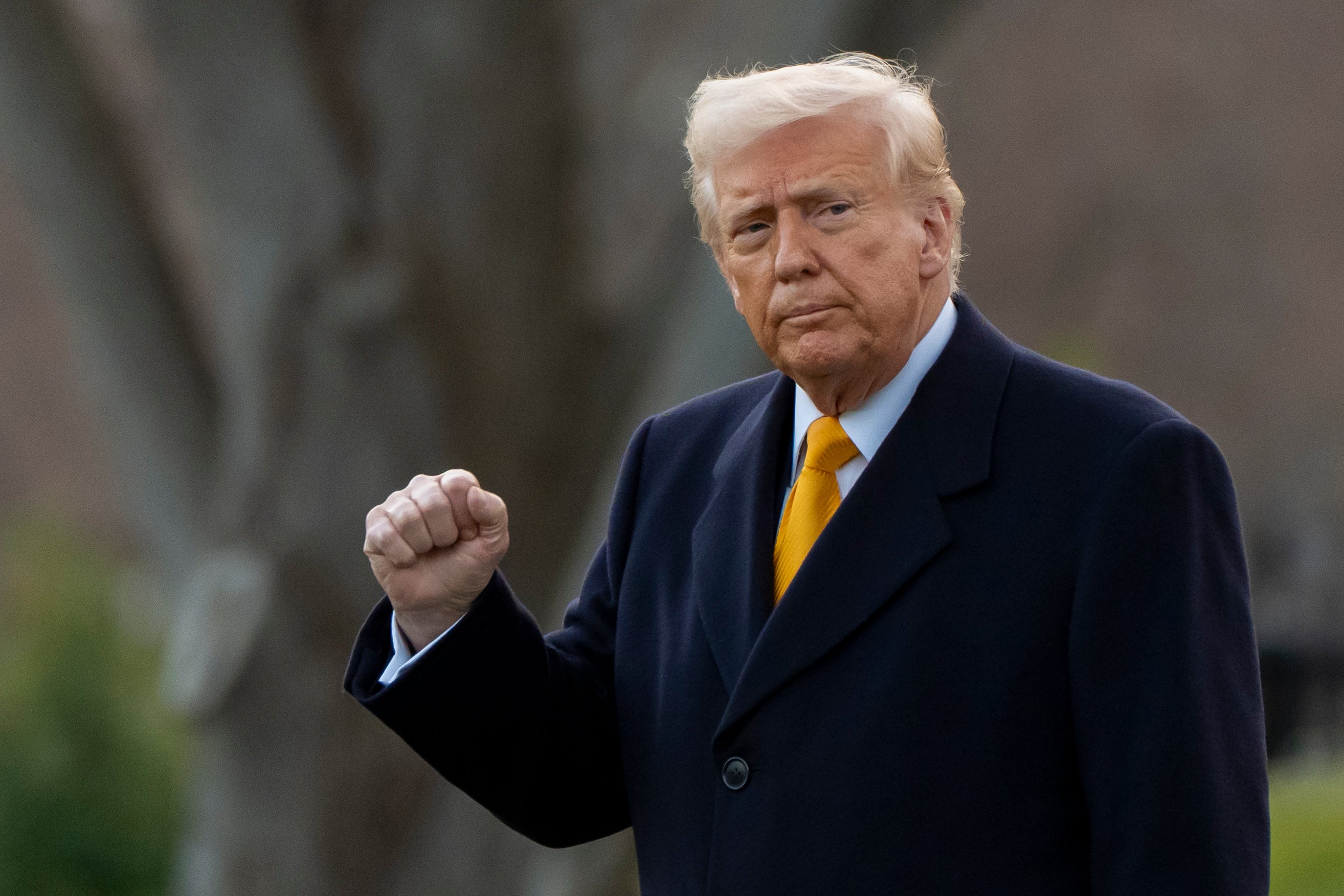
This follows a week of global market instability as investors grappled with the implications of US tariffs on Canada, Mexico, and China.
President Donald Trump’s fluctuating policy decisions, including a temporary suspension of tariffs on Canada and Mexico on Thursday, further unsettled markets.
By the close of European markets, the S&P 500 had plummeted 2.3 per cent, while the Dow Jones Industrial Average had fallen 1.2 per cent.
Analysts suggest several factors may be contributing to this widespread sell-off.
David Morrison, a senior market analyst for Trade Nation, said there was uncertainty surrounding tariffs, adding: “The president appears to be taking a scatter-gun approach in terms of targets, while teasing the markets with last-minute reprieves, delays or softening in scope.
“All-in-all, it’s proving difficult to price all this in.”
He also said there are “some concerns over the US economy”, with Trump ducking questions about whether the country was facing a recession during an interview aired on Sunday, and instead saying it was a time of “transition.”
Dan Coatsworth, investment analyst at AJ Bell, said: “The US market sell-off is starting to look ugly.

open image in gallery
“Many people have been worried about elevated valuations among US equities for some time and looking for the catalyst for a market correction.
“A combination of concerns about a trade war, geopolitical tensions and an uncertain economic outlook could be that catalyst.”
In Frankfurt, Germany’s Dax index suffered another sharp decline on Monday, closing 1.69 per cent lower. In Paris, the Cac 40 fell 0.9 per cent.
The pound was weakening against key currencies, falling about 0.3 per cent against the US dollar, at 1.289, and down about 0.2 per cent against the euro, at 1.19.
The price of Brent crude oil was down around 1.2 per cent to 69.60 US dollars per barrel.

open image in gallery
Shares in shipping broker Clarksons dived by a fifth after the company warned over the impact of geopolitical uncertainties, including trade tensions, tariffs, and ongoing global conflict.
Clarksons said this was causing rates charged by shipping companies to fall over the start of the year, which has brought down the value of deals. Its shares closed 21.7 per cent lower.
Meanwhile, shares in building materials firm Travis Perkins dropped 8.4 per cent after it announced CEO Pete Redfern was leaving due to health issues.
The biggest risers on the FTSE 100 were Kingfisher, up 9.5p to 268.6p, Whitbread, up 84p to 2,598p, Severn Trent, up 68p to 2,461p, National Grid, up 25.8p to 955.6p, and Land Securities, up 15p to 564p.
The biggest fallers on the FTSE 100 were Entain, down 62.4p to 661.2p, Rolls-Royce, down 68.6p to 732.8p, Intermediate Capital, down 124p to 2,004p, Anglo American, down 124p to 2,257.5p, and Barclays, down 14.2p to 284.55p.