US Politics
Trump’s strikes on Iran could cost American economy up to $210 billion, report says

Your support helps us to tell the story
From reproductive rights to climate change to Big Tech, The Independent is on the ground when the story is developing. Whether it’s investigating the financials of Elon Musk’s pro-Trump PAC or producing our latest documentary, ‘The A Word’, which shines a light on the American women fighting for reproductive rights, we know how important it is to parse out the facts from the messaging.
At such a critical moment in US history, we need reporters on the ground. Your donation allows us to keep sending journalists to speak to both sides of the story.
The Independent is trusted by Americans across the entire political spectrum. And unlike many other quality news outlets, we choose not to lock Americans out of our reporting and analysis with paywalls. We believe quality journalism should be available to everyone, paid for by those who can afford it.
Your support makes all the difference.
Read more
The U.S. war with Iran could cost the American economy as much as $210 billion, according to fiscal analyst Kent Smetters, director of the widely used Penn Wharton Budget Model.
The ongoing conflict is already driving disruption to trade, global energy markets, and gasoline prices, though it is difficult to precisely estimate how much the war will impact the economy, Smetters told Fortune.
His predictions currently estimate a $115 billion economic loss, though that figure could range between $50 billion and the upward bound of $210 billion depending on the nature and duration of the conflict.
“One problem I have with cost of war calculations is that they really do ignore the counterfactual,” he told the outlet. “If Iran really did get a nuclear weapon, then we might have spent a lot more on military and even repair of cities later on.”
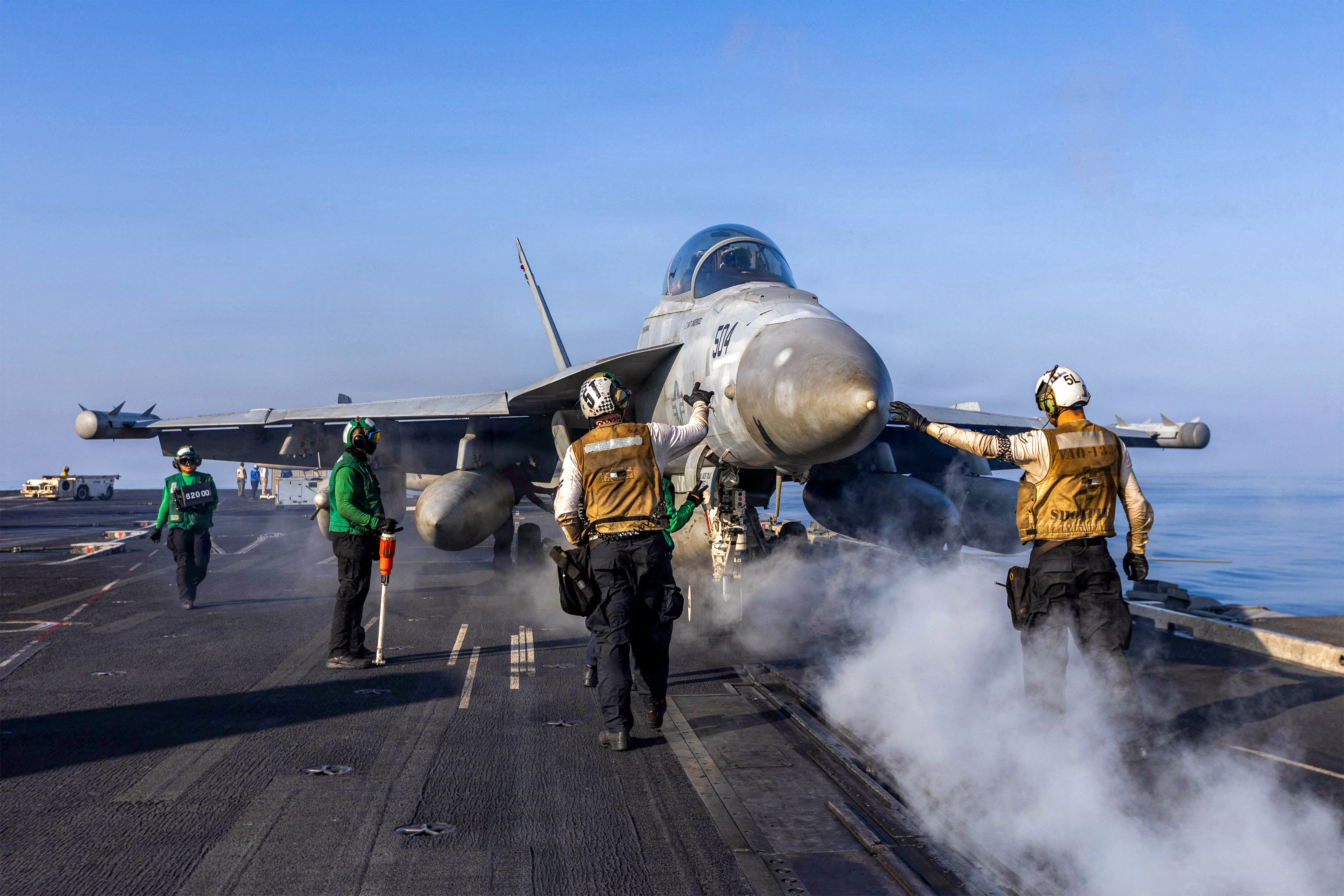
The president has already acknowledged the economic threat of the war, offering government-backed insurance and potential naval escorts to energy tankers moving through key chokepoints in the Gulf region.
“If necessary, the United States Navy will begin escorting tankers through the Strait of Hormuz, as soon as possible,” President Donald Trump announced on Tuesday on Truth Social. “No matter what, the United States will ensure the FREE FLOW of ENERGY to the WORLD. The United States’ ECONOMIC and MILITARY MIGHT is the GREATEST ON EARTH.”

open image in gallery
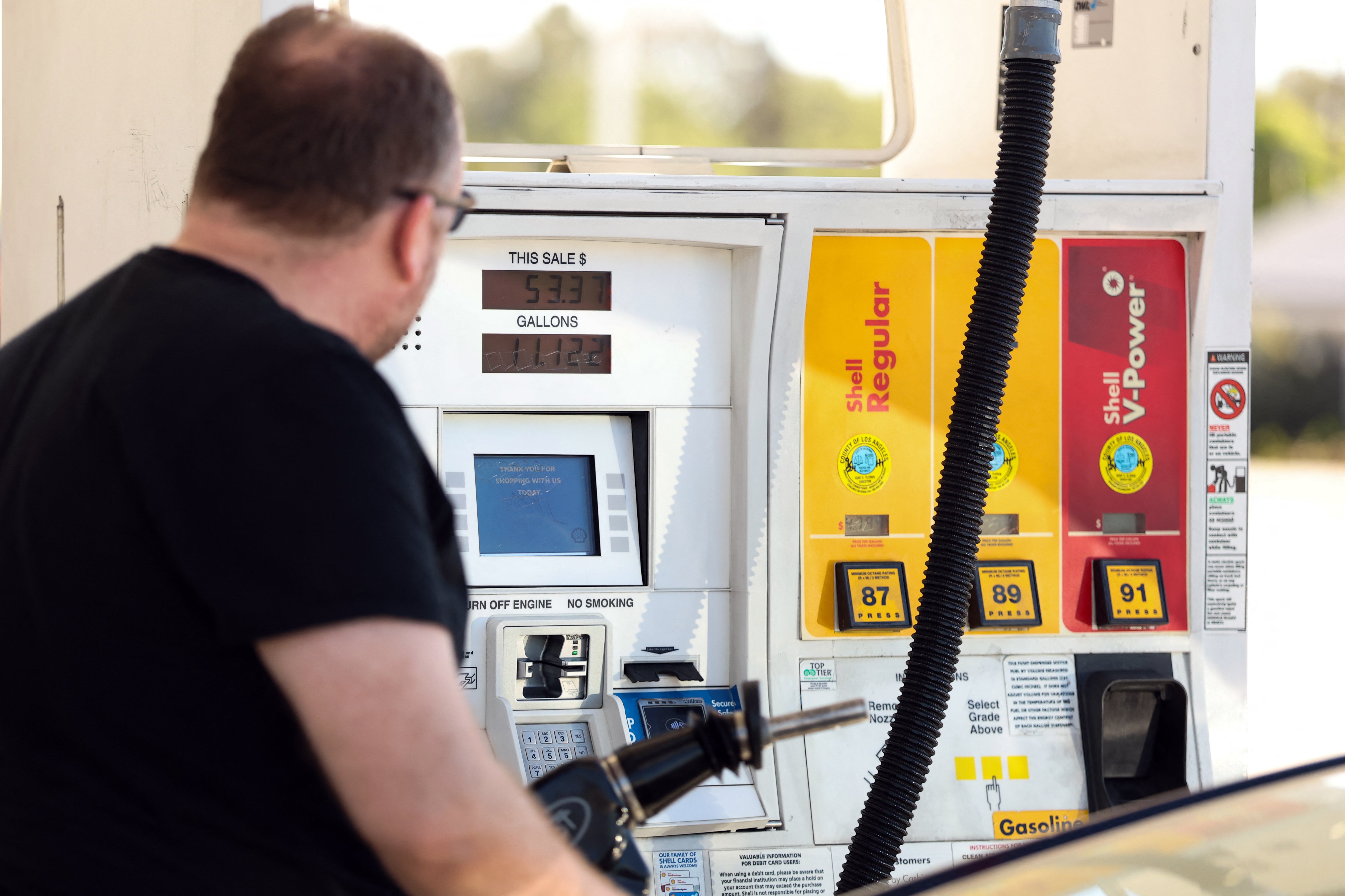
Speaking to reporters in Washington, Trump acknowledged that the war could mean oil prices will be higher “for a little while,” though he insisted once the conflict is over, “these prices are going to drop, I believe even lower than before.”
At the close of trading on Tuesday, prices for benchmark-setting West Texas Intermediate crude oil were up by more than 5 percent, and the national average price per gallon of gasoline was up more than 10 cents, according to the American Automobile Association.
Much of the economic impact of the war will depend on how long the conflict persists, according to analysts.
“Markets are right now really under-pricing the tail risk of a sustained engagement and an operation that does not wrap up quickly, restore travel through the Strait of Hormuz and get everything back to de-escalation and normal in a timely manner,” former Biden economic adviser and chief of policy and advocacy at the Groundwork Collaborative, Alex Jacquez, told The Associated Press.

open image in gallery
In addition to economic costs, the U.S. operation could cost another $65 billion in budgetary spending on the sprawling military campaign itself, which has seen the U.S. marshal air and naval forces toward Iran from bases across the region.
At present, it is “not possible at this time to know” how long the U.S. fight, dubbed Operation Epic Fury, will last, according to a letter the president sent Congress.
“Although the United States desires a quick and enduring peace, it is not possible at this time to know the full scope and duration of military operations that may be necessary,” Trump wrote Monday.
He has previously suggested the bombing could last “four to five weeks.”