US Politics
Trump puts an ‘I’ in ‘peace plan’ as he touts ‘one of the greatest days in civilization’ and makes it all about him

Your support helps us to tell the story
From reproductive rights to climate change to Big Tech, The Independent is on the ground when the story is developing. Whether it’s investigating the financials of Elon Musk’s pro-Trump PAC or producing our latest documentary, ‘The A Word’, which shines a light on the American women fighting for reproductive rights, we know how important it is to parse out the facts from the messaging.
At such a critical moment in US history, we need reporters on the ground. Your donation allows us to keep sending journalists to speak to both sides of the story.
The Independent is trusted by Americans across the entire political spectrum. And unlike many other quality news outlets, we choose not to lock Americans out of our reporting and analysis with paywalls. We believe quality journalism should be available to everyone, paid for by those who can afford it.
Your support makes all the difference.
Read more
The president of the United States barely stopped to consider the possibility of failure on Monday as he touted his 20-point plan for peace in Gaza alongside Benjamin Netanyahu and centered himself in the spotlight he’d been chasing for months.
Since the 2024 election the Republican twice-president has been publicly pining for his shot at ending a conflict between Israel and Hamas.
Trump has spent almost the entire first eight months of his presidency coming up with different conflicts to “solve” in lieu of actually delivering on the two promises he made during the campaign: to end wars in Ukraine and Gaza. In Europe, the respective parties seem no closer to peace as the White House’s rhetoric around Vladimir Putin, Russia’s president, seems to be souring.
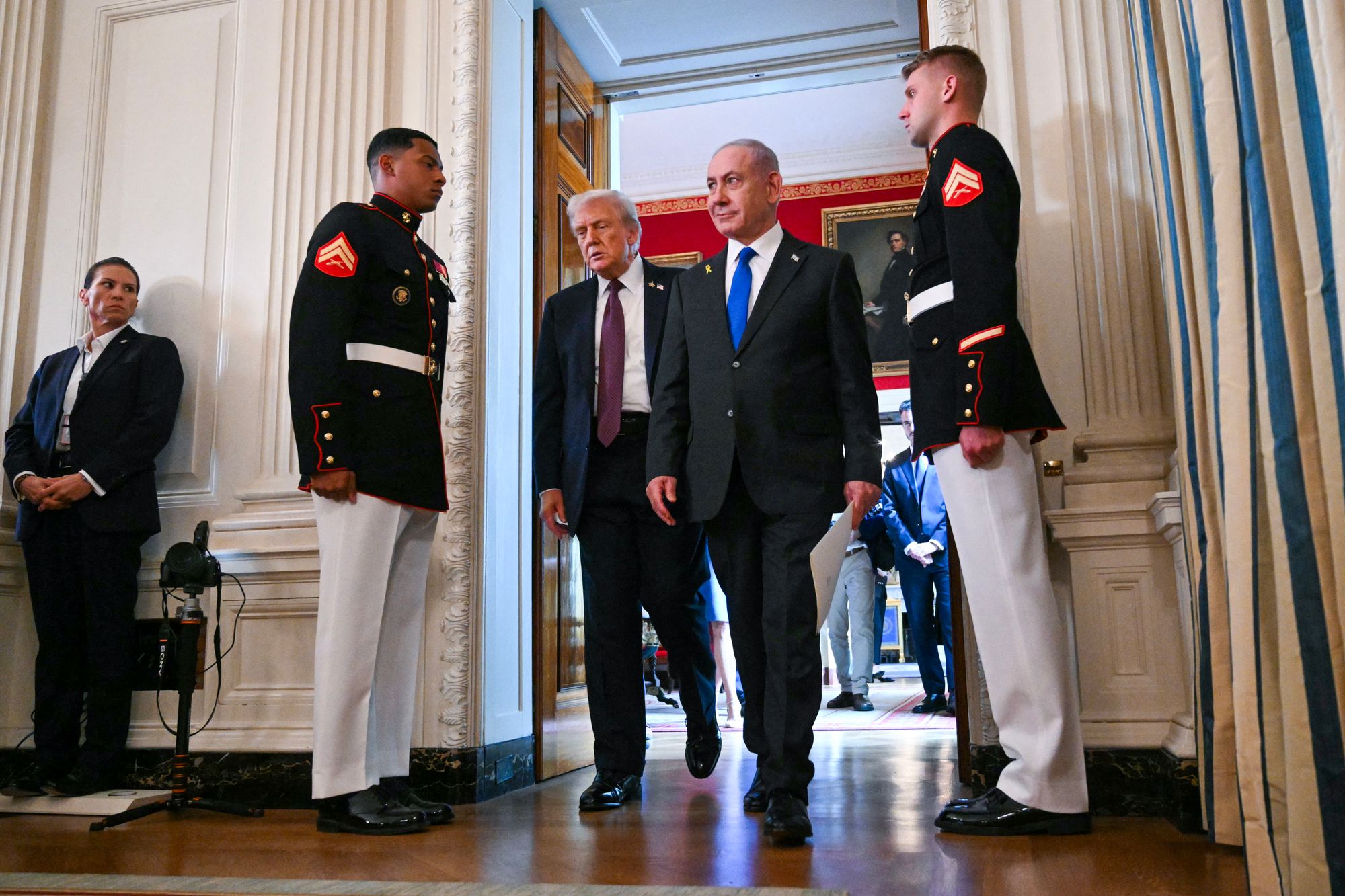
On Monday, Trump stood beside Israeli Prime Minister Benjamin Netanyahu and declared that peace was on the horizon, if only Hamas were to accept the terms engineered without their representatives’ consultation. A potential peace deal would create a security buffer zone separating Israeli and Palestinian territory while halting the war “immediately” and beginning a multi-stage withdrawal of Israeli forces from the Gaza Strip.
There are many questions left unanswered: whether the deal can proceed without any movement from Israel on the issue of eventual recognition of a Palestinian state, and who will be the other members of a so-called “Board of Peace” chaired by Trump himself — Tony Blair is the only other named member.

open image in gallery
But what was very clear was the U.S. president’s real aim here: to position himself as a Clinton-esque broker of peace in the region and to be seen as having brought both Israel and Hamas into line, even if the reality of the situation doesn’t match up.
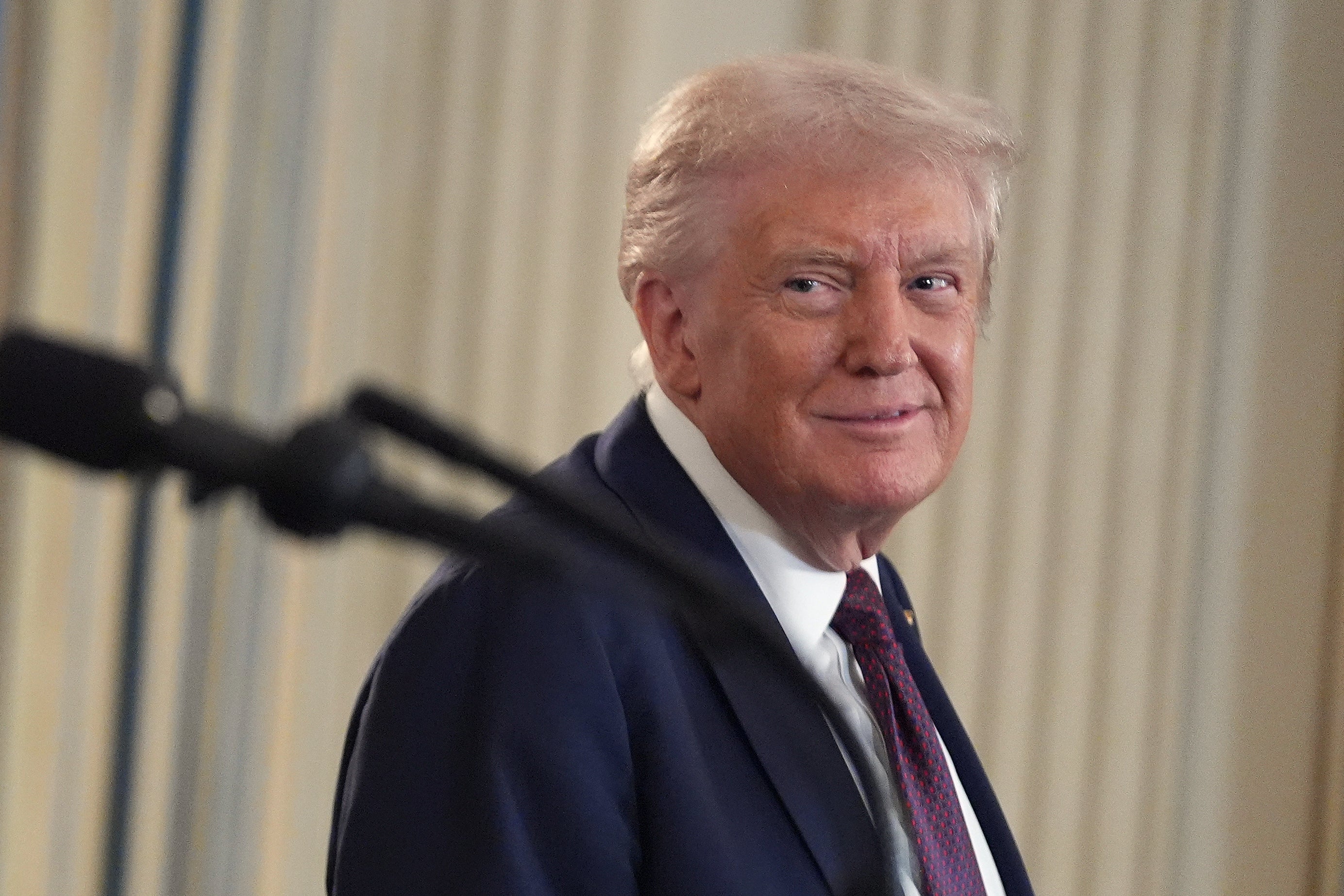
The president’s ambition was most obvious as he described his role on the “Board of Peace” governing Gaza in the short- to medium-term: “Everybody involved asked me to do this.”
“It will be headed by a gentleman known as President Donald J. Trump of the United States…that’s just what I want, is some more work to do. But it’s so important that I’m willing to do it.”

open image in gallery
He also repeatedly stressed the supposed historic nature of the deal, at one point claiming that European leaders were falling over themselves to praise him: “I was called by many European leaders, most of them say, ‘Is this true? Are you really doing peace in the Middle East? This is the most incredible thing we’ve heard.’ Some think it’s the biggest thing they’ve ever heard. They call just to find out; is it just a rumor, or is it actually done?”
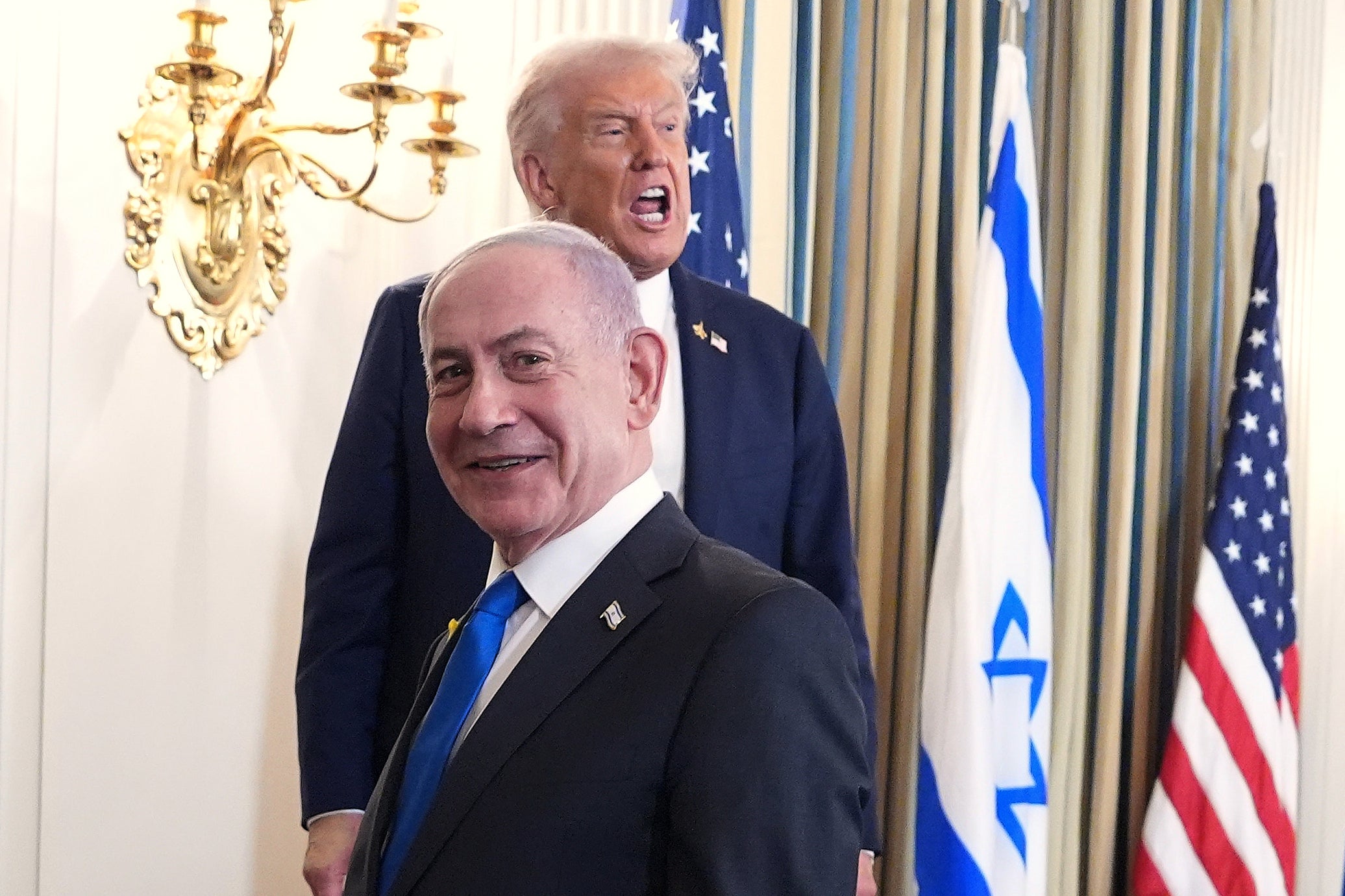
The president’s tongue-in-cheek declaration of self sacrifice followed the other shiny object he offered to the media and observers of his dealmaking efforts on Monday: the surprise announcement that Israel’s prime minister, at Trump’s behest, had spoken with Qatar’s leaders on the phone and apologized for violating Qatari sovereignty with a strike aimed at Hamas political leadership.

open image in gallery
That moment, notable on its own, was coupled with the president’s admission that Netanyahu had seemingly not budged on opposition to Palestinian statehood, either in the immediate or long term. The Israeli leader’s refusal to budge on that position was one of several factors blamed for a peace agreement not being reached under the previous U.S. administration.
With no signs Netanyahu had been moved towards embracing the idea of eventual statehood for a Palestinian territory, and no signs of Hamas even having been consulted on the terms, it seemed that little progress was truly made towards a permanent peace agreement being signed.
A Hamas spokesperson told news outlets that the militant group hadn’t received a written copy of the proposal as of Trump’s White House event with Netanyahu on Monday. A statement from the Palestinian Authority welcomed the deal’s proposed terms.
The White House and many in the media quickly pushed the notion that the ball is in Hamas’s court on Monday. But Trump, too, is under growing pressure to show that his peacemaking efforts aren’t just a bunch of smoke and mirrors as his party rushes towards the 2026 midterms and the president bets his credibility on a bid to solve one of the most bitter conflicts on Earth.