US Politics
Trump offers $12 billion taxpayer bailout for farmers harmed by his tariff policies

Your support helps us to tell the story
From reproductive rights to climate change to Big Tech, The Independent is on the ground when the story is developing. Whether it’s investigating the financials of Elon Musk’s pro-Trump PAC or producing our latest documentary, ‘The A Word’, which shines a light on the American women fighting for reproductive rights, we know how important it is to parse out the facts from the messaging.
At such a critical moment in US history, we need reporters on the ground. Your donation allows us to keep sending journalists to speak to both sides of the story.
The Independent is trusted by Americans across the entire political spectrum. And unlike many other quality news outlets, we choose not to lock Americans out of our reporting and analysis with paywalls. We believe quality journalism should be available to everyone, paid for by those who can afford it.
Your support makes all the difference.
Read more
President Donald Trump has announced a $12 billion program that will see the Department of Agriculture dole out as much as $12 billion in taxpayer funds to bail out American farmers who have been hit hard by low crop prices and decreased demand for their products as a result of the president’s tariff policies.
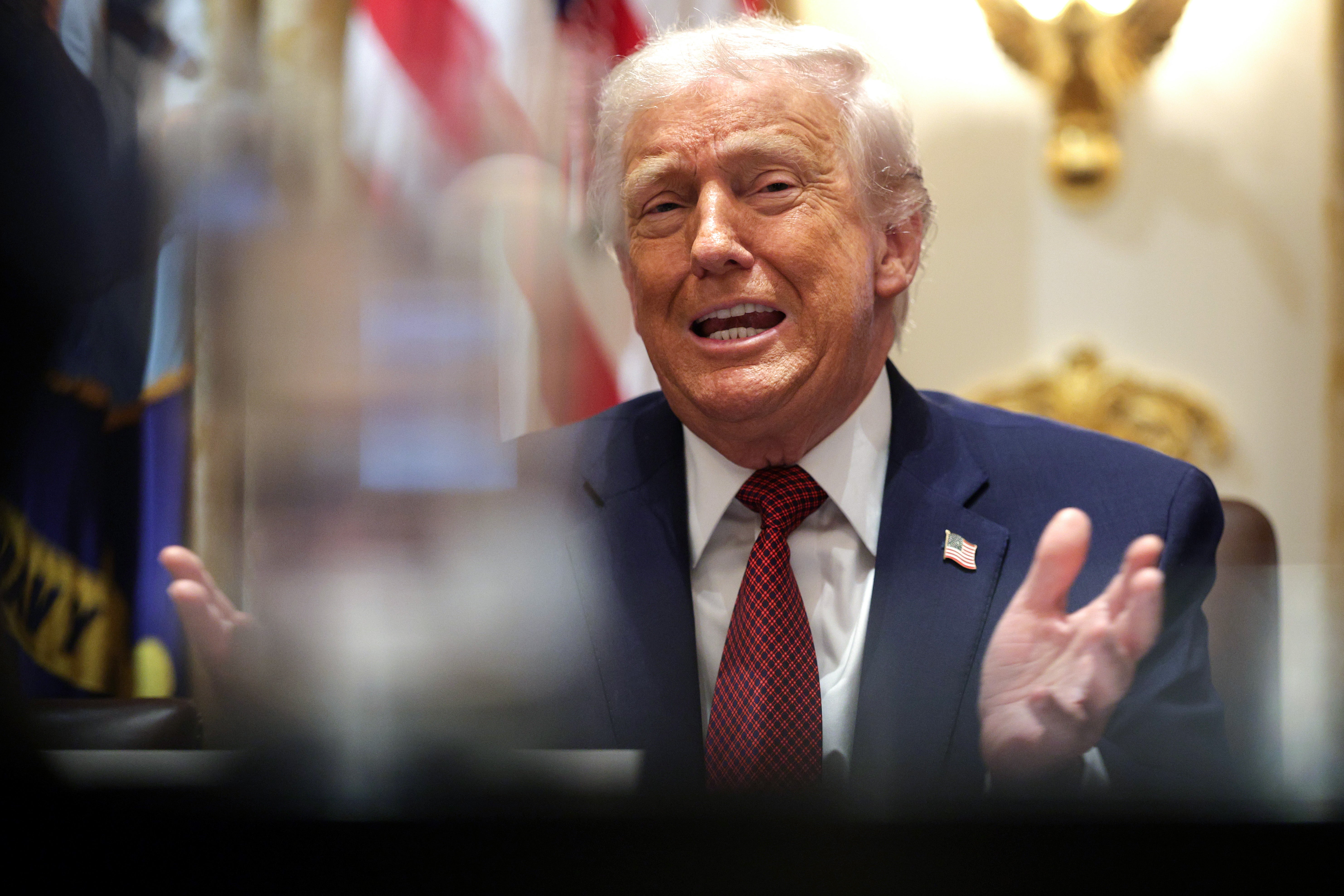
Trump unveiled the program on Monday during a roundtable event at the White House alongside Treasury Secretary Scott Bessent and Agriculture Secretary Brooke Rollins.
He falsely claimed it would utilize a “small portion of the hundreds of billion dollars” his administration has collected from American importers and consumers through tariffs and called the bailout payments “economic assistance to farmers.”
“This relief will provide much needed certainty to farmers as they get this year’s harvest to market and look ahead to next year’s crops, and it will help them continue their efforts to lower food prices for American families,” he said.
While Trump claimed his administration would use tariff revenue to help the farmers harmed by those same tariffs, Agriculture Secretary Brooke Rollins later told reporters that the funds for the $12 billion bailout will come from the Commodity Credit Corporation, an agency within the Department of Agriculture that finances farm safety net programs, often through borrowing as much as $30 billion from the treasury and private lenders.
Though Trump’s tariff policies and retaliatory actions by foreign governments are largely responsible for the shortfalls faced by farmers this year, Trump blamed his predecessor for having “crushed” farmers with “the worst inflation in modern history and crippling restrictions on energy, water and countless other necessities.”
The bailout will draw as much as $11 billion for one-time payments to farmers under a new program from the Department of Agriculture called Farmer Bridge Assistance, plus another billion allocated to crops that aren’t covered by the first program.

The new initiative mirrors Trump’s response to tariff-induced hardships felt by farmers during his first term, when he gave $28 billion in taxpayer handouts to farmers harmed by his tariff policies in an effort to maintain their support ahead of the 2020 election.
According to a White House official, the new program would be open to farmers whose adjusted gross income for the last two tax years was under $900,000, with the payments the farmers will receive to be determined by how many acres of crops they report to the department.
Farmers will have until December 19 to apply, with the payment rates being released by the end of the month.
The administration expects the bailout program to be completed by the end of February 2026 if not before.
News of the program, which was was first reported by Bloomberg, comes as Americans are reeling from higher prices on imports from nearly every American trading partner caused by Trump’s tariff policies, which are currently the subject of a pending Supreme Court case that could result in many of the import taxes he has levied under emergency powers being thrown out.
Farmers have been hit particularly hard by the barrage of tariffs, as U.S. trading partners such as China have clamped down on their purchases of American agricultural products in retaliation for their products being taxed by the United States.
According to the Agriculture Department, China has gradually increased soybean purchases after an October agreement between Trump and Chinese president Xi Jinping meant to de-escalate some of the Sino-American trade tensions.
The department said China has purchased 2.25 million tons of soybeans since the end of October, roughly a sixth of the 12 million tons Beijing purportedly pledged to purchase.