US Politics
Trump nominee for Southern Command pressed on Latin America military operations

Your support helps us to tell the story
From reproductive rights to climate change to Big Tech, The Independent is on the ground when the story is developing. Whether it’s investigating the financials of Elon Musk’s pro-Trump PAC or producing our latest documentary, ‘The A Word’, which shines a light on the American women fighting for reproductive rights, we know how important it is to parse out the facts from the messaging.
At such a critical moment in US history, we need reporters on the ground. Your donation allows us to keep sending journalists to speak to both sides of the story.
The Independent is trusted by Americans across the entire political spectrum. And unlike many other quality news outlets, we choose not to lock Americans out of our reporting and analysis with paywalls. We believe quality journalism should be available to everyone, paid for by those who can afford it.
Your support makes all the difference.
Read more
A U.S. Marine Corps general, tapped to lead American military operations in Latin America, told lawmakers Thursday he is ready to oversee an expanded presence that began before Venezuelan leader Nicolás Maduro’s capture, but admitted he does not know how long this heightened focus will endure.
If confirmed by the Senate, Lieutenant General Francis Donovan will take over U.S. Southern Command. He would replace Navy Admiral Alvin Holsey, who retired last year amid scrutiny of the Trump administration’s deadly strikes on alleged drug boats in the region – a significant extension of U.S. power.
U.S. troops earlier this month deposed and apprehended Maduro, culminating a pressure campaign that began with the largest military buildup in the region for generations, expanding to dozens of attacks on alleged drug boats and the seizure of sanctioned oil tankers connected to Venezuela.
Democrats and Senator Angus King, an Independent, pressed Lt Gen Donovan for details on his oversight of Southern Command and the Trump administration’s long-term regional plans. Lt Gen Donovan, however, said he didn’t know.

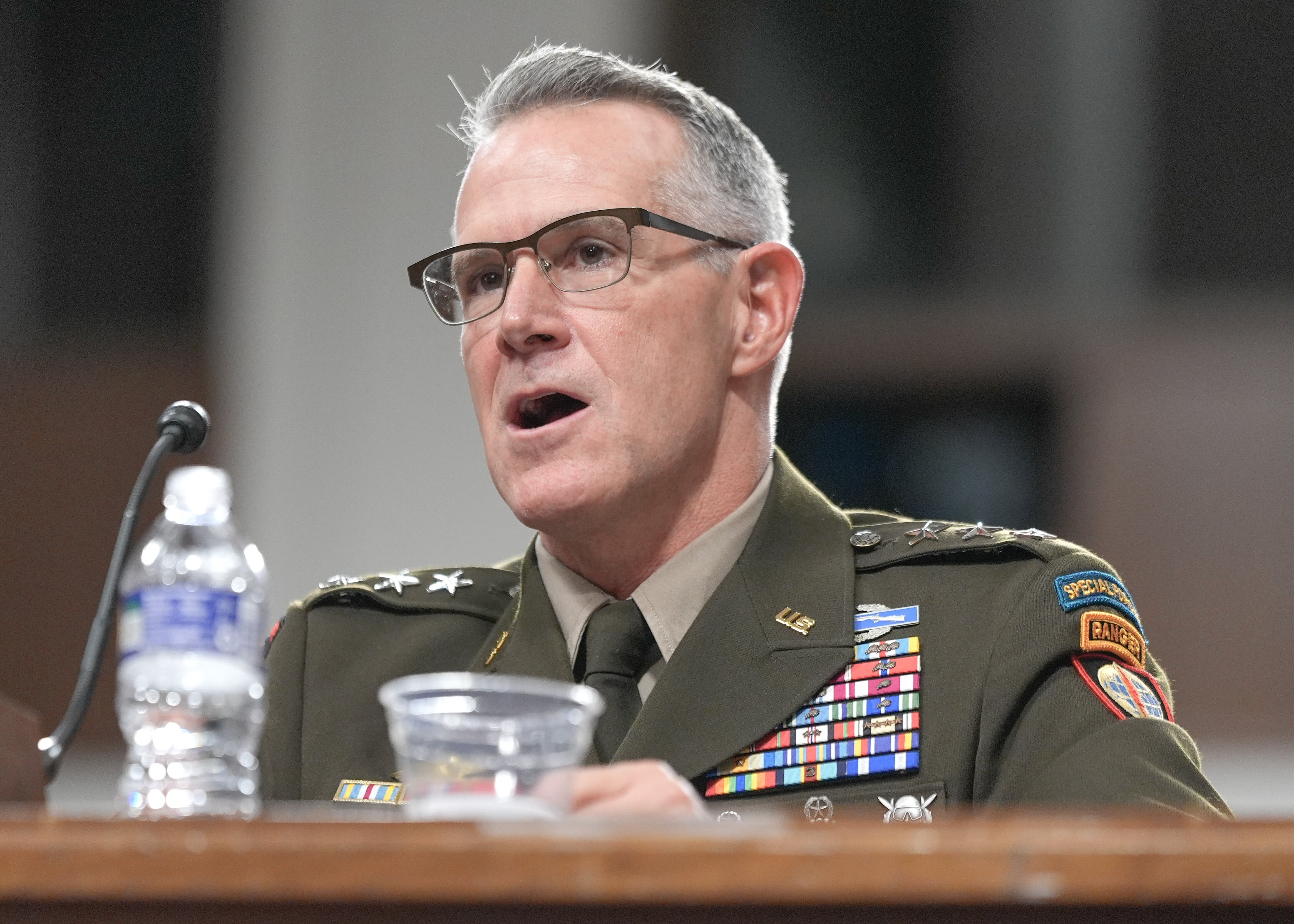
“So you don’t know what the plan is now? You don’t know why all those ships and aircraft and soldiers are there?” King asked.
“Senator, I do not,” Donovan said, explaining that he isn’t involved in military plans for the region in his current role as vice commander of the U.S. Special Operations Command.
But Donovan acknowledged that the renewed interest in Latin America is likely to bring changes to the Southern Command, which is headquartered in Doral, Florida.
“Do you expect, because of this pivot to the Western Hemisphere, that SouthCom this year is going to have to be much different than SouthCom last year?” asked Sen. Mark Kelly, an Arizona Democrat.
“Yes I do,” Donovan replied.
The confirmation hearing before the Senate Armed Service Committee was the latest effort by some lawmakers to question the Trump administration over its military operations in Latin America and its justification for the boat strikes, which have prompted concerns about international law and the use of force.
Lawmakers also questioned Lt. Gen. Joshua Rudd, nominated to lead the National Security Agency, over his views on surveillance and concerns that the NSA could be used against innocent Americans.
Sen. Elissa Slotkin of Michigan, a former CIA analyst, said she worries that the Trump administration could order the NSA to spy on Americans because of their political views or speech, something she said is expressly forbidden by federal law.
“Will you reject that?” asked Slotkin, who is one of several Democratic lawmakers who say they face criminal investigation by the Trump administration after appearing in a video urging service members to resist illegal orders.
“Senator, if confirmed, I will execute my responsibilities in accordance with the Constitution and all applicable laws,” Rudd said.
The NSA has been without a permanent director since Trump fired Gen. Tim Haugh last year. The NSA director also runs the Pentagon’s Cyber Command, giving it a critical role in the nation’s defensive and offensive cyber capabilities.
Lawmakers from both parties said they expect the nominations to be approved. A vote has not been announced.