US Politics
Trump has ordered a critically ill four-year-old Mexican girl to leave the country. She could die within days, experts say

Your support helps us to tell the story
From reproductive rights to climate change to Big Tech, The Independent is on the ground when the story is developing. Whether it’s investigating the financials of Elon Musk’s pro-Trump PAC or producing our latest documentary, ‘The A Word’, which shines a light on the American women fighting for reproductive rights, we know how important it is to parse out the facts from the messaging.
At such a critical moment in US history, we need reporters on the ground. Your donation allows us to keep sending journalists to speak to both sides of the story.
The Independent is trusted by Americans across the entire political spectrum. And unlike many other quality news outlets, we choose not to lock Americans out of our reporting and analysis with paywalls. We believe quality journalism should be available to everyone, paid for by those who can afford it.
Your support makes all the difference.
Read more
A critically ill Mexican girl who could die within days if her treatment is paused has been ordered by the Trump administration to leave the U.S., according to her family and doctor.
Deysi Vargas’s 4-year-old daughter, named only as Sofia in a GoFundMe page, urgently required better medical care for a life-threatening condition and was granted temporary humanitarian permission to enter the U.S. from her home country of Mexico in 2023, The Los Angeles Times reports.


open image in gallery
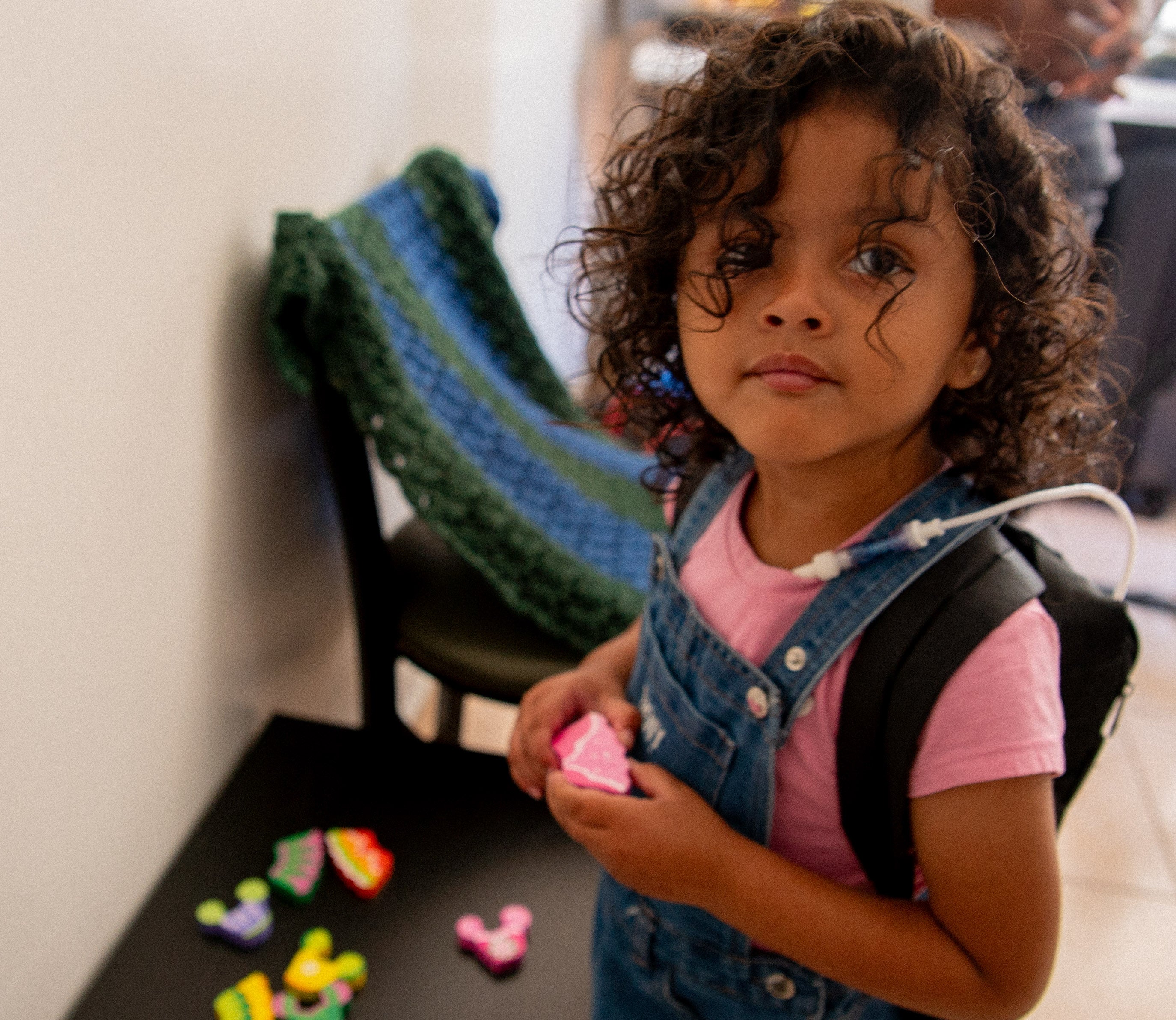
Sofia has short bowel syndrome, a rare condition that stops her from absorbing nutrients in food. When she was born in Playa del Carmen, Mexico, she had to be attached to feeding tubes 24 hours a day. Since moving to the U.S., her condition has significantly improved, but she still requires treatment every day.
Now the Trump administration has ordered Sofia’s deportation, leaving her at risk of death, an attorney representing the family said.
“This is a textbook example of medical need,” Rebecca Brown of the pro bono firm Public Counsel told the paper. “This child will die and there’s no sense for that to happen. It would just be a cruel sacrifice.”
The family is currently living in Bakersfield, California, just over 100 miles north of Los Angeles.
The threat to Sofia’s life was confirmed by Dr. John Arsenault of the Children’s Hospital Los Angeles, where she receives regular treatment every six weeks.

open image in gallery
Arsenault said in a letter seen by The Los Angeles Times that if there is an interruption to administering nutrition to her system, “it could be fatal within a matter of days.”
The doctor added that patients who receive the treatment, called Total Parenteral Nutrition, at home “are not allowed to leave the country.”
“The infrastructure to provide TPN or provide immediate intervention if there is a problem with IV access depends on our program’s utilization of U.S.-based healthcare resources and does not transfer across borders,” Arsenault explained in the letter.
The Independent has contacted the U.S. Citizenship and Immigration Services for comment.
Sofia was born one month premature and had to undergo six surgeries due to an intestinal blockage, as medics struggled to get the condition under control in Mexico.
During one surgery, Vargas, 28, told the newspaper that doctors cut out too much, leaving Sofia with short bowels. One blood infection she suffered as a result nearly killed her.

.jpg)
open image in gallery
While she was being kept alive in Mexico, her condition was no better by the age of two and Vargas knew the family would have to move to get her better care.
Vargas signed up to the Biden administration’s CBP One app to book an appointment with border agents in Tijuana to receive two-year protection from deportation. The app is now used by the Trump administration to notify migrants to self-deport or face the consequences.
At the appointment on July 31, 2023, agents could tell that Sofia was seriously unwell just by taking one look at her. “God knew she needed better treatment,” Vargas told The Los Angeles Times. “When we got to the entrance, they saw her and asked us if we needed medical help.”
That same day, the family was taken to Rady Children’s Hospital-San Diego and her condition improved quickly. A year later, Sofia was referred to the Children’s Hospital Los Angeles, which has one of the highest-ranked programs for gastroenterology in the U.S.
Under their care, by September 2024, Sofia was discharged and could receive treatment in the comfort of her home. Meanwhile, her parents were working hard to hold down odd jobs in Bakersfield.


open image in gallery
“It was incredible,” Vargas, who found a steady job as a cleaner at a restaurant, told the outlet. “I had waited so long for doctors to tell me, ‘Ma’am, your daughter is OK now. She can go home.’”
Sofia’s care is still gruelling. She must still spend 14 hours a night hooked up to the intravenous feeding system and Vargas also has to administer different medication that goes into her stomach through a gastric tube four times a day. At preschool, a school nurse has to administer nutrition daily.
As things were beginning to look up, the notice from immigration arrived, swiftly followed by a notice terminating her employment authorization.
Their attorney believes the family’s legal status was terminated by mistake and has submitted a petition for a continuation of temporary humanitarian legal status because of Sofia’s medical condition.
“This is the intended purpose — to help the most vulnerable who need attention here,” Brown said. “We can avoid having harmed the child and the family.”
Vargas added that they only intend to stay for as long as Sofia requires treatment, which is unclear.