US Politics
Trump asks Supreme Court to approve his tariffs after warning US would be ‘destroyed’ if they don’t go ahead

Your support helps us to tell the story
From reproductive rights to climate change to Big Tech, The Independent is on the ground when the story is developing. Whether it’s investigating the financials of Elon Musk’s pro-Trump PAC or producing our latest documentary, ‘The A Word’, which shines a light on the American women fighting for reproductive rights, we know how important it is to parse out the facts from the messaging.
At such a critical moment in US history, we need reporters on the ground. Your donation allows us to keep sending journalists to speak to both sides of the story.
The Independent is trusted by Americans across the entire political spectrum. And unlike many other quality news outlets, we choose not to lock Americans out of our reporting and analysis with paywalls. We believe quality journalism should be available to everyone, paid for by those who can afford it.
Your support makes all the difference.
Read more
Donald Trump has appealed to the U.S. Supreme Court to overturn a lower court’s ruling that the basis for his “reciprocal tariffs” policy was not legal, having warned the country would be “destroyed” without it.
The Court of Appeals ruled on Friday in agreement with a May finding by the Court of International Trade that the president had overstepped his authority by invoking a law known as the International Emergency Economic Powers Act 1977 to place hefty levies on goods imported from America’s trading partners.
Trump was incensed by the decision, insisting it was “highly partisan” and “would literally destroy the United States of America.”

open image in gallery
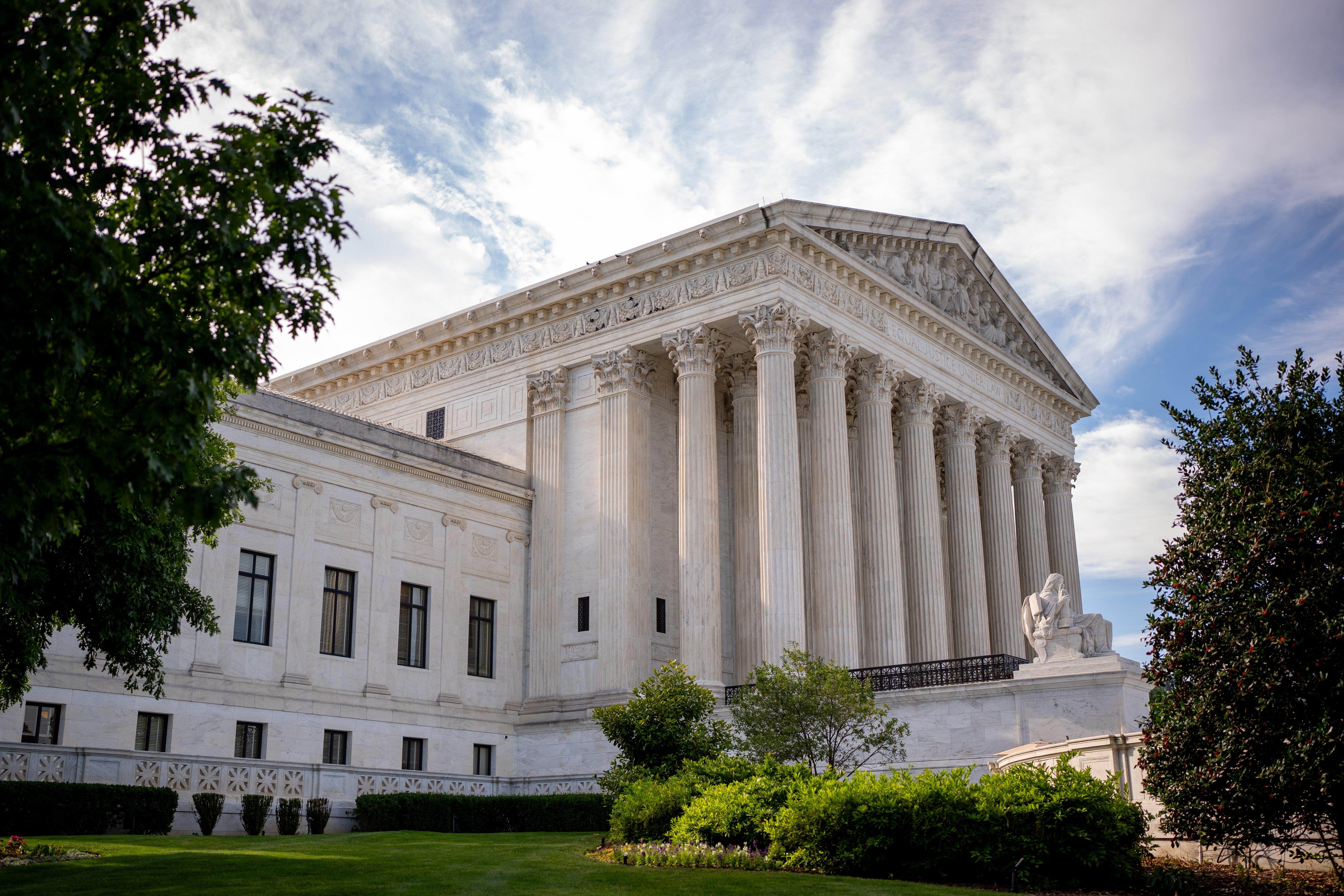
Now, the administration has asked the conservative-majority Supreme Court to decide whether to take up the case by September 10, despite its new term not beginning until October 6, with a view to hearing arguments in November.
“The stakes in this case could not be higher,” Solicitor General D John Sauer wrote in his filing. “The president and his cabinet officials have determined that the tariffs are promoting peace and unprecedented economic prosperity, and that the denial of tariff authority would expose our nation to trade retaliation without effective defenses and thrust America back to the brink of economic catastrophe.”
Attorneys representing small businesses challenging the tariff program said they were not opposed to the Supreme Court hearing the matter and said, on the contrary, they were confident their arguments would prevail.
“These unlawful tariffs are inflicting serious harm on small businesses and jeopardizing their survival,” said Jeffrey Schwab of Liberty Justice Center. “We hope for a prompt resolution of this case for our clients.”


open image in gallery
Trump announced his “Liberation Day” tariffs in the White House Rose Garden on April 2, invoking the IEEPA to set a 10 percent baseline tax on all imports and even higher taxes on goods being shipped from nearly every one of America’s trading partners, with China, Canada and Mexico among those hardest hit.
However, his announcement sent shockwaves through the world’s stock markets as investors panicked over their likely economic consequences, eventually forcing Trump into a rethink. He duly announced a week later that the implementation of the tariffs would be suspended for 90 days, a deadline that was eventually extended until August.
Administration officials led by Commerce Secretary Howard Lutnick used the intervening summer months to attempt to broker custom deals with other countries but only succeeded in securing a handful of agreements, notably with the U.K. and Vietnam.
A revised list of tariffs that came into effect on August 7 saw India (51 percent), Syria (41 percent), Laos (40 percent), Myanmar (4o percent) and Switzerland (39 percent) particularly hard done by.
Then, last week, the Court of Appeals agreed with two challenges, one brought by the small businesses and another by 12 states, to rule in a seven-four majority decision that the president’s power to regulate imports under the law does not include the power to impose tariffs.
“It seems unlikely that Congress intended, in enacting IEEPA, to depart from its past practice and grant the president unlimited authority to impose tariffs,” the justices wrote in their decision.
They added that U.S. law “bestows significant authority on the president to undertake a number of actions in response to a declared national emergency, but none of these actions explicitly include the power to impose tariffs, duties, or the like, or the power to tax.”