
US Politics
Trump administration settles meatpacking antitrust case in effort to lower grocery prices

Your support helps us to tell the story
From reproductive rights to climate change to Big Tech, The Independent is on the ground when the story is developing. Whether it’s investigating the financials of Elon Musk’s pro-Trump PAC or producing our latest documentary, ‘The A Word’, which shines a light on the American women fighting for reproductive rights, we know how important it is to parse out the facts from the messaging.
At such a critical moment in US history, we need reporters on the ground. Your donation allows us to keep sending journalists to speak to both sides of the story.
The Independent is trusted by Americans across the entire political spectrum. And unlike many other quality news outlets, we choose not to lock Americans out of our reporting and analysis with paywalls. We believe quality journalism should be available to everyone, paid for by those who can afford it.
Your support makes all the difference.
Read more
The Trump administration has announced a proposed settlement in an antitrust case targeting Agri Stats, a data-sharing company for the meatpacking industry.
The federal government had accused Agri Stats of practices that contributed to inflated grocery prices, a case initially brought by the Biden administration.
Justice Department officials hailed the agreement as a significant step in their efforts to restore competitive pricing within the meat industry and reduce food costs for American consumers.
However, officials acknowledged that tackling the root causes of high food prices remains a complex challenge.
Acting Attorney General Todd Blanche stated, “A stable and affordable food supply is critical to our country’s well-being. This Department of Justice is laser-focused on making everyday life affordable for all Americans.”
The lawsuit focused on Agri Stats, an Indiana-based firm that gathers nonpublic information from meat processors and distributes this data in detailed reports to the industry.
Federal prosecutors alleged that these practices enabled chicken, pork, and turkey processors to artificially inflate prices charged to restaurants, grocery stores, and other buyers who were denied access to Agri Stats’ data.
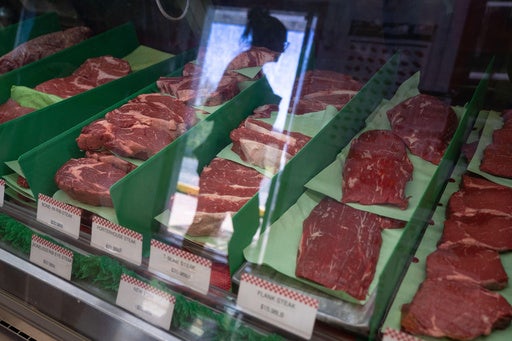
Under the terms of the proposed settlement, Agri Stats would be mandated to share most of the information it collects from processors directly with U.S. buyers, according to the Justice Department.
Agri Stats’ president, Eric Scholer, expressed satisfaction with the outcome, stating, “Agri Stats has been instrumental in the efficiency improvements in the chicken industry that have made such wonderful results possible, and we look forward to continue helping our subscribers improve their businesses, which will make chicken more affordable for all Americans.”
Separately, the Justice Department is conducting an investigation into potential antitrust violations within the beef processing sector.
This inquiry followed a request from President Donald Trump to examine whether foreign-owned meat packers were driving up beef prices in the U.S.
U.S. beef prices have seen a steady increase since 2020, now hovering near record highs. Government figures show that in March, a pound of ground beef averaged $6.70, marking a 16% rise compared to the previous year.
However, multiple factors contribute to these elevated prices, including persistent drought conditions and a shrinking national herd size.
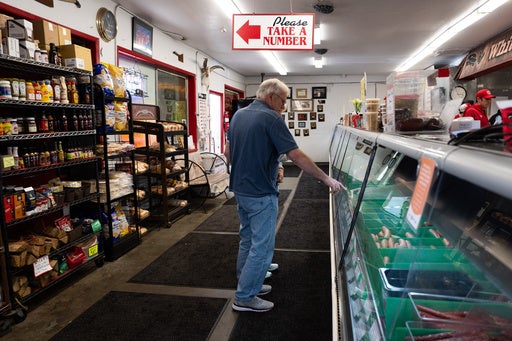
A three-year drought, which began in 2020, severely reduced available grazing land across the U.S. and caused feed costs to surge. Dry weather continues, with approximately 63% of the U.S. cattle herd currently located in drought-affected areas, as reported by the USDA.
The U.S. cattle herd, which has been declining for decades, has reached its smallest size since 1951, according to the USDA.
While advancements in cattle genetics and feeding techniques allow ranchers to yield more meat per animal, they are hesitant to expand herd sizes due to the high expenses of feed and labor, compounded by the ongoing dry conditions.
Another contributing factor to rising prices is the closure of the U.S.-Mexico border to livestock imports, implemented to curb the spread of the New World screwworm, a flesh-eating parasite. These closures, which commenced in late 2024, have prevented the transport of approximately one million cattle from Mexico into the U.S.