US Politics
The Senate can restrain Trump on Iran — but it won’t

Your support helps us to tell the story
From reproductive rights to climate change to Big Tech, The Independent is on the ground when the story is developing. Whether it’s investigating the financials of Elon Musk’s pro-Trump PAC or producing our latest documentary, ‘The A Word’, which shines a light on the American women fighting for reproductive rights, we know how important it is to parse out the facts from the messaging.
At such a critical moment in US history, we need reporters on the ground. Your donation allows us to keep sending journalists to speak to both sides of the story.
The Independent is trusted by Americans across the entire political spectrum. And unlike many other quality news outlets, we choose not to lock Americans out of our reporting and analysis with paywalls. We believe quality journalism should be available to everyone, paid for by those who can afford it.
Your support makes all the difference.
Read more
Welcome to the the most important decision of President Donald Trump’s second term – and likely his entire time in the White House.
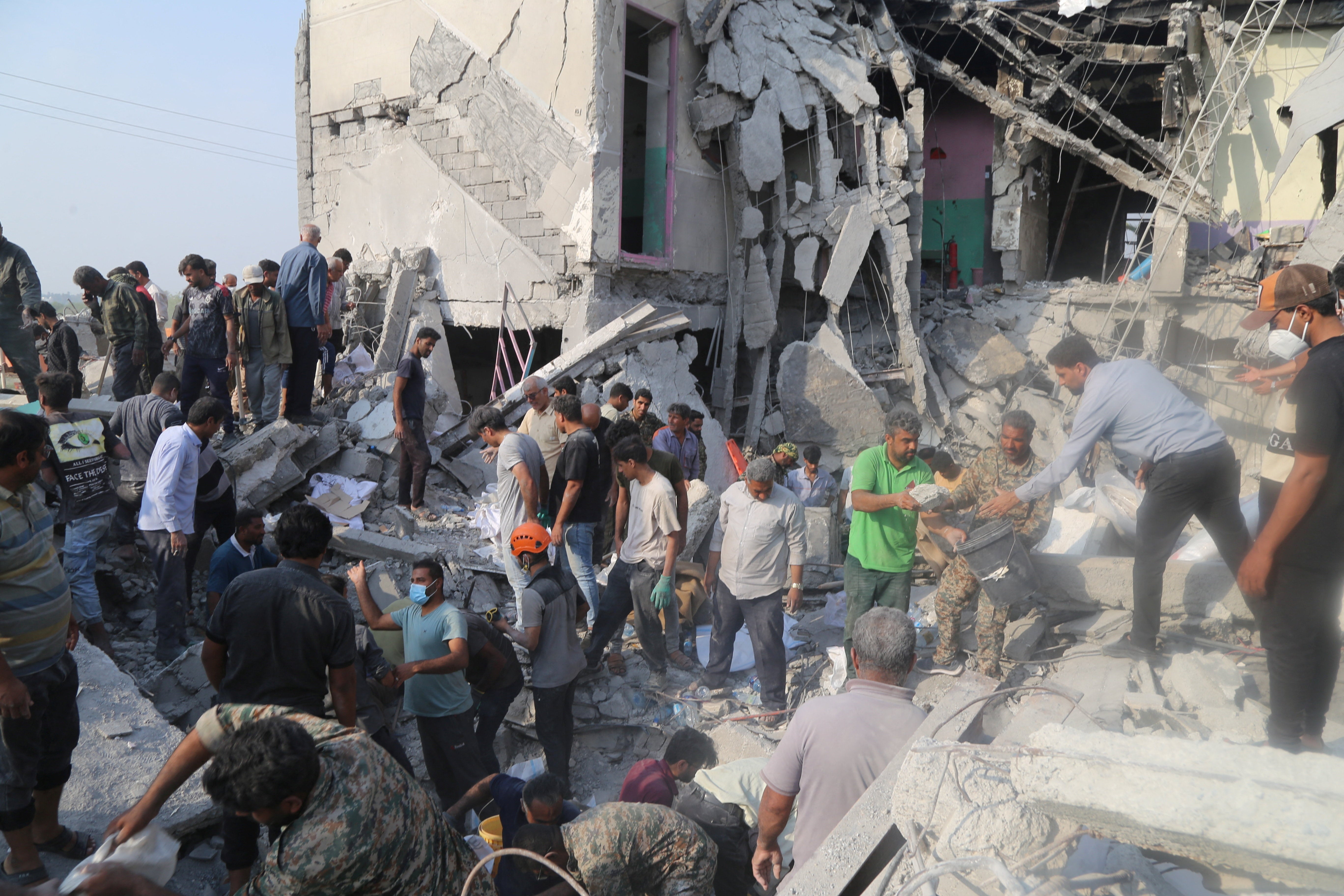
Over the weekend, the president announced that the United States and Israel had launched coordinated strikes against Iran and killed the country’s Supreme Leader, Ayatollah Ali Khamenei.
As of Monday, four U.S. service members have been killed. “Sadly, there will likely be more… before it ends, that’s the way it is,” Trump said Sunday.
Sending Americans into war is one of the most consequential decisions any president can take. It’s why the Constitution solely invests the power to declare war with Congress, which is more directly accountable to voters than the executive.
But don’t expect the Republican-controlled Congress to take any action to restrain Trump.
open image in gallery
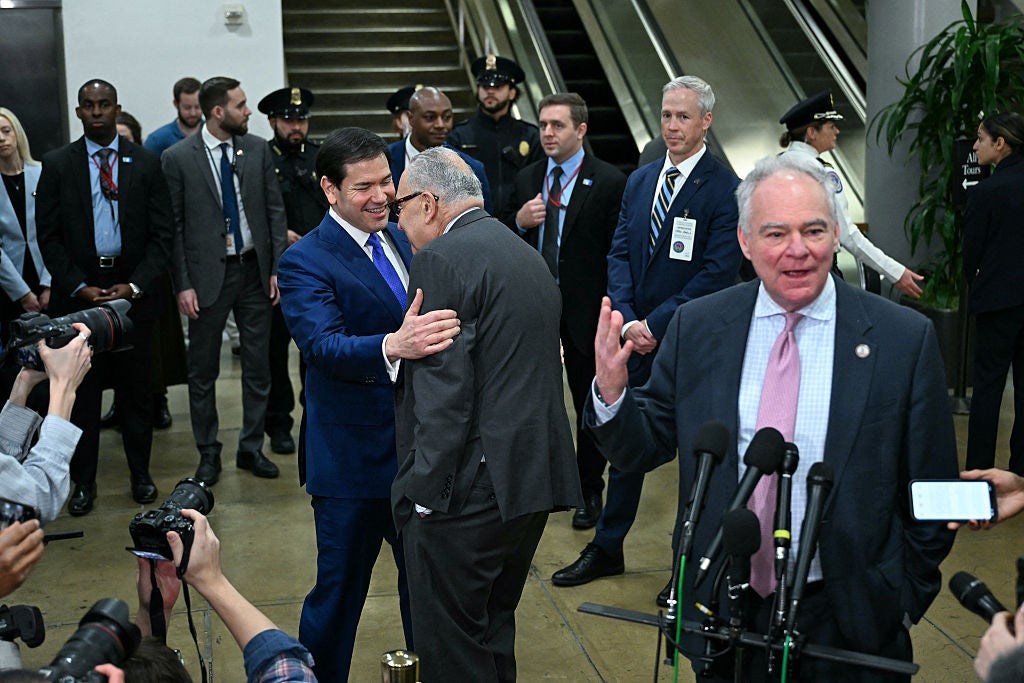
In the hours after the strikes, Democratic Sen. Tim Kaine of Virginia lambasted the military action and questioned whether Trump is too “mentally incapacitated” to understand the effects of his decision. Kaine has led efforts to force a War Powers Act resolution through Congress, which allows the legislative branch to rein in a president’s military power.
Reps. Ro Khanna (D-Calif.) and Thomas Massie (R-Ky.), the political odd couple that forced the passage of legislation to release the Epstein files, also said they would push a vote on a War Powers Act resolution in the lower chamber.
Initially passed in 1973 after the Vietnam War saw a succession of presidents escalate American involvement in Southeast Asia, the War Powers Act requires the executive branch inform Congress within 48 hours of troops being deployed.
In addition, it requires that troops be withdrawn within 60 days, with a possible 30-day extension, if Congress has not declared war or authorized the use of military force.
But consistently, Congress has rebuffed these efforts. Earlier this year, after Trump’s attack on Venezuela, five Republicans voted with Democrats for a War Powers Act resolution to go through. But Trump raged against the Republicans who did so and Senators Josh Hawley of Missouri and Todd Young of Indiana flipped their votes, defeating the resolution.
open image in gallery
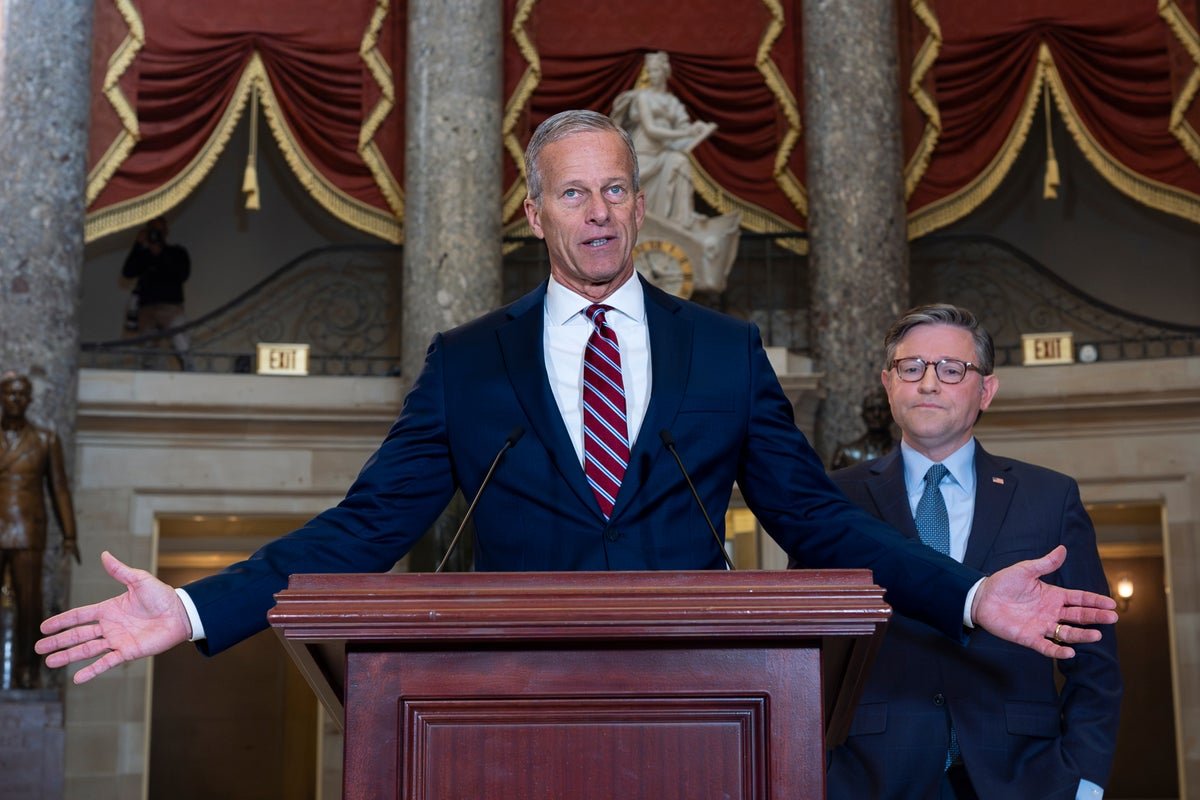
There are a number of reasons for this: The obvious one is that Republicans fear Trump and have provided a rubber stamp to any of his actions this presidency, facilitated by House Speaker Mike Johnson and Senate Majority Leader John Thune.
The second is that even before Trump, many Republicans, including many who do not personally like the president, ardently oppose the Iranian regime and would like to see it fall.
And there’s also the fact that Trump has largely gotten lucky with the administration’s previous military operations since he returned to office.
Last year, when Trump conducted strikes on Iran’s nuclear facilities, I wrote that Trump had gambled his entire presidency on the strikes. It looked like that gamble paid off, initially. After a scuffle between Iran and Israel, Trump touted a ceasefire, chided both countries when they seemed to break it by saying “they don’t know what the f*** they’re doing.” They ultimately ceased hostilities.
open image in gallery
Similarly, when Trump launched a surprise attack on Venezuela, capturing President Nicolás Maduro and his wife Cilia Flores, the mission appeared to have been largely a success – even though the country remains incredibly unstable, to the point that many oil companies still do not want to invest, and still under authoritarian control.
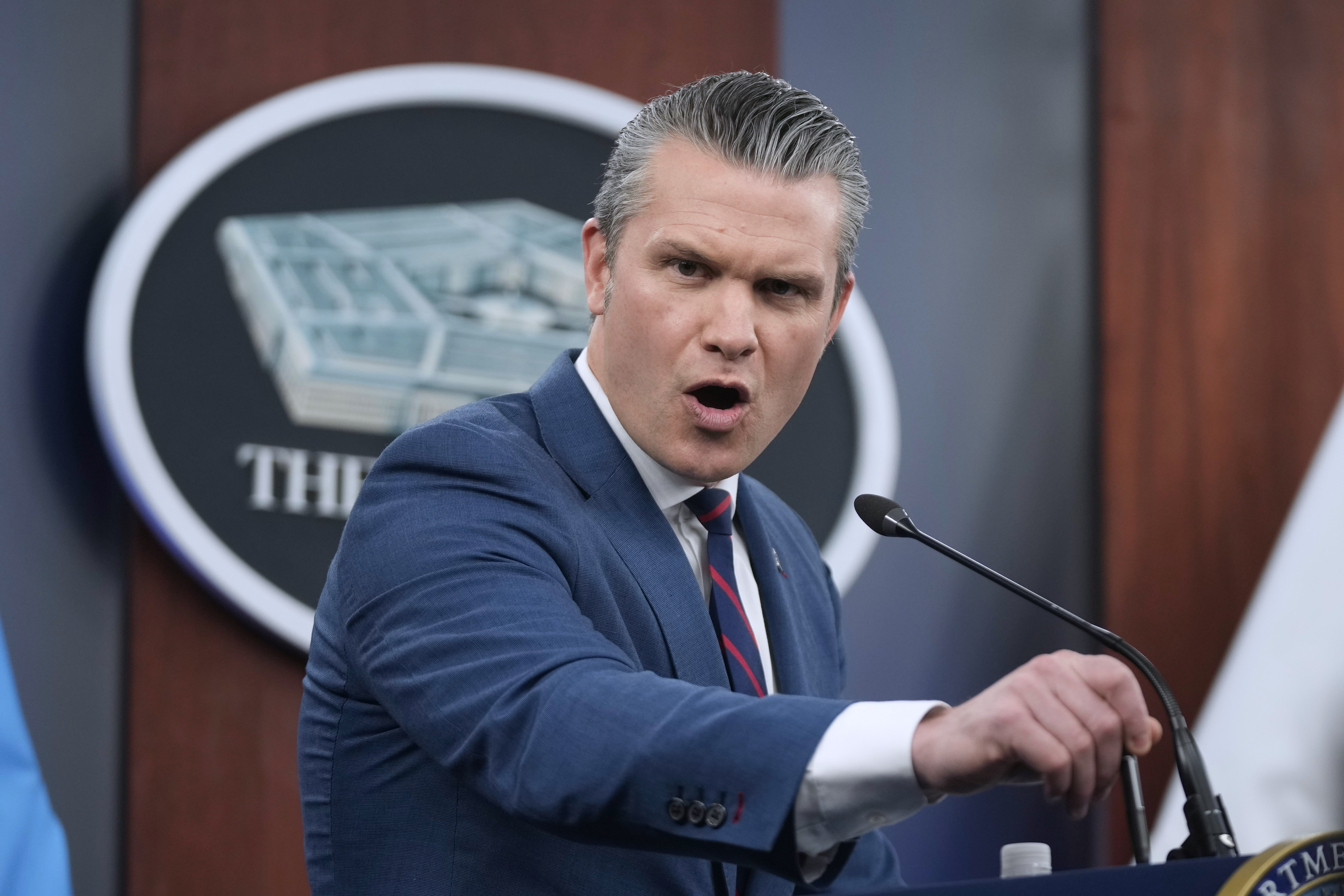
Iran represents a more long-term military commitment, whether Trump knows it or not. Secretary of Defense Pete Hegseth brushed off questions as to whether U.S. attacks on Iran would turn the conflict into another Iraq.
“No stupid rules of engagement, no nation-building quagmire, no democracy-building exercise, no politically-correct wars,” he said during a press briefing Monday. “We fight to win.”
But the fact remains, this is still a war. And as Trump has completely neutered Congress, he will likely keep the conflict as open-ended as he likes.