
Breaking News
Screwworms, a flesh-eating parasite, have U.S. officials and ranchers bracing for infestation following 1st reported human case last month

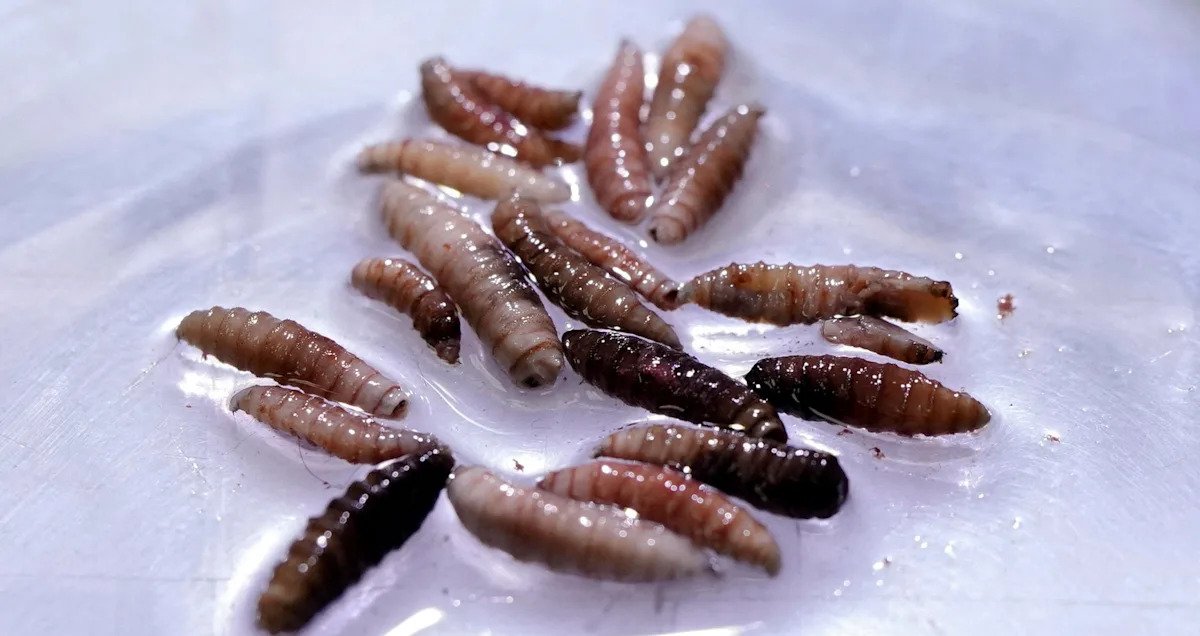
Ranchers and health officials are increasing their efforts to spread awareness and protect livestock from New World screwworms — a flesh-eating parasite native to the Caribbean and Central America. A screwworm can kill cattle within days, and U.S. health officials reported the first human case of a screwworm infection just last month.
Although the patient has recovered, and there was no indication that the infection spread to any other people or animals, some states are still concerned about the rising rates of screwworm infections outside the U.S., particularly in Mexico. Texas ranchers are focusing on how to protect their cattle, according to some local outlets, while the Kansas Department of Health and Environment issued a Sept. 5 alert urging health care providers to stay vigilant.
“Humans can become infected with NWS when they travel to endemic or outbreak areas,” the Kansas Department of Health and Environment’s alert said. The Centers for Disease Control and Prevention (CDC) confirmed the patient in Maryland had recently traveled to El Salvador, Reuters reported.
Screwworms are parasitic flies that burrow in warm-blooded tissue, and their females will lay larvae that further invade the tissue, according to the Animal and Plant Health Inspection Service, a division of the United States Department of Agriculture. Screwworms tend to infest “livestock, pets, wildlife, occasionally birds, and in rare cases, people,” APHIS said.
The renewed focus on screwworms comes after Department of Agriculture Secretary Brooke Rollins announced a five-part plan on Aug. 15 to prevent screwworms from entering the U.S. from Mexico. The plan includes breeding sterile flies in southern Texas, which would ensure that female screwworm flies would only be able to lay unfertilized eggs, which won’t hatch into larvae. This is an approach that has been used in the past, most recently in the Florida Keys in 2017, when a small outbreak was affecting deer in the area, APHIS said.
What is a New World screwworm?
The screwworm name comes from the way the larvae tend to “screw” themselves into open wounds, APHIS said. The maggots will tear apart skin tissue with their hooks and start to expand and deepen the wound so more larvae can hatch and feed.
APHIS describes adult screwworms as “the size of a common housefly” with “orange eyes, a metallic blue or green body and three dark stripes along their backs.” Each screwworm has a 10-to-30-day lifespan and can lay up to 3,000 larvae during its myiasis, the CDC said.
“When NWS fly larvae (maggots) burrow into the flesh of a living animal, they cause serious, often deadly damage to the animal,” APHIS said. “Keeping NWS out of the United States is crucial to protect our livestock industry, economy and food supply chain.”
What are the symptoms of a screwworm infection?
Screwworm infections are extremely painful, and an infected person might be able to see or feel the screwworm larvae in or around an open wound, according to the CDC.
Symptoms include skin lesions that aren’t healing, constant bleeding from open sores, feeling movement within the skin around or in the wound, nose, mouth or eyes and potentially an odor from the infection.
For some mammals and birds who are infected, they will start seeming more irritable, start shaking their heads and will likely start to smell of decay, APHIS says on its website.
Is there a treatment for screwworm infection?
The CDC strongly recommends contacting a health care provider immediately if you believe you are infected with screwworm larvae, as doctors should be able to remove them. Do not try to remove the maggots yourself.
There are currently no FDA-approved drugs for treating or preventing screwworm infections in animals. Again, in such cases, it’s best to contact a veterinarian to treat the larvae.
How do I protect myself from screwworms?
Government agencies like the USDA have fought for years to keep screwworms out of the U.S. Even though a human case has been reported in Maryland, the Department of Health and Human Services does not currently consider the screwworm a public health threat.
If you are traveling to areas where it is more common, like the Caribbean or South America, the CDC recommends:
Keep open wounds cleaned and covered at all times
Wear loose-fitting, long-sleeved shirts and pants to limit the areas where you could get bitten