US Politics
Resistance Front: US designates Pakistani offshoot behind Pahalgam attack as terrorist group

Your support helps us to tell the story
From reproductive rights to climate change to Big Tech, The Independent is on the ground when the story is developing. Whether it’s investigating the financials of Elon Musk’s pro-Trump PAC or producing our latest documentary, ‘The A Word’, which shines a light on the American women fighting for reproductive rights, we know how important it is to parse out the facts from the messaging.
At such a critical moment in US history, we need reporters on the ground. Your donation allows us to keep sending journalists to speak to both sides of the story.
The Independent is trusted by Americans across the entire political spectrum. And unlike many other quality news outlets, we choose not to lock Americans out of our reporting and analysis with paywalls. We believe quality journalism should be available to everyone, paid for by those who can afford it.
Your support makes all the difference.
Read more
The US has designated The Resistance Front (TRF), widely described as an offshoot of the Lashkar-e-Taiba, as a “foreign terrorist organisation” for its role in the April Pahalgam terror attack in Kashmir that killed 26 civilians.
On Thursday, US secretary of state Marco Rubio said that TRF was behind the Pahalgam attack and other assaults on Indian security forces. He highlighted the new sanctions as proof of US president Donald Trump’s tough foreign policy stance.
“These actions taken by the Department of State demonstrates the Trump Administration’s commitment to protecting our national security interests, countering terrorism, and enforcing President Trump’s call for justice for the Pahalgam attack,” the State Department said in a statement.
On 22 April, assailants, armed with automatic weapons, targeted unarmed civilians in the Baisaran Valley, a popular destination frequented by tourists in Pahalgam in Kashmir. The terror attack claimed the lives of twenty-six people.
Although TRF initially claimed responsibility for the attack, it later retracted and denied any involvement.
Lashkar-e-Taiba, designated by the United States as a “foreign terrorist organisation”, is a Pakistan-based Islamist group blamed for orchestrating attacks in India and abroad – most notably the three-day siege of Mumbai in November 2008 that left more than 160 people dead and hundreds injured.
In his statement on Thursday, Mr Rubio described TRF, which surfaced in 2019, as both a “front and proxy” for Lashkar-e-Taiba.
The South Asia Terrorism Portal, a Delhi-based think tank, also identifies it as an offshoot of the banned militant group.

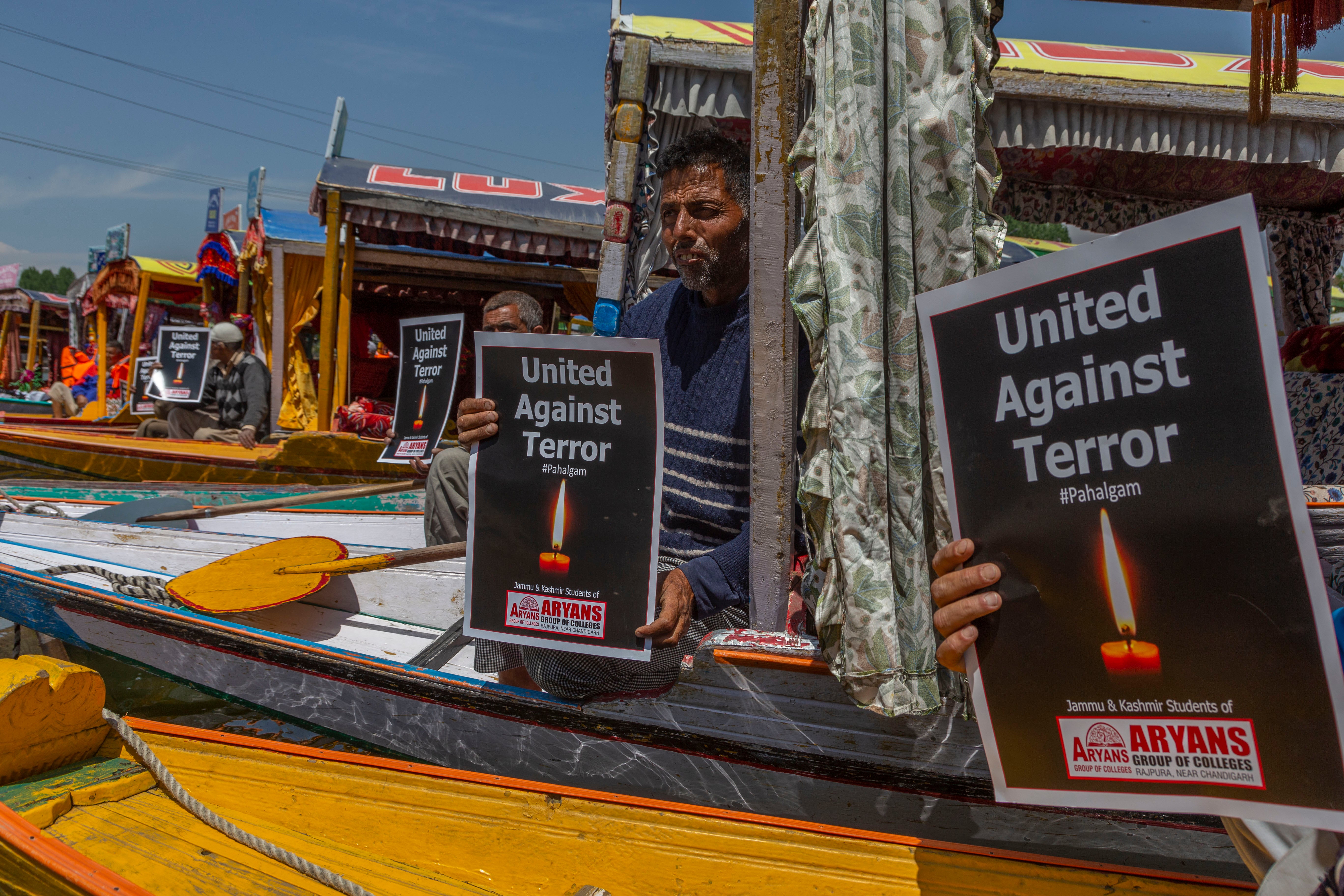
Indian prime minister Narendra Modi’s nationalist government swiftly pointed fingers at Pakistan following the Pahalgam massacre, accusing its neighbour of harbouring and backing militant groups responsible for attacks on Indian civilians and security personnel.
The nuclear-armed rivals, India and Pakistan, both assert full territorial claims over Kashmir, but each controls only portions of the disputed region. This longstanding conflict has sparked three wars between them since they gained independence from Britain in 1947.
Following the Pahalgam attack, India launched “Operation Sindoor”, targeting what it called terror infrastructure in Pakistan and Pakistan-occupied Kashmir. A brief military escalation ended in a ceasefire on 10 May – a development Mr Trump claimed was the result of his efforts to broker peace between the two nuclear-armed neighbours.
On Thursday, Mr Rubio described the Pahalgam attack as “the deadliest attack on civilians in India since the 2008 Mumbai attacks conducted by LeT”.
Last month, Indian investigators said all three militants behind the April Pahalgam attack were Pakistani nationals linked to Lashkar-e-Taiba. Earlier, the police had claimed that one attacker was a resident of Jammu and Kashmir.
Meanwhile, Michael Kugelman, a Washington-based South Asia analyst, was quoted as saying by Reuters that in designating TRF, “Washington is flagging its concern about the terrorist attack that provoked the recent India-Pakistan conflict, and siding with New Delhi’s view that the group is linked to Lashkar-e-Taiba”.
He added: “This can be a shot in the arm for a US-India relationship looking to rebound after a few tough months.”