US Politics
President of Peace? How Trump’s claim to have ended eight wars unravelled

Your support helps us to tell the story
From reproductive rights to climate change to Big Tech, The Independent is on the ground when the story is developing. Whether it’s investigating the financials of Elon Musk’s pro-Trump PAC or producing our latest documentary, ‘The A Word’, which shines a light on the American women fighting for reproductive rights, we know how important it is to parse out the facts from the messaging.
At such a critical moment in US history, we need reporters on the ground. Your donation allows us to keep sending journalists to speak to both sides of the story.
The Independent is trusted by Americans across the entire political spectrum. And unlike many other quality news outlets, we choose not to lock Americans out of our reporting and analysis with paywalls. We believe quality journalism should be available to everyone, paid for by those who can afford it.
Your support makes all the difference.
Read more
Donald Trump’s claim to have ended eight wars appears to be unravelling as a result of peace deals that “press pause” on the fighting and fail to deal with the root causes of each conflict, experts have said.
The US president, who was awarded the widely-criticised Fifa Peace Prize last week, has persistently boasted about ending the conflicts during his two periods as president.
He listed peace agreements between Israel and Hamas, Israel and Iran, Pakistan and India, Rwanda and the Democratic Republic of Congo, Thailand and Cambodia, Armenia and Azerbaijan, Egypt and Ethiopia, and Serbia and Kosovo.
But a deeper analysis of these disputes, as well as others that Trump has sought halt, casts doubt over his claim to be the President of Peace.
Cambodia and Thailand have resumed clashes at the border, Kosovo and Serbia are struggling to implement peace deals and Israeli attacks continue in Lebanon and Gaza. Trump has also failed to stop the war in Ukraine – a conflict he once promised to end “in 24 hours”.


open image in gallery
Trump’s peace deals ‘lack a clear pathway’
Dr Melanie Garson, an associate professor of political science at University College London (UCL), says that while Trump should be credited for pushing for these agreements, the deals mediated by his administrations are “prone to failure”.
“Without the clear pathways, guarantees and oversight of the next steps, it leaves huge gaps in the system. Basically what you’ve done is press the pause button, and not the stop button.”
The “low quality” of these deals owes to Trump’s reluctance to surround himself with “real experts” who would challenge his authority as the “master deal maker”, says Dr Jonathan Monten, a US foreign policy expert at UCL.
“He wants to be perceived as at the centre. He is this master deal maker, not some you know, career expert in the State Department,” he told The Independent.
“So the quality of the preparation, the quality of expertise, the quality of diplomatic negotiation are all extremely low.”


open image in gallery
Cambodia and Thailand attack each other… again
Border clashes in Thailand resumed earlier this week, with hundreds of thousands displaced and at least 10 people killed.
It comes just weeks after the Kuala Lumpur peace accord was signed in October, with the prime ministers of both countries vowing their “unwavering commitment” to peace after the centuries-old border dispute was reignited in July. Trump attended the signing ceremony in Malaysia.
Thailand’s defence ministry said the recent attacks were “a last option”, while Cambodia accused Thailand of “aggressive military attacks”.
Thai Prime Minister Anutin Charnvirakul confirmed on Friday that there was no ceasefire yet with Cambodia and said he had spoken by telephone with Trump. Anutin said Trump told him he wanted the two countries to return to the July ceasefire.
Israel continues attacks in Lebanon and Gaza
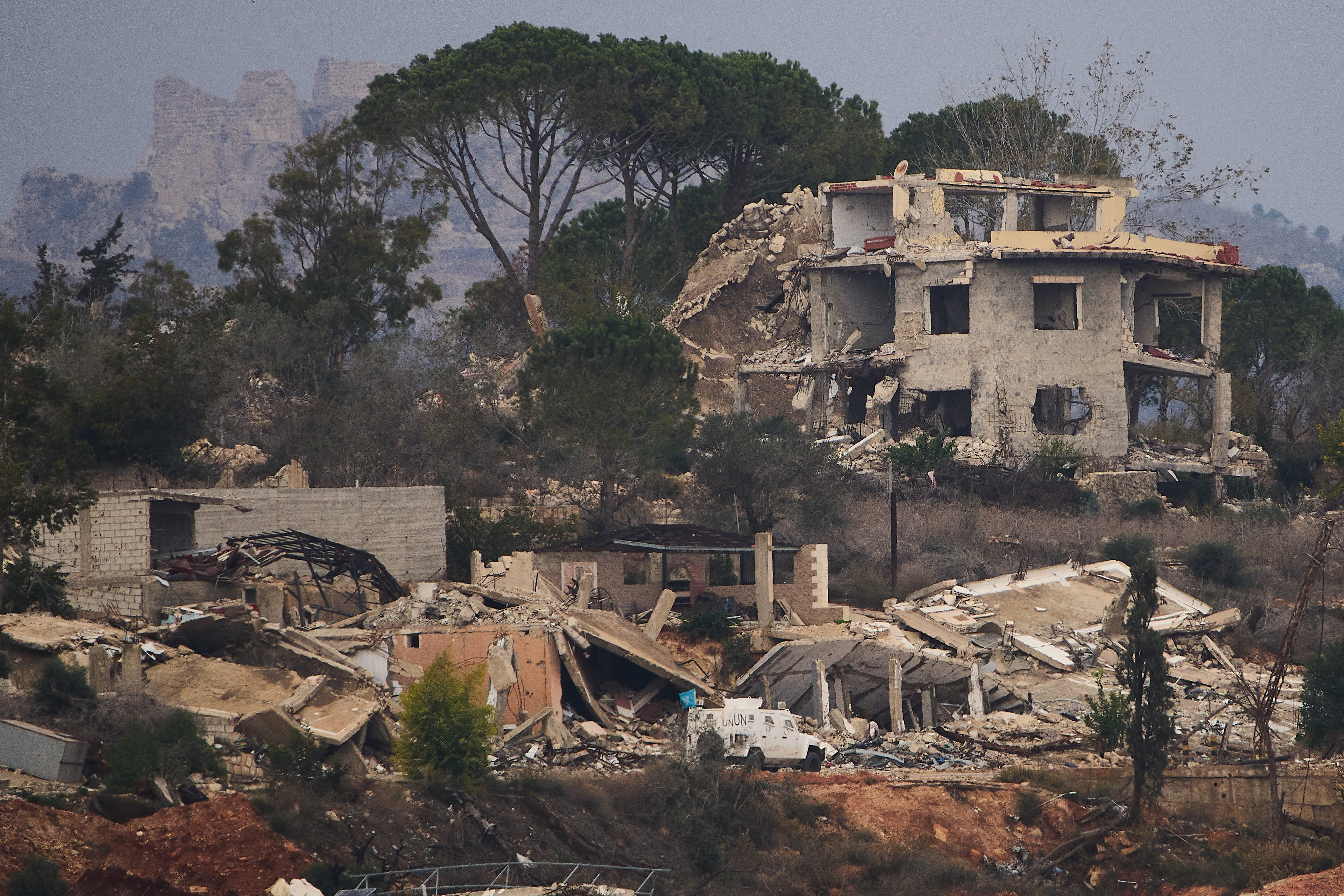
The initial ceasefire deal between Israel and Lebanon was signed under the Biden administration – but Trump has since failed to prevent Benjamin Netanyahu’s government from regular strikes on the country.
Israel launched a new wave of attacks on Lebanon last week, stating that it was targeting Hezbollah sites in the south, including several buildings and a rocket-launching site.
The Trump administration had been urging Israel and Lebanon to broaden their talks on establishing longer-term peace. Just days before the Israeli strikes, both sides had dispatched civilian envoys to a military committee tasked with overseeing the ceasefire – but the ceasefire now appears to be over.

open image in gallery
Trump was, however, involved in brokering the deal between Israel and Hamas, which promised to end of Israel’s military campaign in Gaza and the return of all the hostages.
All living hostages and all-except-one of the dead hostages have been returned. But authorities in Gaza say nearly 400 people, including children, have been killed by Israeli gunfire since the ceasefire was put in place.
Serbia-Kosovo agreements unfulfilled
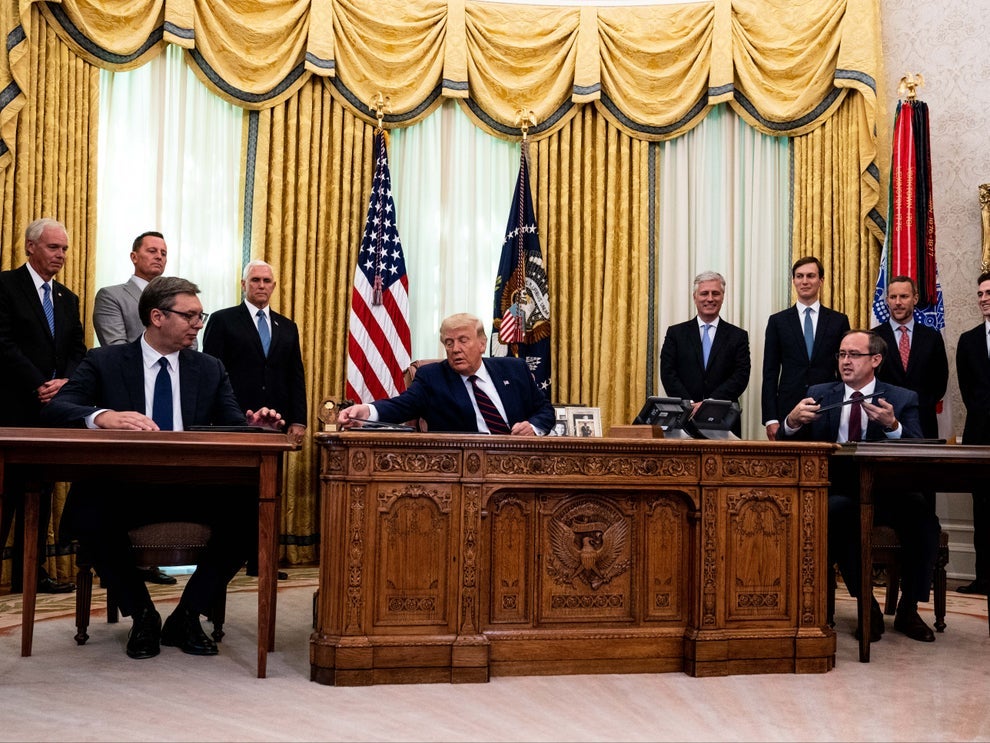
Trump has repeatedly hailed an economic normalisation agreement reached between Serbia and Kosovo during his first term. Earlier this year, he also claimed to have prevented a war from breaking out between the pair.
The 2020 agreement planned to expand economic cooperation and integration, in an attempt to de-escalate political tensions by focussing on economic ties. But the agreements failed to address a critical and central element of the dispute: Serbia’s refusal to formally recognise Kosovo.
Implementation has been limited with many of the specific economic provisions failing to materialise in practise in the years since.

open image in gallery
Progress on agreed projects, such as the envisaged ‘Peace Highway’ linking Belgrade and Pristina to facilitate trade and travel between the countries, has seen very slow progress, with financing coming not from provisions of the agreements but from European investment.
Political tensions between Kosovo and Serbia remain unresolved, and the Trump administration is yet to make a significant push to get them round the table again.
War in Ukraine frustrates the White House
Attempts to bring an end to the war in Ukraine have been one of Trump’s primary frustrations during his second term, thus far failing in an objective which he said before the US election could be wrapped up in 24 hours.
In recent weeks, the US has ramped up efforts to push Moscow and Kyiv towards reaching an agreement, but the main sticking point – territory – remains a crucial problem.
Vladimir Putin appears to have little interest in signing a peace agreement unless Kyiv hands over the entirety of the Donbas, including parts of the Donetsk and Luhansk regions currently under US control.
Trump has directed most of his impatience at Volodymyr Zelensky, saying that he “isn’t ready” for peace and, according to reports, telling the Ukrainian president he wants Kyiv to accept a peace deal by Christmas.