US Politics
Pentagon is reinstalling portrait of Confederate General Robert E. Lee that includes a slave

Your support helps us to tell the story
From reproductive rights to climate change to Big Tech, The Independent is on the ground when the story is developing. Whether it’s investigating the financials of Elon Musk’s pro-Trump PAC or producing our latest documentary, ‘The A Word’, which shines a light on the American women fighting for reproductive rights, we know how important it is to parse out the facts from the messaging.
At such a critical moment in US history, we need reporters on the ground. Your donation allows us to keep sending journalists to speak to both sides of the story.
The Independent is trusted by Americans across the entire political spectrum. And unlike many other quality news outlets, we choose not to lock Americans out of our reporting and analysis with paywalls. We believe quality journalism should be available to everyone, paid for by those who can afford it.
Your support makes all the difference.
Read more
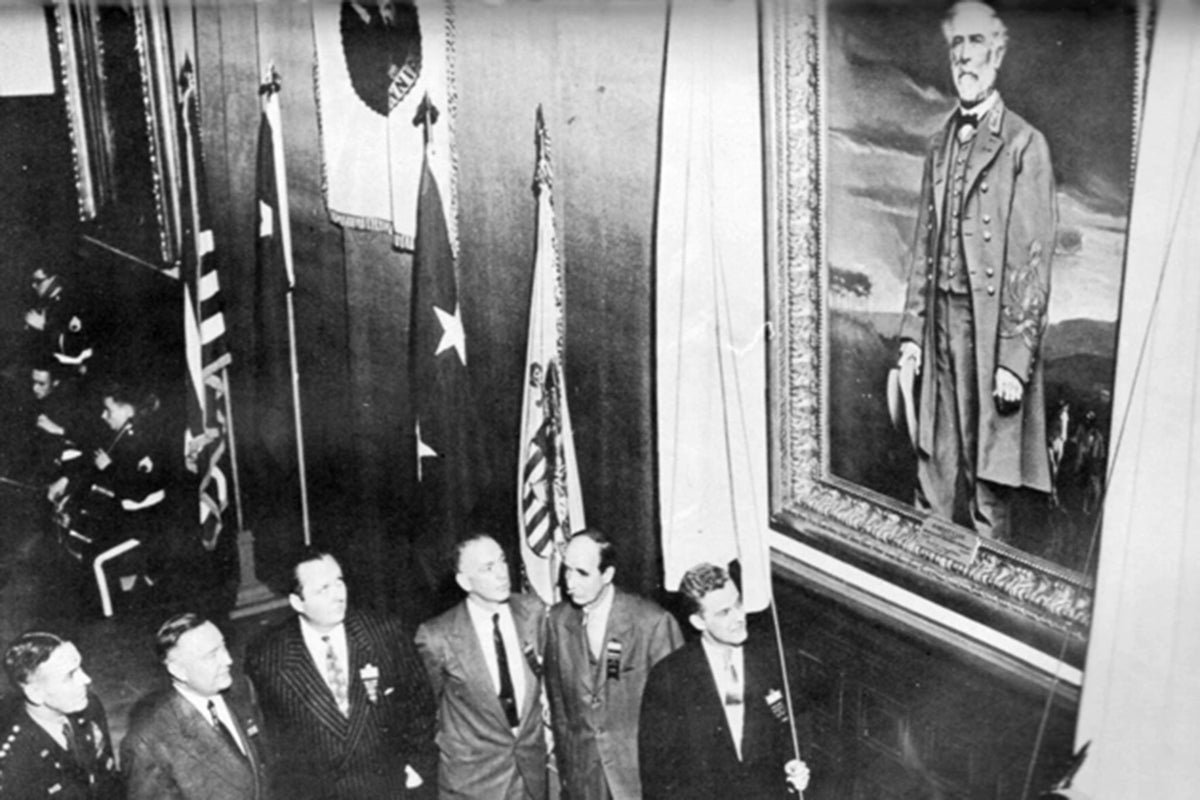
A portrait of Confederate general Robert E Lee that includes a slave guiding his horse is set to be reinstated in the Pentagon.
The 20-foot-tall painting, which was on display at the United States Military Academy for 70 years, will be hung in the West Point library under President Trump’s instruction despite a congressionally mandated commission that ordered its removal back in 2020.
“At West Point, the United States Military Academy is prepared to restore historical names, artifacts, and assets to their original form and place,” said the Army’s communications director, Rebecca Hodson, to the New York Times. “Under this administration, we honor our history and learn from it — we don’t erase it.”
-copy.jpeg)
open image in gallery
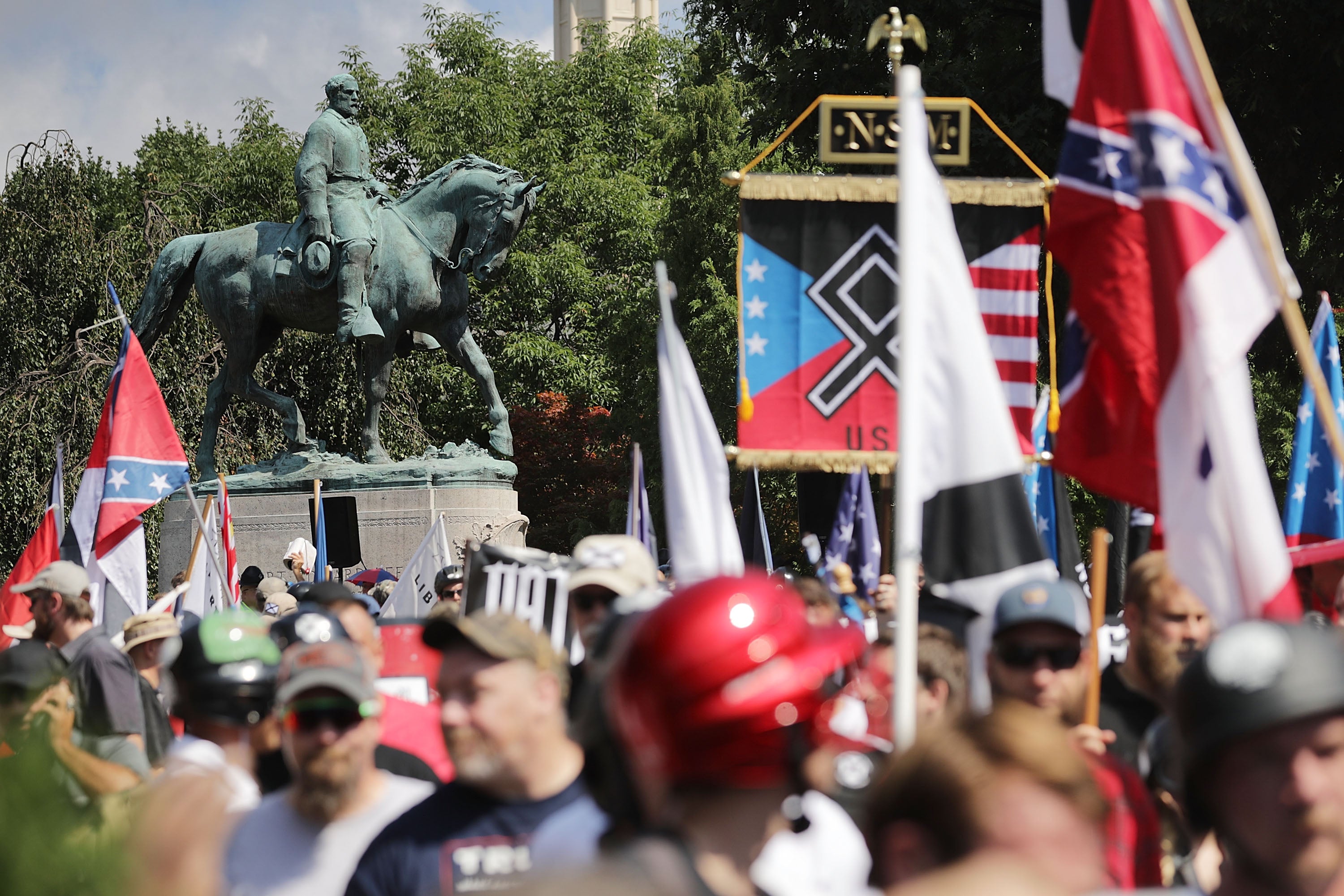
Memorials to General Lee, former commander of the Confederate army and a slave owner, have long proven controversial. Multiple monuments to Confederate leaders like Lee have been taken down in recent years by campaigners who see them as a celebration of white supremacy.
The law that led to the painting’s removal was passed during Trump’s first term, when a key Senate committee passed a $741 billion defense policy plan in defiance of the president.
Proposed by Democratic Senator Elizabeth Warren, it required the Department of Defense to remove all names, symbols, displays, monuments, and paraphernalia that honored or commemorated the Confederate States of America, as well as any person who served voluntarily with the Confederate States of America.
Against Trump’s wishes, the Pentagon was forced to scrub names from monuments and paraphernalia honoring the Confederacy and its leaders from military bases and assets.
Since returning to the White House, Trump has moved to reverse a number of those decisions.
open image in gallery
Speaking at Fort Bragg, North Carolina, in June, Trump said he would also be restoring the names of Fort Pickett, Fort Hood, Fort Rucker, Fort Polk, Fort AP Hill, as well as Fort Robert E. Lee.
In 2023, Fort Lee was redesignated Fort Gregg-Adams to commemorate African American veterans Lt. Gen. Arthur J. Gregg and Lt. Col. Charity Adams, following earlier proposals for the name change.
“Over the course of United States history, these locations have taken on significance to the American story and those who have helped write it that far transcends their namesakes,” Trump said.
He slated Congress’s 2020 directive as a “politically motivated attempt to wash away history and to dishonor the immense progress our country has fought for in realizing our founding principles.”