US Politics
More than 30 people killed by US strikes on ‘narco’ boats, as Trump launches first attack in Pacific waters

Your support helps us to tell the story
From reproductive rights to climate change to Big Tech, The Independent is on the ground when the story is developing. Whether it’s investigating the financials of Elon Musk’s pro-Trump PAC or producing our latest documentary, ‘The A Word’, which shines a light on the American women fighting for reproductive rights, we know how important it is to parse out the facts from the messaging.
At such a critical moment in US history, we need reporters on the ground. Your donation allows us to keep sending journalists to speak to both sides of the story.
The Independent is trusted by Americans across the entire political spectrum. And unlike many other quality news outlets, we choose not to lock Americans out of our reporting and analysis with paywalls. We believe quality journalism should be available to everyone, paid for by those who can afford it.
Your support makes all the difference.
Read more
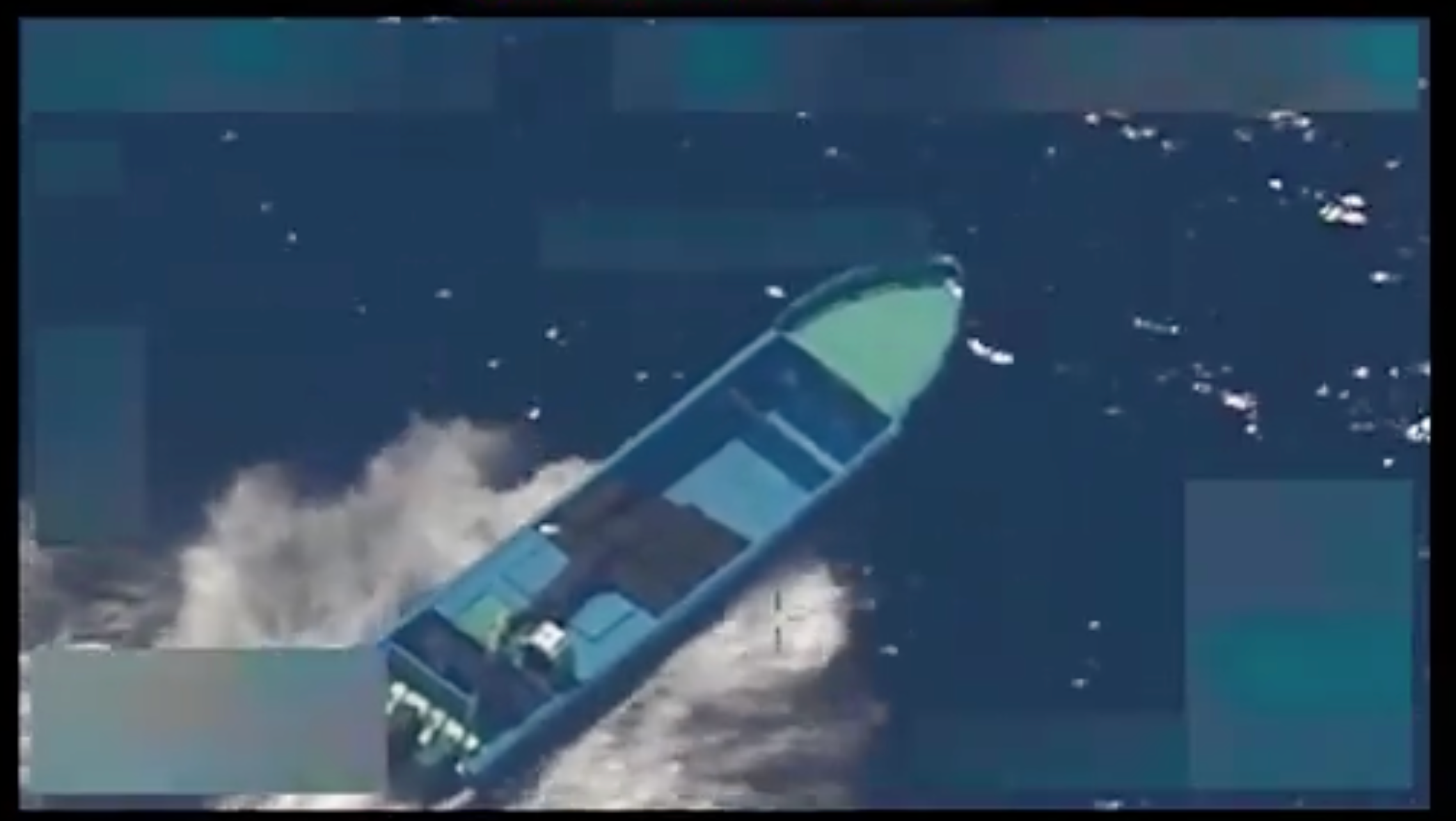
Donald Trump’s administration has struck another alleged drug-carrying vessel, killing two people on board, in what appears to be the first attack in the Pacific Ocean.
Tuesday’s operation announced by Defense Secretary Pete Hegseth brings the death toll from the administration’s campaign to more than 30, as the United States declares itself at war with drug cartels in an expanding military campaign across South America.
The vessel “was known by our intelligence to be involved in illicit narcotics smuggling, was transiting along a known narco-trafficking transit route, and carrying narcotics,” according to Hegseth.
Two “narco-terrorists” were killed in the strike off Colombia’s coast, he said Wednesday.
The latest strike — believed to be the eighth attack since September — raises the death toll from the administration’s attacks to at least 34 people, who Hegseth compared to the terror group behind 9/11.

open image in gallery
“Narco-terrorists intending to bring poison to our shores, will find no safe harbor anywhere in our hemisphere,” Hegseth added. “Just as Al Qaeda waged war on our homeland, these cartels are waging war on our border and our people. There will be no refuge or forgiveness — only justice.”
Officials did not immediately identify the group or country accused of running drugs in the Pacific.
Critics have argued the campaign amounts to illegal extrajudicial killings, while members of Congress and civil rights groups are pressing the administration for evidence and the legal memos shared among White House officials to justify the attacks.
Two people who survived a recent strike in the Caribbean were sent to their home countries, Ecuador and Colombia, after Trump hailed the destruction of a “very large DRUG-CARRYING SUBMARINE.”
The apparent repatriation of people labeled “terrorists” by the government — rather than face prosecution in the United States — also raises additional legal questions about the operations, including whether to treat survivors as wartime detainees or transfer them to military or criminal authorities for prosecution.
Ecuadorian officials said there was “no report of a crime” brought against the Ecuadorian survivor, who is not being detained. A Colombian citizen who survived the attack remains hospitalized after his repatriation but is expected to be prosecuted.
Colombia President Gustavo Petro said a U.S. strike in September targeted a civilian boat in distress — not a drug-smuggling vessel — and accused Trump of “murder.”
Trump, on his Truth Social, called Petro “an illegal drug leader” and accused his government of “ripping off” American aid.
The majority of the cocaine smuggled into the United States arrives from the Pacific Ocean, but the Trump administration largely focused its attacks off the coast of Venezuela and the Caribbean in an apparent military-led campaign against Venezuelan President Nicolas Maduro.
Last week, Trump said he authorized the CIA to perform covert operations inside Venezuela, marking a significant escalation of his aggressive campaign against Maduro’s regime and drug cartels that Trump claims are fueled by Maduro’s government.
Trump told reporters at the White House that he “authorized” CIA operations because Venezuela “emptied their prisons into the United States of America” and flooded the country with drugs.
Last month, the administration declared the United States is formally engaged in an “armed conflict” with drug cartels that the president has labeled “unlawful combatants,” according to a confidential notice to members of Congress.
The notice appears to invoke extraordinary wartime powers to justify a series of missile strikes targeting boats off the coast of Venezuela and in the Caribbean.
Trump said defense officials are now “looking at land” strikes in Venezuela.

open image in gallery
In January, Trump issued an executive order designating Venezuela’s Tren de Aragua as a foreign terrorist organization, paving the way for his order invoking the Alien Enemies Act to summarily deport suspected gang members. Neither the Alien Enemies Act nor “foreign terrorist organization” designations allow for lethal force.
Venezuelan Defense Minister Vladimir Padrino Lopez has accused the Trump administration of trying to “force a regime change” in the country.
“I want to warn the population: we have to prepare ourselves because the irrationality with which the U.S. empire operates is not normal,” Padrino said in televised remarks this month. “It’s anti-political, anti-human, warmongering, rude and vulgar.”