US Politics
Is Donald Trump in charge of America’s war machine – or is Netanyahu?

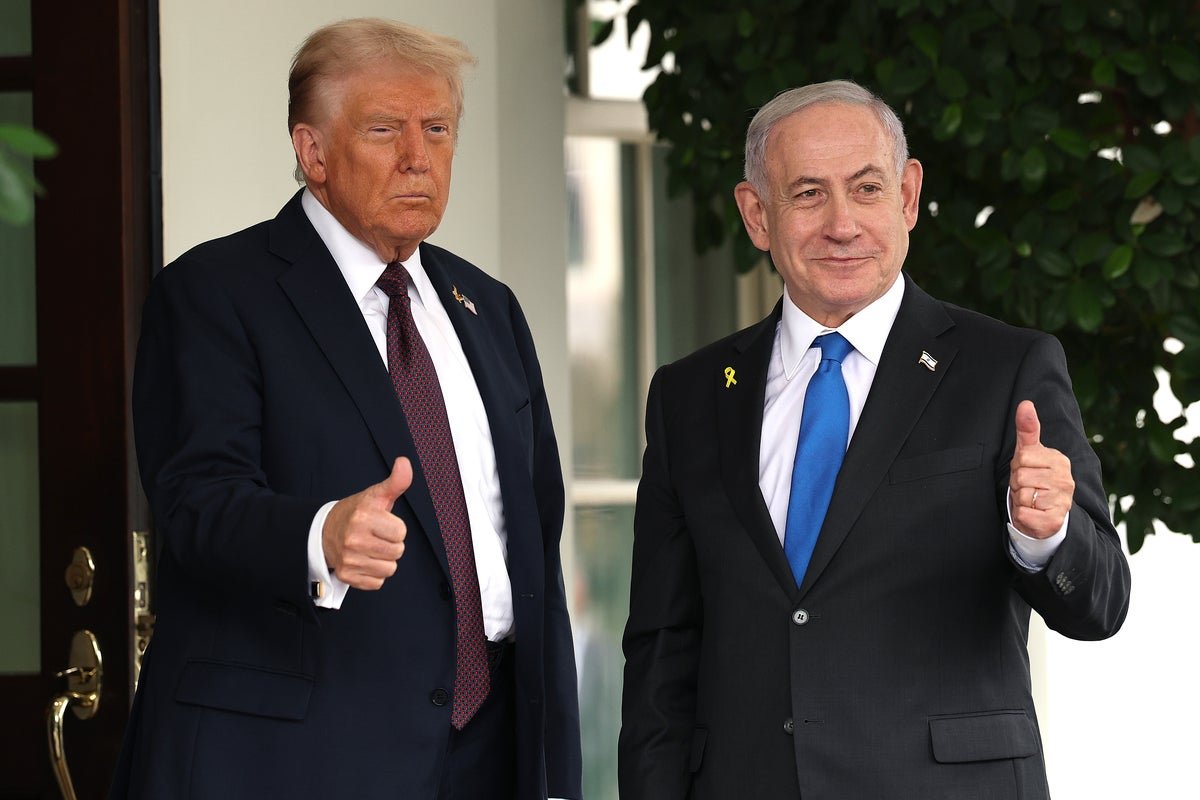
Social media addicts across the world – Benjamin Netanyahu among them – have had a lot of sport this week over trending suggestions that the Israeli PM had somehow died in the current Iran war.
Of course, Israel’s longest-serving head of government could hardly be more alive and kicking, politically as well as literally, than he is at present. So much so that it has been increasingly accepted – and justly so, as I argued 10 days ago – that he was pivotal in Donald Trump’s decision to start a joint US-Israel war on Iran on 28 February.
We have Marco Rubio’s word for it that the US joined the attack because Israel was going to strike anyway. We also know that Netanyahu has wanted to do this since at least the turn of the century, but was blocked successively by George W Bush, Barack Obama and Joe Biden.
It’s striking, too, that Trump, as the US politician most exposed to Netanyahu’s persuasive powers, from the start shared the latter’s goal of regime change in ways that Rubio and the so-called Secretary for War Pete Hegseth did not. As Ben Rhodes, former deputy National Security Adviser during the Obama presidency, asked rhetorically: “Do we really believe that the United States would be in this war absent Netanyahu?”
That said, it’s important to be clear what this does and doesn’t mean. The view that Netanyahu is the continuing mastermind of the war fits neatly with Donald Trump’s claim that he knew nothing at all in advance about the attack this week by Israel on Iran’s South Pars gas field. That is politically helpful to him, since it has caused such turbulence in global energy markets.
Yet the Trump claim should and is being treated with scepticism, to put it mildly, by officials and experts in both Jerusalem and Washington DC, given the unprecedented co-operation between the two defence establishments.
Yes, the potentially catastrophic strike was carried out by Israel. But as the well informed Dan Shapiro, a former US ambassador to Israel now at the Atlantic Council think tank, insisted this week, “Trump knew and approved [of the strike]. Now he realises it caused a massive escalation.”
Similarly, the assassination of Iran’s security chief Ali Larijani bears all the hallmarks of Israel’s belief – far from always vindicated – that decapitation of a movement’s leaders leads to its defeat. Some Iran experts believe that Larijani might have been a protagonist in any diplomatic negotiation to end the war. But whether there’s anything in that or not, the idea that Israel was freelancing when it took him out is all but inconceivable.
Moreover, blaming Netanyahu for his undoubted part in starting this war does not mean accommodating the extreme fantasies of some ultra-rightists in the US – including (the Trump-appointed) Joe Kent, who resigned from his counter-intelligence post in protest at the war. Kent was surely factually correct in saying that “Iran posed no imminent threat to our nation”.
But he was totally incorrect to make the baseless claim that Israel had also “dragged” the US into the 2003 Iraq war. Israel largely stood aside from that war despite coming under attack from Iraq and indeed the then prime minister Ariel Sharon had said it was the “wrong war” – against Iraq rather than Iran. He also had the unfortunate privilege of been singled out for praise by the white nationalist and anti-semitic commentator Nick Fuentes.
It does not alter the fact that this is still very much a war of Trump’s choice. There’s no doubt that the war is so far much more popular in Israel than it is in the US, perhaps leading Netanyahu to think he can convert some of that popularity to boost his own currently far from electorally bankable poll ratings. No doubt too, that his laudable, if at present seemingly distant, goal of setting Iranians free from the ayatollahs’ egregious tyranny sits so uneasily with lack of interest in anything parallel for the Palestinians.
But it’s Trump who said yes to all this, and who decided to be the first American president, at least on Iran, not to deny Netanyahu. It’s Trump who is treating a war he seemingly does not know how to finish like a bellicose toddler with a new video game, threatening to repeat the bombing of the Kharg oil site “just for fun”.
Even for those most convinced that Trump was bullied by Netanyahu into going to war, that provides no cover for the US president. As Ben Rhodes himself added in his recent interview with the Zeteo website: “Donald Trump is responsible. I actually don’t think it’s fair to say it’s all Netanyahu. No, this is the guy who took us to war. He could have said no to Netanyahu.”