US Politics
If you thought the cost of living was bad, wait for the ‘Iran shock’

A war launched without a clear set of aims and a plan for what happens “the day after” is not only bad news for those who try to fight it, but also for the folks back home. That’s because such conflicts tend to be less winnable, to drag on far longer and then end inconclusively.
The 10,000-day war in Vietnam was like that, as were all of the 21st-century conflicts across the Middle East, and, indeed, the Russian full-scale invasion of Ukraine. If – and we must hope not – the American-Israeli attack on Iran spreads and turns into yet another forever conflict, then its effects will be not just be geopolitical but economic.
It is not an exaggeration to say that they will affect just about every household and business on Earth. Including yours. That, in turn, will have repercussions for the progress of the Iran war itself. Put at its simplest, if Americans, already unimpressed with the idea, find that the Iran war is making them poorer, they will turn out the party and administration responsible.
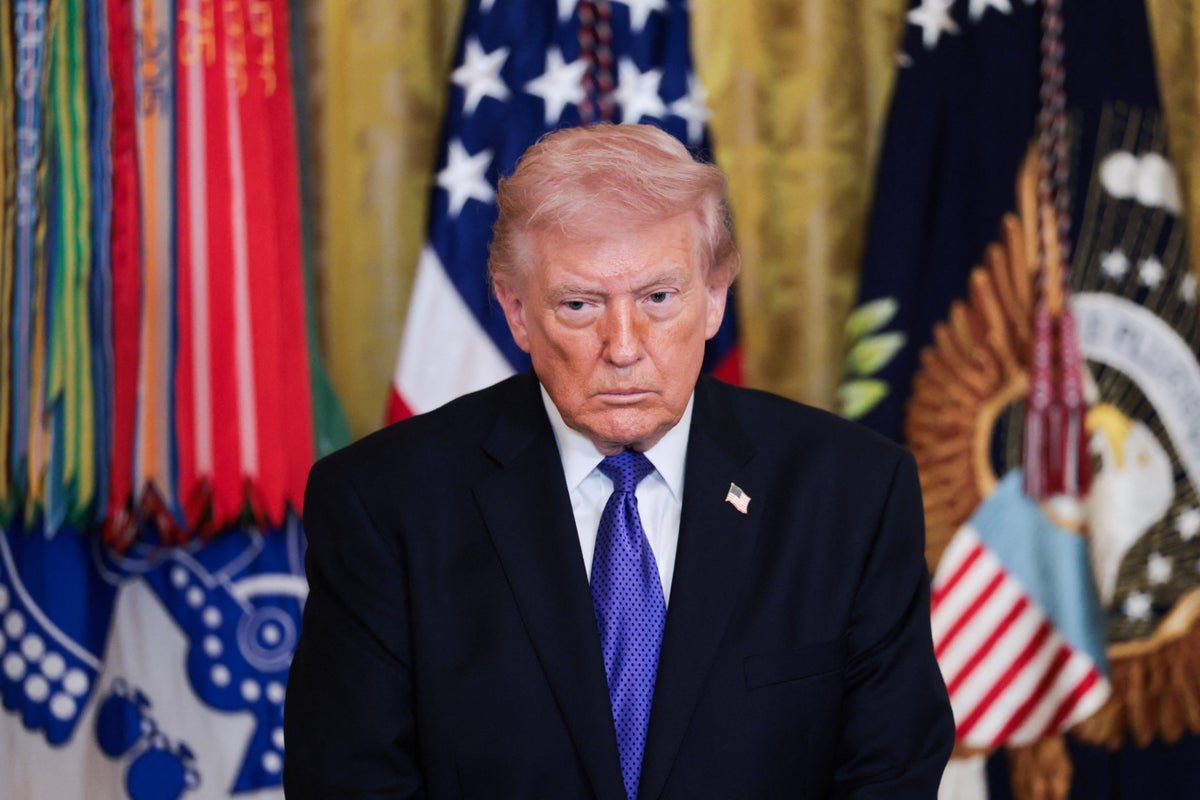
That means the effective end of Trump, who, we shall shortly find confirmed, is not making America great again after all. No, he is about to make Americans – and the rest of us – much poorer.
The transmission mechanism for this disaster is twofold and fairly straightforward to plot. In the first place, as with previous instability in the Middle East and the full-scale invasion of Ukraine by Putin four years ago, the price of oil and gas spikes. It has already – natural gas is up by 50 per cent or more, because so much is, or rather was, produced by Qatar and exported via the Straits of Hormuz, which Iran controls.
Oil is up by less – 10 per cent or so – but the Saudis’ and other fields, pipelines and ports are equally vulnerable to even clumsy, amateurish attacks from Iran and its terrorist proxies. The Shahed drone really comes into its own in such a scenario – cheap to make, elusive, extremely effective at attacking infrastructure, and extremely costly to shoot down when using conventional fighter aircraft.
It is what we’ve seen happen so often in Ukraine. The economies of the Gulf states will be crippled by this war. (We also have to factor in the damage to already-sanctioned Iranian exports and the effects this will have on global oil supplies.)
Within weeks, unless there is a ceasefire, all this will feed through into rocketing energy bills for households and businesses, and at petrol stations. That means another spike in inflation just as the developed world is recovering from the one induced by the Ukraine war (albeit that also directly impacted wholesale world food prices via the cost of sunflower cooking oil and wheat).
That, in turn, will hurt business profits and employment on the one hand, but also cause an underlying increase in inflationary pressures on the other. The latter will make it harder for central banks to carry on reducing interest rates.
Uncertainty will hit business confidence and investment, and consumer confidence and spending. We will feel, and be, poorer than if the Iran war hadn’t begun – another bout of stagflation. This will have obvious political consequences, especially for Trump and the Republicans as they head into the midterm elections. It could be a Maga split and collapse.
That brings us to the second effect, which is on stock markets and people’s wealth rather than disposable incomes. Shares have had a good run, driven by high-tech and AI stocks, but the novel problem now is how closely linked they are to the cost of energy. Data centres, AI and cryptocurrency are highly energy-intensive and thus sensitive to world energy prices.
The world economy started gradually weaning itself off fossil fuels after the first and second oil crises in 1973 and 1979 (both triggered by Middle East/Iranian crises), but these new technologies, where there is so much investment and activity, have to some degree impeded that progress by increasing demand again.
Renewables obviously help, but the danger to these very energy-hungry new sectors is apparent. And because so much of the recent dramatic stock market gains have been driven by AI, so too are capital markets going to get upset by any sense of another prolonged conflict in the Middle East. This will hurt everyone’s savings and pension plans, and will feed through to property values too – further knocking confidence among investors, households and commerce.
In the case of the Americans, when they receive their 401(k) statements in a few weeks, they’ll be able to quantify exactly how much Trump’s war of choice in Iran will have cost them (thousands of dollars). And that’s before they fill up the car and see how prices are going up again at the mall – groceries included.
Of course, none of this may happen. The Islamic Republic of Iran may quickly surrender and invite the Shah’s son back from exile to set up a liberal, secular democracy under a constitutional monarchy with free speech and religious liberty for all.
In that case, Iran would become a formidable engine of economic growth for the whole world – it does have that much human and resource potential. On the other hand, things could just become messier and messier, with no clear winners and a fracturing and destabilisation of governments across the region. The good news, in a sense, is that that is not sustainable, militarily, economically or – crucially and decidedly – politically.
If the Iran war is going to end soon, then it will probably do so because Western voters, and that means in America, want it stopped. It’s how Vietnam, Afghanistan and Iraq ended.
Thankfully, there is every sign that that is precisely what is going to happen over Iran, sooner rather than later, because Trump, fearing impeachment above all else, really cannot afford to lose control of Congress this November. In due course, he will declare his unspecified goals have been achieved “like nobody’s ever seen before”, withdraw from the wreckage and start talking to the Iranians again, which he was still happy to do about a week ago. We hope.