US Politics
How the House could force a vote on releasing all the Epstein files — even if no more Republicans join

Your support helps us to tell the story
From reproductive rights to climate change to Big Tech, The Independent is on the ground when the story is developing. Whether it’s investigating the financials of Elon Musk’s pro-Trump PAC or producing our latest documentary, ‘The A Word’, which shines a light on the American women fighting for reproductive rights, we know how important it is to parse out the facts from the messaging.
At such a critical moment in US history, we need reporters on the ground. Your donation allows us to keep sending journalists to speak to both sides of the story.
The Independent is trusted by Americans across the entire political spectrum. And unlike many other quality news outlets, we choose not to lock Americans out of our reporting and analysis with paywalls. We believe quality journalism should be available to everyone, paid for by those who can afford it.
Your support makes all the difference.
Read more
On Wednesday, amid the fracas between Democrats and Republicans about the killing of conservative activist Charlie Kirk, the House of Representatives swore in its newest member.
Democratic Rep. James Walkinshaw won his special election for Virginia’s 11th district after the death of his former boss, the late Gerry Connolly, who died earlier this year. Immediately, Walkinshaw signed the discharge petition by Reps. Thomas Massie (R-Ky.) and Ro Khanna (D-Calif.) to release files related to Jeffrey Epstein.
In the weeks since the House returned from the August recess, House Speaker Mike Johnson and President Donald Trump have run a blitz campaign to prevent other Republicans from signing the petition.
If Massie and Khanna receive a majority of signatures, they can force a vote on legislation, going outside of the normal committee process and around leadership. Massie said that he was confident the number of signatures would hit 218.
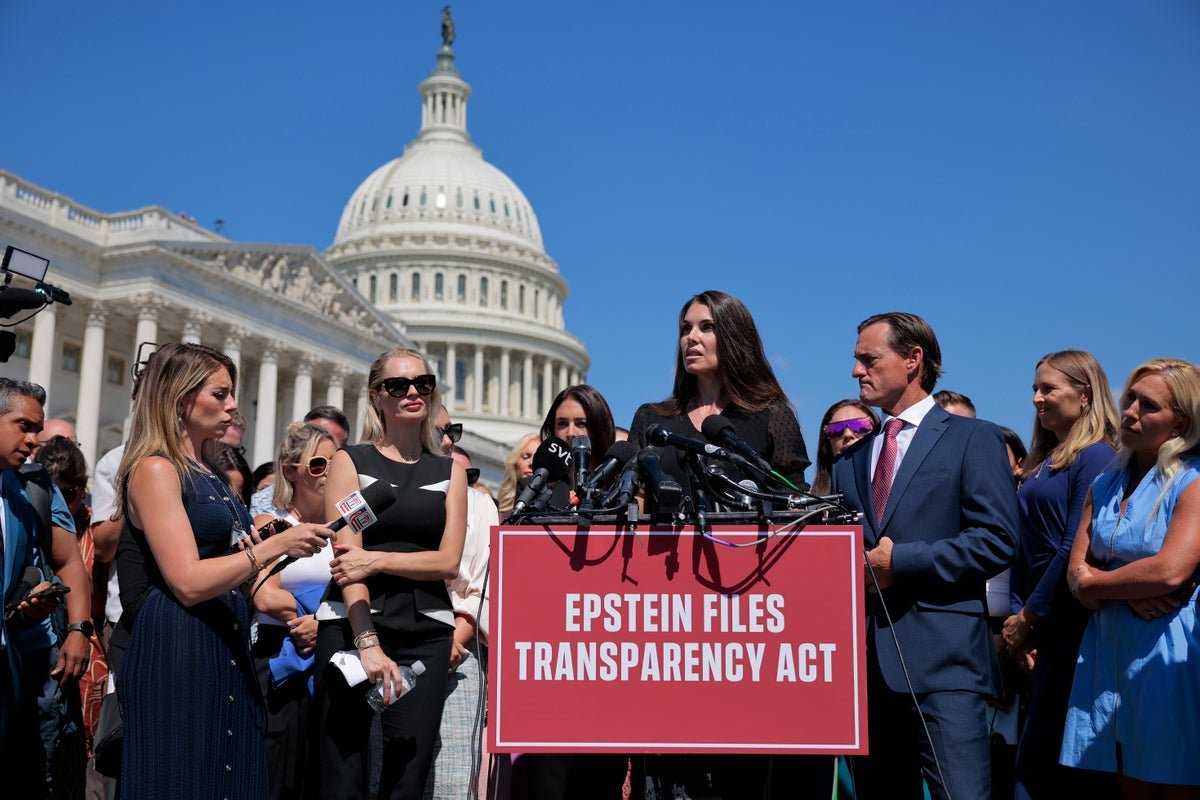
“We have 217 of the 218 signatures required,” he said on X. “We just need one more Congressman to sign the discharge petition in order to force a vote in the House on a bill to release the Epstein files. Victims deserve justice and Americans demand transparency.”
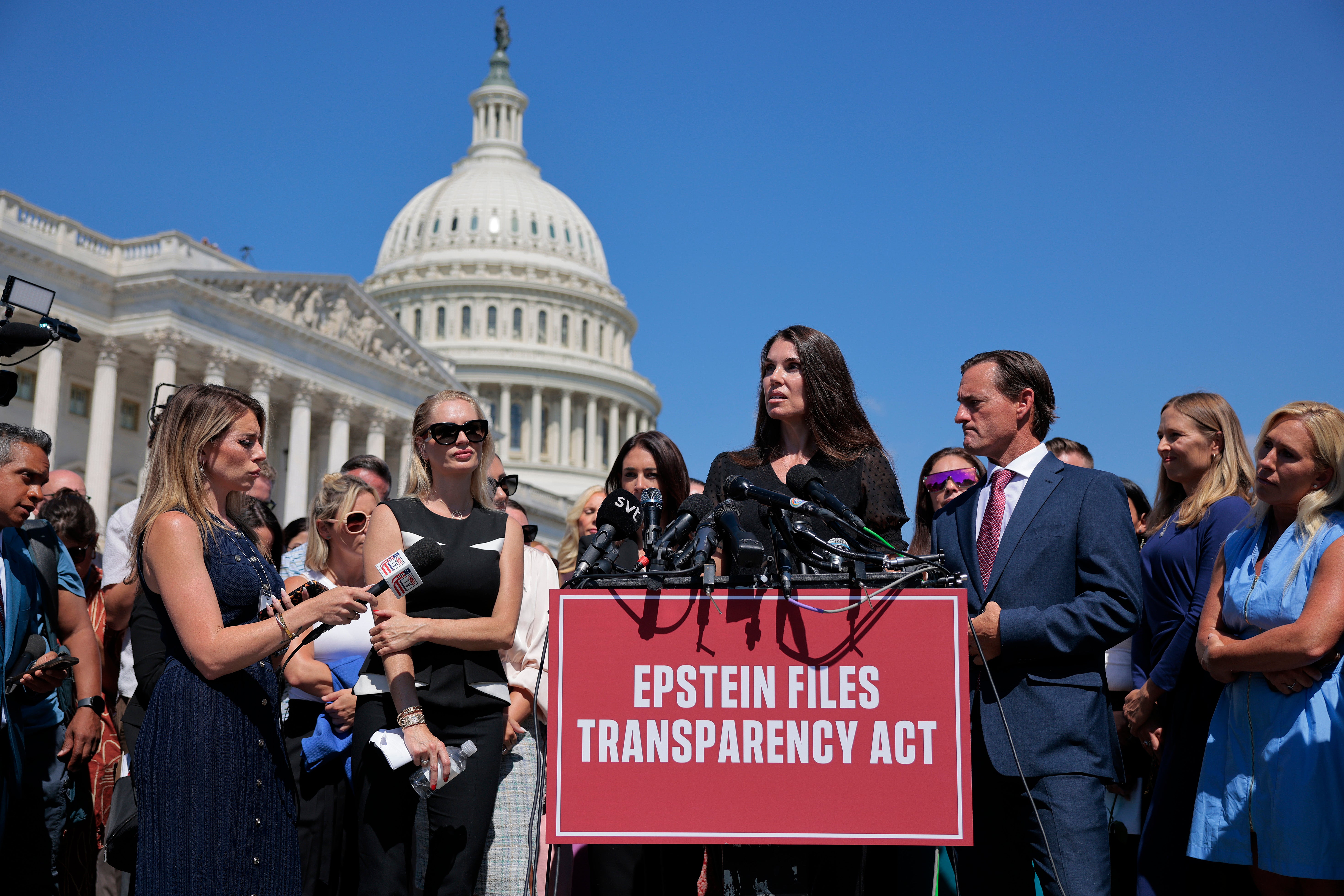
So far, only three Republicans — Reps. Marjorie Taylor Greene of Georgia, Lauren Boebert of Colorado and Nancy Mace of South Carolina — have signed onto the discharge petition, while all 213 Democrats have signed onto it. On Thursday, Massie said they need only one more signature.
But no additional Republicans appear eager to sign on. Despite the fact that survivors of the late convicted sex offender came to Capitol Hill last week to urge a vote on the legislation, most Republicans have refused to do so, many in fear of angering President Donald Trump.
Shortly after Epstein’s survivors spoke on Capitol Hill, Trump impugned the investigation as “a Democrat hoax that never ends.”
The House Oversight Committee’s release of a “bawdy” birthday card Trump allegedly sent to Epstein that featured a drawing of a naked woman with Trump’s signature in place of a woman’s pubic hair did not trigger a change of heart for Republicans. Rather, they deflected or denied they had seen it.
But two more Democratic-leaning seats will hold special elections in the coming months. On September 23, Arizona will hold a special election for the 7th congressional district to replace Democratic Rep. Raúl Grijalva, who died earlier this year.
Grijalva’s daughter Adelita is almost guaranteed to sign the petition, which would give Massie and Khanna’s discharge petition the requisite 218 votes needed to put the discharge petition on the floor.
And in case Democrats need an additional vote, on November 4, Texas will hold a special election to fill the seat for Texas’s 18th district. Freshman Rep. Sylvester Turner died in March. The overwhelmingly Democratic district will almost certainly elect another Democrat.
For the most part, Democrats have been saddled by the fact that their overwhelmingly older caucus has meant they can lose crucial votes simply by a member falling ill or dying. But these special elections might wind up being the spark that finally sets off the bombshell in the House of Representatives.
At the same time, the legislation would still need to receive a vote in the Senate. On Thursday, Senate Minority Leader forced a vote on an amendment to the 2026 National Defense Authorization Act, which grants the authority for Pentagon spending.
But Senate Republicans blocked the attempt 51-49. Only two Republicans–Sens. Josh Hawley and Rand Paul (R-Ky.)–joined the Democrats.