US Politics
How a Ford pickup truck could become key to Japan’s plan to woo Trump

Your support helps us to tell the story
From reproductive rights to climate change to Big Tech, The Independent is on the ground when the story is developing. Whether it’s investigating the financials of Elon Musk’s pro-Trump PAC or producing our latest documentary, ‘The A Word’, which shines a light on the American women fighting for reproductive rights, we know how important it is to parse out the facts from the messaging.
At such a critical moment in US history, we need reporters on the ground. Your donation allows us to keep sending journalists to speak to both sides of the story.
The Independent is trusted by Americans across the entire political spectrum. And unlike many other quality news outlets, we choose not to lock Americans out of our reporting and analysis with paywalls. We believe quality journalism should be available to everyone, paid for by those who can afford it.
Your support makes all the difference.
Read more
While Japan is known for its compact vehicles, Prime Minister Sanae Takaichi presented a different image to build rapport with visiting U.S. President Donald Trump this week.
She strategically placed U.S.-made cars, including an enormous American Ford F-150 truck, in the courtyard of Akasaka Palace for their initial talks.
This diplomatic gesture demonstrates Takaichi’s ambition to strengthen economic ties with Washington and cultivate a robust relationship with Trump.
A fan of the F-150, Trump has welcomed the possibility of Japan buying dozens of the pickups, having often complained about the lack of American cars and strict safety standards in the country.
However, the scarcity of large American automobiles in Japan may stem from more practical reasons, including local tastes, road conditions, and marketing, rather than solely regulatory hurdles.
The trucks may be too big for Japanese roads

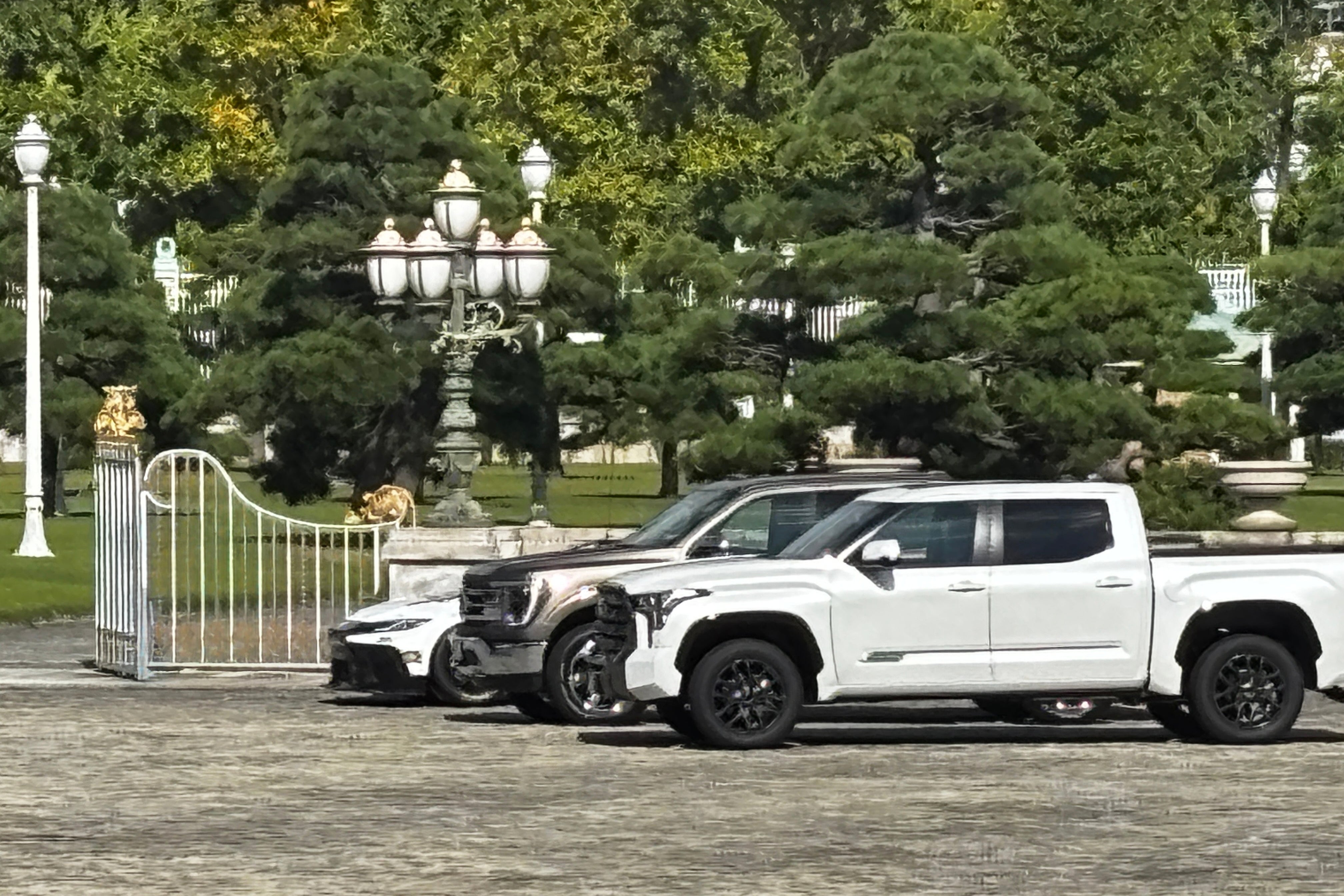
open image in gallery
Japan is smaller than California, there is limited parking and many streets here are very narrow.
Consumers seem to prefer compact or mini cars that can easily navigate the crowded, narrow roads. Those who can afford more expensive foreign cars tend to go for compact or medium-size vehicles from Europe, such as Mercedes-Benz, BMW, Volkswagen and Audi.
Except for American-produced Japanese cars such as Honda, Mazda and Nissan, the top-selling American brand is Jeep, according to the Japan Automobile Importers Association.
Many American cars have their steering on the left side, the opposite of the standard right-side steering in Japan, where expressway tolls are on the right side, for instance. Lower mileage and lack of maintenance and service networks also help explain why American brands except for Jeep have struggled in Japan.
“Why don’t American cars sell well in Japan? Because they lack understanding for road conditions and housing situations, as well as energy conservation,” former Prime Minister Shigeru Ishiba told parliament in April.
Trump loves the idea, but it’s unclear how Japan will respond


open image in gallery
When Trump heard of the Ford truck idea as he flew to Asia on Air Force One, he reacted enthusiastically.
“She has good taste,” Trump told reporters of Takaichi. “That’s a hot truck.”
The underlying context is Takaichi’s need to figure out how to navigate the complex trade relationship that Trump shook up earlier this year with tariffs.
Trump wants allies to buy more American goods and also make financial commitments to build factories and energy infrastructure in the United States.
Japan’s previous administration agreed in September to invest $550 billion in the U.S., which led Trump to trim a threatened 25% tariff on Japanese goods to 15%. But Japan wants the investments to favor Japanese vendors and contractors.
In Japan, sport utility vehicles and are becoming popular among people with families and for outdoor activities such as camping, but buyers often go for more stylish, smaller models.