US Politics
Google and Apple warn H-1B workers against holiday international travel over risk of being stranded abroad

Your support helps us to tell the story
From reproductive rights to climate change to Big Tech, The Independent is on the ground when the story is developing. Whether it’s investigating the financials of Elon Musk’s pro-Trump PAC or producing our latest documentary, ‘The A Word’, which shines a light on the American women fighting for reproductive rights, we know how important it is to parse out the facts from the messaging.
At such a critical moment in US history, we need reporters on the ground. Your donation allows us to keep sending journalists to speak to both sides of the story.
The Independent is trusted by Americans across the entire political spectrum. And unlike many other quality news outlets, we choose not to lock Americans out of our reporting and analysis with paywalls. We believe quality journalism should be available to everyone, paid for by those who can afford it.
Your support makes all the difference.
Read more
Tech giants Google and Apple have advised their employees on H-1 B visas against traveling overseas at present, citing concerns they could face extended delays at embassies when awaiting re-entry stamps, according to a report.
A memo from BAL Immigration Law, which represents Google, first reported by Business Insider, advises employees to undertake domestic travel only due to extended visa processing delays abroad stemming from a new U.S. social media screening directive.
A recently introduced security protocol from the Department of Homeland Security requires that travellers seeking to enter the U.S. have their social media activity from the past five years reviewed by officials before entry is granted.
“Please be aware that some U.S. Embassies and Consulates are experiencing significant visa stamping appointment delays, currently reported as up to 12 months,” the memo read.
It went on to advise staff to avoid international travel as they would “risk an extended stay outside the U.S.”
open image in gallery
The firm said the backlogs are impacting people on H-1B, H-4, F, J, and M visas.
Berry Appleman & Leiden, another firm that works with Google, said in a similar memo reported by NPR: “We recommend avoiding international travel at this time as you risk an extended stay outside of the U.S.”
Fragomen, which represents Apple, issued a similar warning to Apple’s personnel. “Given the recent updates and the possibility of unpredictable, extended delays when returning to the U.S., we strongly recommend that employees without a valid H-1B visa stamp avoid international travel for now,” it said.
“If travel cannot be postponed, employees should connect with Apple Immigration and Fragomen in advance to discuss the risks.”
The U.S. Embassy in India meawhile posted on Monday that the social media vetting process commenced on December 15 and added: “We encourage applicants to apply as early as they can and anticipate additional processing time for these visa classifications.”
The situation is particularly bad news for Google and Apple, according to NPR, because they employ more than 300,000 employees and rely heavily on highly skilled foreign workers.
The Independent has reached out to Google, Apple, the State Department, and the White House for comment.

open image in gallery
The Trump administration sparked panic in September over H-1 B visas when President Donald Trump abruptly announced that a $100,000 fee would be introduced, charging applicants rather than granting them through a lottery system.
That led several major corporations, including Amazon, Microsoft, and JPMorgan Chase, to instruct their employees overseas to return home as soon as possible to dodge the financial penalty.
The White House later clarified that the fee would apply only to new applicants, not to existing holders. Still, by then, the president’s announcement had already caused airfare prices to skyrocket.
The visas in question were first introduced under the 1990 Immigration Act to allow U.S. companies to hire workers with technical skills and qualifications that are difficult to find in the U.S.
They are not intended for individuals who wish to reside permanently. Some eventually do, but only after transitioning to different immigration statuses.
There are currently “around 700,000 H-1B visa holders in the country and another half a million or so dependents,” according to Capital Economics commentator Stephen Brown.
The attempt to profit from selling the coveted visas drove a wedge this fall between Trump’s MAGA movement, which includes both anti-immigrant constituents, such as Laura Loomer and Steve Bannon, who hope to deter new arrivals, and entrepreneurs like Elon Musk and Vivek Ramaswamy, who want to encourage them.
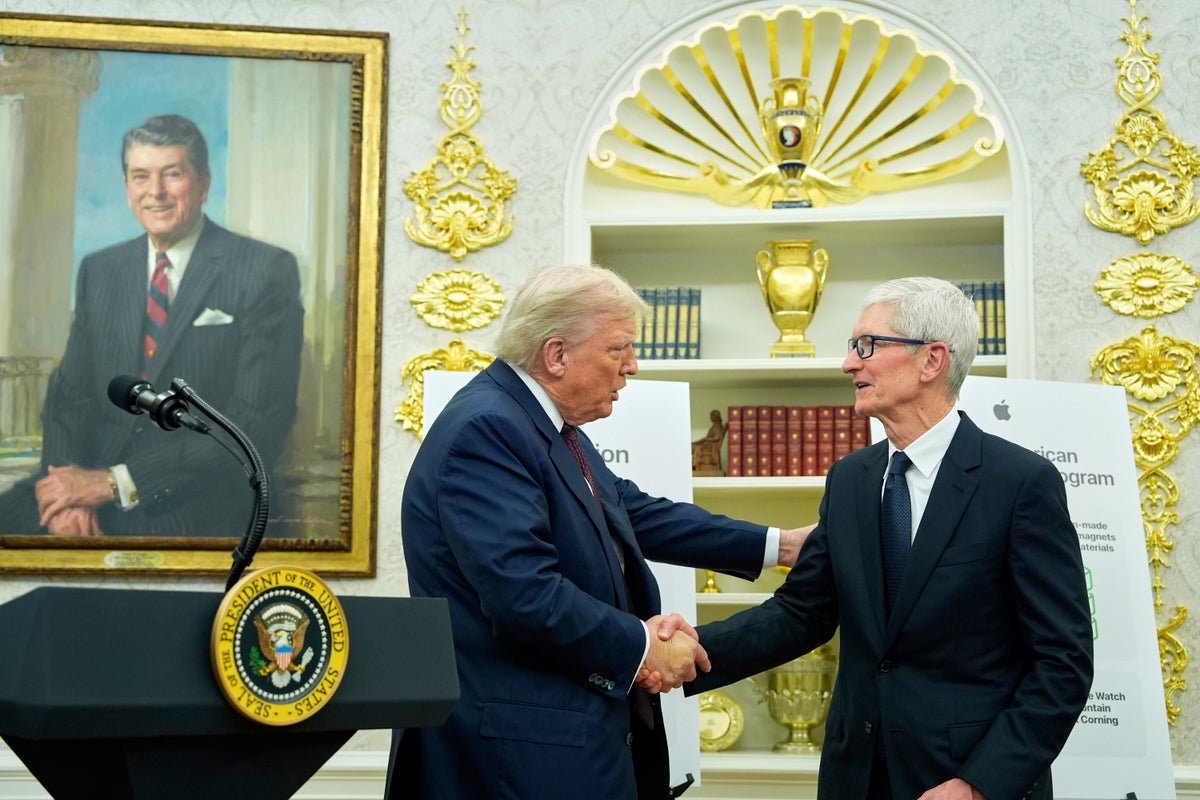
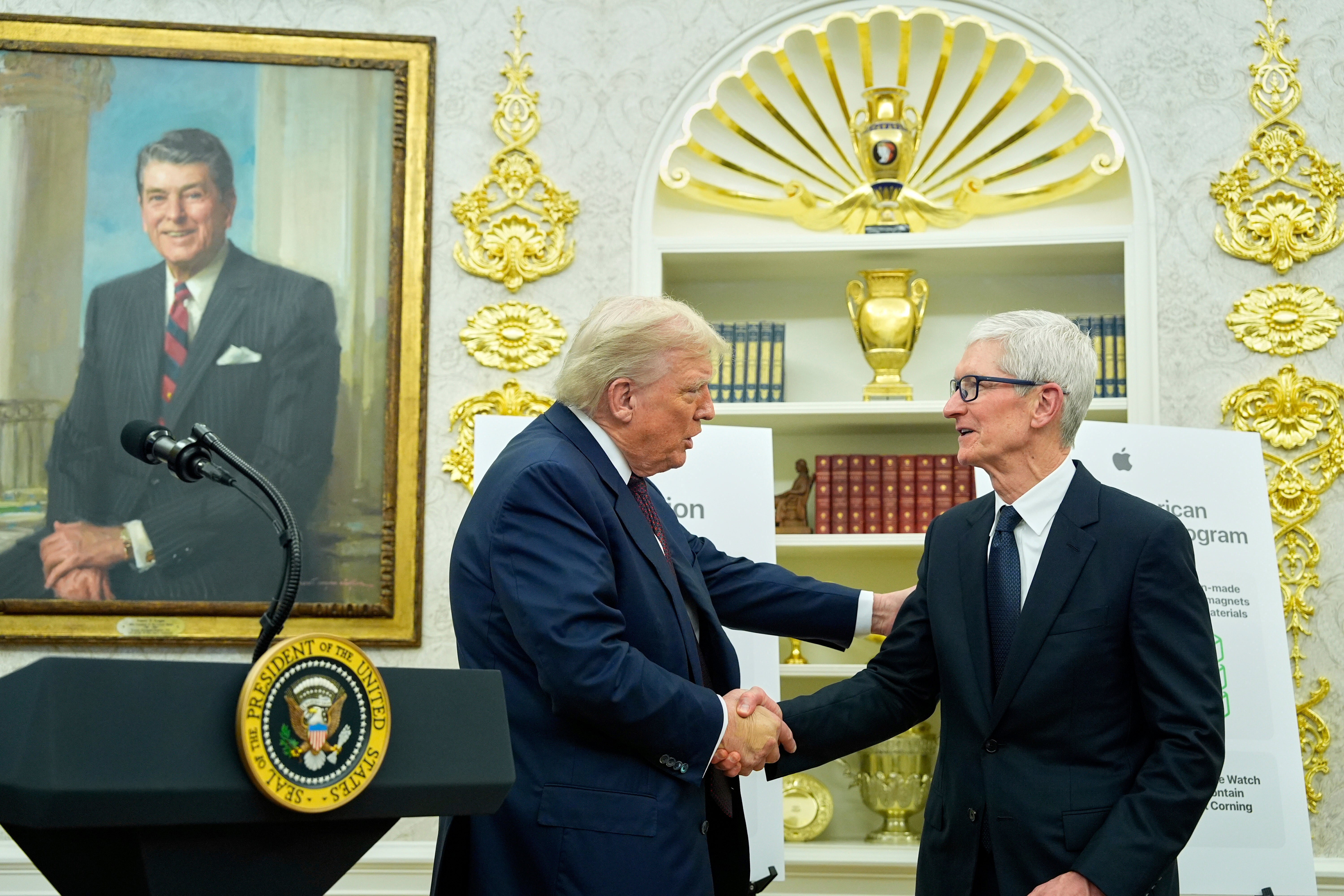
The titans of Big Tech, from Elon Musk and Apple CEO Tim Cook to Meta’s Mark Zuckerberg and Google’s Sundar Pichai, have worked hard to ingratiate themselves with Trump this year, attending his inauguration at the Capitol in January and several events at the White House since.