
Lifestyle
GLP-1 … and done. The people who say weight loss drugs didn’t live up to the hype.

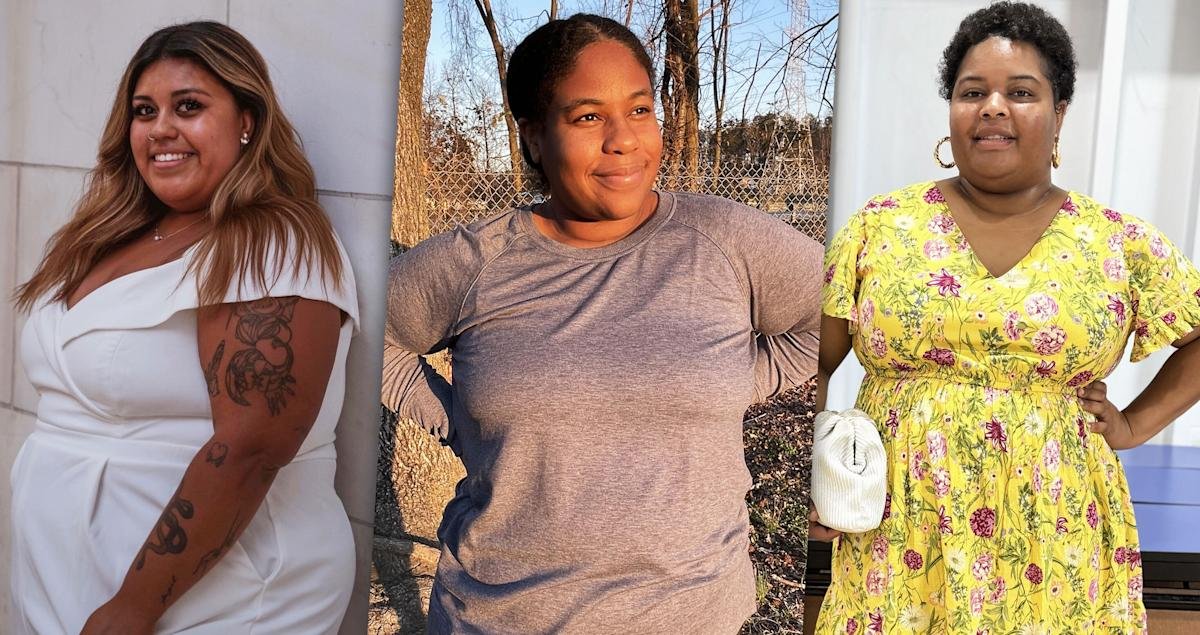
Rachel Reilly thought that taking a GLP-1 would help her lose weight and ease the symptoms of her polycystic ovarian syndrome (PCOS). Instead, she says it landed her in the emergency room — twice.
Reilly’s doctor had prescribed Zepbound, one of the GLP-1 medications that has become synonymous with transformative weight loss and touted for its benefits, including improving diabetes, cardiovascular health and sleep apnea — and perhaps even PCOS. Reilly had seen videos online of people who said GLP-1s helped their PCOS symptoms, and felt hopeful when she started the medication. “I feel like people don’t really talk about the nasty sides of it, so I was kind of under the impression it was going to go well,” she tells Yahoo.
Many people have reached their health and weight loss goals on GLP-1 medications, with some garnering large social media followings by documenting their journeys. But no medication is perfect, and some people have been disappointed with the drugs or say the side effects aren’t worth it. We spoke to three of them about what went wrong and what they wish they’d known before they started.
‘I chose quality of life over weight loss’
For most of her life, Reilly has struggled with her weight and with PCOS, which often comes with insulin resistance. She’d tried exercising and working with a nutritionist, but neither made much difference in her weight or her PCOS symptoms. At 25, she was ready to try another option.
In April, Reilly took her first shot of Zepbound. The medication suppressed Reilly’s appetite, but even that wasn’t altogether good for her well-being. “I have suffered with an eating disorder in the past, and it was kind of like that [disorder] was easier to succumb to because I wasn’t hungry,” Reilly tells Yahoo. “Basically, all you’re doing is taking away that feeling of hunger, so it’s a lot easier to reduce your calorie intake.”
She lost 19 pounds in total, but by the time her dose was increased (in her case, to 7.5 milligrams) — the standard procedure for GLP-1s to maintain progress — Reilly was waking up feeling sick every morning. She had diarrhea and nausea and felt exhausted all the time. Her two ER trips in the span of a few months were caused by dehydration from diarrhea. She also developed “sulphur burps” that made her fear she had pancreatitis. “There are so many people on these medications, but they won’t speak up about [the side effects],” says Reilly. “They just want to post [on social media] about how much weight they lost and, ‘Go on it!’”
Reilly’s doctor suggested reducing her dose back down 5 milligrams in the hopes that her side effects would be milder. But she still felt terrible. She quit taking Zepbound in July, tried one more dose in mid-August and quit again. “After a while, I was like, ‘I’m going to choose quality of life over weight loss,’” Reilly says.
‘Yeah, not doing this again’
Like Reilly, Stephanie McDaniel tried a GLP-1 (a compounded version of tirzepatide, the active ingredient in Zepbound), stopped due to side effects and then tried again before deciding it just wasn’t right for her.
McDaniel had a completely different set of side effects, however. Shortly after starting tirzepatide in October, she noticed what she at first thought were signs of typical injection site irritation: some redness and itching. But by November, it was no longer just a little itch. A scabby rash developed around her belly button, which was oozing pus. Soon, the rash spread, with hives appearing in her armpits, as well as on her thighs, abdomen, arms and neck. “I hadn’t genuinely experienced anything like it in my life,” McDaniel tells Yahoo. “I was so scared, so confused — I had no idea what was happening.”
A nurse practitioner in her doctor’s office thought McDaniel had one or several infections and prescribed antibiotics. That seemed to help clear up the rash, but McDaniel also paused her GLP-1 injections. When she started on the weight loss medication again months later, the same symptoms cropped up. Her doctor determined that McDaniel was among a small subset of people (between about 1% and 3%) who develop allergies to GLP-1 injections. “It got better with time because I was no longer injecting myself, but the biggest takeaway was, Yeah, not doing this again,” McDaniel says.
‘Some people are willing to go through the stomach pain, the throwing up, the fatigue’
Sefra Hirston, 28, has just about tried it all when it comes to GLP-1s. She says her fridge is full of boxes of Ozempic, Wegovy and Zepbound. Her first time taking Ozempic in 2021 went well, but eventually, she couldn’t get it amid shortages. When she finally restarted the drug in 2023, she had a completely different experience, which included nausea and vomiting. “It made me scared to try again” with Ozempic. Earlier this year, her doctor suggested Zepbound instead, “and I ended up in the hospital with severe acid reflux,” Hirston tells Yahoo.
Hirston also has insulin-resistant PCOS and is prediabetic, and from her online research, it seemed that most women with her condition were “saying it’s great, because they are losing weight,” Hirston says. She says she’s highly motivated to lose weight, and even got a prescription to try a third GLP-1, Wegovy. But, for the time being, it’s sitting in the fridge alongside the other medication boxes. “When women are losing weight, they’re satisfied, and some people are willing to go through the stomach pain, the throwing up, the fatigue,” and worse, Hirston says. “But when it starts to affect your health and give you additional [diagnoses], it’s not worth it.” Now, she’s deciding whether to give Wegovy a chance or opt for bariatric surgery.
Why don’t GLP-1s work out for some people?
Experts don’t yet know why some people can’t tolerate these weight loss medications. While the gastrointestinal side effects of GLP-1s are very common and manageable for many, between 15% and 25% of people simply can’t tolerate them. Another one in five patients on semaglutide (the active ingredient in Wegovy and Zepbound) don’t lose significant weight, Dr. Melanie Cree, a pediatric endocrinologist and director of the University of Colorado Anschutz PCOS clinic, tells Yahoo. “There is the perception that these are miracle drugs that work for everybody,” she says. “But the data’s been there the whole time” to show that’s not necessarily the case, Cree adds.
For many who are prediabetic or have type 2 diabetes, the benefits of GLP-1s are likely worth dealing with the side effects, Dr. Andrea Dunaif, chief of the division of endocrinology, diabetes and bone disease for the Mount Sinai Health System, tells Yahoo. But, “for the group of people we call metabolically healthy obese, if they don’t have any [health problems] related to high-BMI, there’s nothing that’s urgent that you need to lose weight for,” says Dunaif.
Despite the side effects that made Reilly, McDaniel and Hirston decide to quit taking GLP-1s, all say they would never discourage someone who wants to try one of these medications from doing so. “I hope that my story doesn’t scare people away,” says McDaniel. “I just feel like an unlucky girl and wish I could take the medication; I know GLP-1s are helping a lot of people.” She adds: “If you’re going to do it, talk to your doctor first.”
Still, she wishes more GLP-1 users would share the downsides — not just the successes — on social media. “It’s hard to find anything that scrutinizes [these medications] because it’s drowned out in the positive experiences,” McDaniel says. “I think it’s important for people to be open-minded, listen to both sides and make an informed decision for themselves.”