
Breaking News
Charlie Kirk’s death renews focus on the balance between free speech and safety

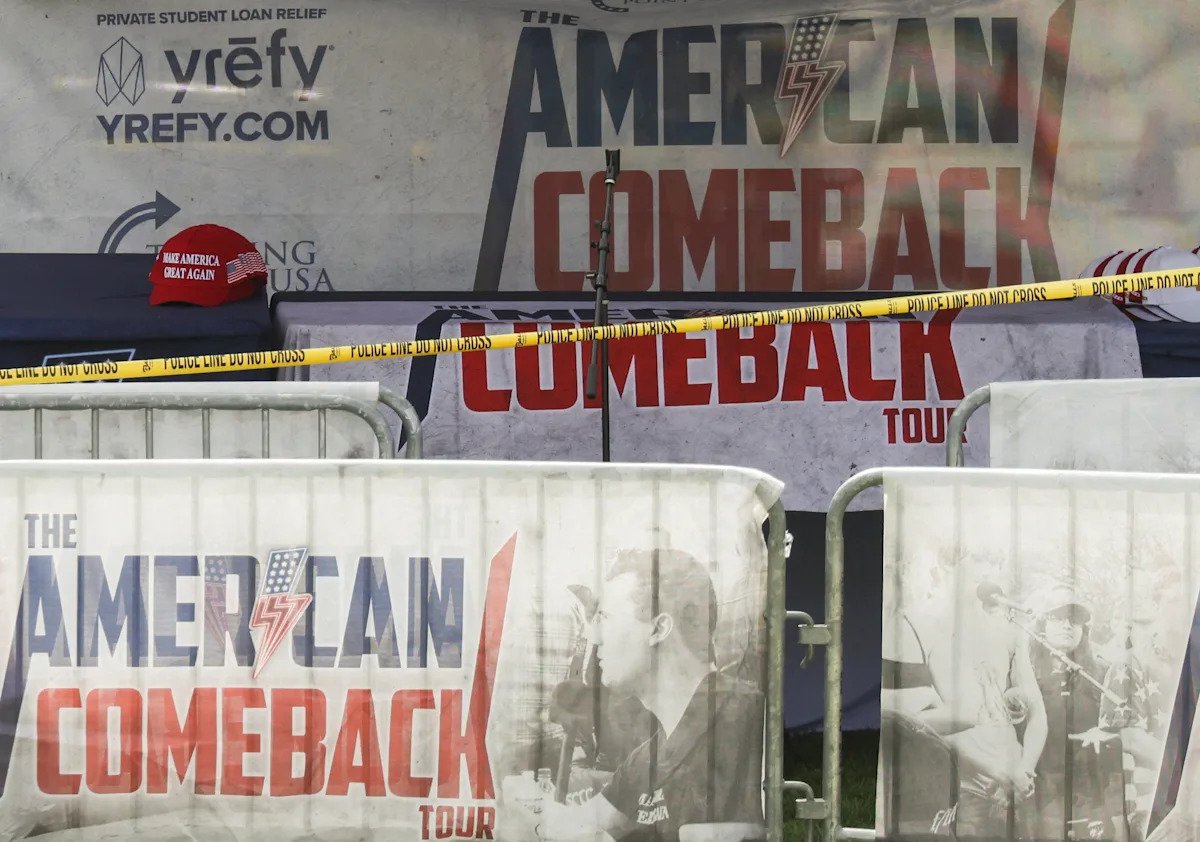
The assassination of conservative activist Charlie Kirk at a Utah university on Sept. 10 brings to the forefront the challenge colleges and universities face in balancing a mission of critical inquiry with maintaining safety in an era of political violence.
It’s a “major dilemma” for schools around the country, said Ken Paulson, director of Middle Tennessee State University’s Free Speech Center.
“We don’t want campuses to be able to turn away speakers that don’t have the resources for security,” he said. “You also don’t want a situation where only the most tame and tepid speakers can come because they don’t provoke angry responses.”
It’s a challenge that’s “keeping me up at night,” said Todd Wolfson, a Rutgers University professor who also serves as president of the American Association of University Professors.
“I am worried,” he said. “I’m worried about the culture right now on our campuses.”
But the issue is larger than just college campuses, he said, echoing concerns other experts expressed to USA TODAY about a growing national trend of polarization and violence.
Kirk’s death is the latest in a wave of acts of political violence that, to some, echoes the era in which numerous national leaders, including President John F. Kennedy, the Rev. Martin Luther King Jr. and Robert F. Kennedy, were assassinated.
“The concern is something is igniting here in America that unfortunately is all too familiar to those who lived in the ’60s and ’70s,” said Paulson, a former USA TODAY editor in chief.
Kirk’s death also comes at a time when free speech issues are pervading college campuses around the country and prompting fierce debate among school leaders about how best to respond.
On Sept. 9, the Foundation for Individual Rights and Expression (FIRE) published a report that found 1 in 3 college students accept, at least to some extent, violence as a means of stopping a campus speech.
Though they had different perspectives on the actions colleges and universities have taken and should take to address the issue, experts agreed that colleges and universities need to be at the forefront of the fight to promote both free speech and public safety.
They universally agreed that Kirk’s murder cannot dissuade schools from hosting controversial speakers.
“We can’t shut down speeches on college campuses because some people are willing to … channel their political anger into violence,” Paulson said. “As a nation, it’s important that we continue to have these voices, and universities simply have to find a way to make that happen.”
A need for more security on campuses
Avoiding an era similarly plagued by political violence will require schools to scrutinize their security protocols and resources to ensure adequate protection for speakers, experts said.
Robert Shibley, special counsel for campus advocacy at FIRE, acknowledged that schools have varying amounts of resources available for security. At the same time, colleges and universities should do whatever it takes to be “ultimate free speech zones,” he said.
A potential path forward, according to Shibley, could be increased collaboration with local and state governments to ensure adequate security on school campuses, particularly when it comes to visits from controversial speakers.
Wolfson, echoing the position of his organization, said guns should not be permitted on college campuses. It impedes efforts to have productive discussions on important and controversial issues when “somebody’s got a weapon on their hip,” he said.
Cultural change has ‘got to start somewhere’
Beyond measures to boost physical security, experts said a cultural change is also necessary.
Part of that would entail a broader public awareness and acceptance of the First Amendment, they said, pointing to the theory that free speech provides a “safety valve” that leads to less – not more – violence.
“If everyone has a voice, then there’s a free flow of ideas and it minimizes the chance that anyone feels they need to turn to weapons to be heard,” Paulson said.
Officials referenced such values in news conferences following Kirk’s death, with Utah Gov. Spencer Cox saying Kirk “believed in the power of free speech and debate” and Robert Bohls, special agent in charge of the FBI’s Salt Lake City field office, saying “any attack on the First Amendment is an attack on the very foundation of our democracy.”
Colleges and universities must champion such sentiments and promote tolerance not only of various identities but also of various ideologies, Shibley said.
Tom Ginsburg, a University of Chicago law professor and faculty director of the school’s Forum for Free Inquiry and Expression, said there have been efforts to promote ideological diversity on college campuses in recent years but “we need much more of it.”
Some school administrators have displayed “cowardice” in the face of backlash over hosting controversial speakers, he said.
The University of Southern California said security concerns prompted it to cancel the commencement speech of its 2024 valedictorian, who was an outspoken advocate for Palestinians, according to The Associated Press. The school said its decision was solely about safety and had “nothing to do with freedom of speech,” the outlet reported.
Wake Forest University also canceled events with speakers on both sides of the Israel-Hamas war. School officials said an event with Palestinian American scholar Rabab Abdulhadi on the one-year anniversary of Hamas’ October 2023 attack in Israel was canceled because the school made the “conscious decision not to host events on this day that are inherently contentious and stand to stoke division.”
School leaders have to do more than just stay out of the way when it comes to fostering both free expression and safety, Ginsburg said. They have to actively work to expose students to the values and principles of the First Amendment to increase tolerance of diverse viewpoints.
It will be a heavy lift to make a cultural change, but experts said Kirk’s assassination shows the stakes are too high to avoid the work.
“Overall, I think they need to prioritize making sure that this does not mean there will be no further Charlie Kirks coming to campus,” Shibley said. “If that’s what it means, then the assassin has won.”
BrieAnna Frank is a First Amendment reporter at USA TODAY. Reach her at bjfrank@usatoday.com.
USA TODAY’s coverage of First Amendment issues is funded through a collaboration between the Freedom Forum and Journalism Funding Partners. Funders do not provide editorial input.
This article originally appeared on USA TODAY: After Kirk’s death, schools seek to balance free speech with safety