US Politics
Army intel chief warns enemies are targeting unhappy troops through unsolicited offers on social media

Your support helps us to tell the story
From reproductive rights to climate change to Big Tech, The Independent is on the ground when the story is developing. Whether it’s investigating the financials of Elon Musk’s pro-Trump PAC or producing our latest documentary, ‘The A Word’, which shines a light on the American women fighting for reproductive rights, we know how important it is to parse out the facts from the messaging.
At such a critical moment in US history, we need reporters on the ground. Your donation allows us to keep sending journalists to speak to both sides of the story.
The Independent is trusted by Americans across the entire political spectrum. And unlike many other quality news outlets, we choose not to lock Americans out of our reporting and analysis with paywalls. We believe quality journalism should be available to everyone, paid for by those who can afford it.
Your support makes all the difference.
Read more
U.S. Army intelligence has warned active-duty members of the military to beware unsolicited approaches on social networking sites like LinkedIn, warning they could be from foreign agents.
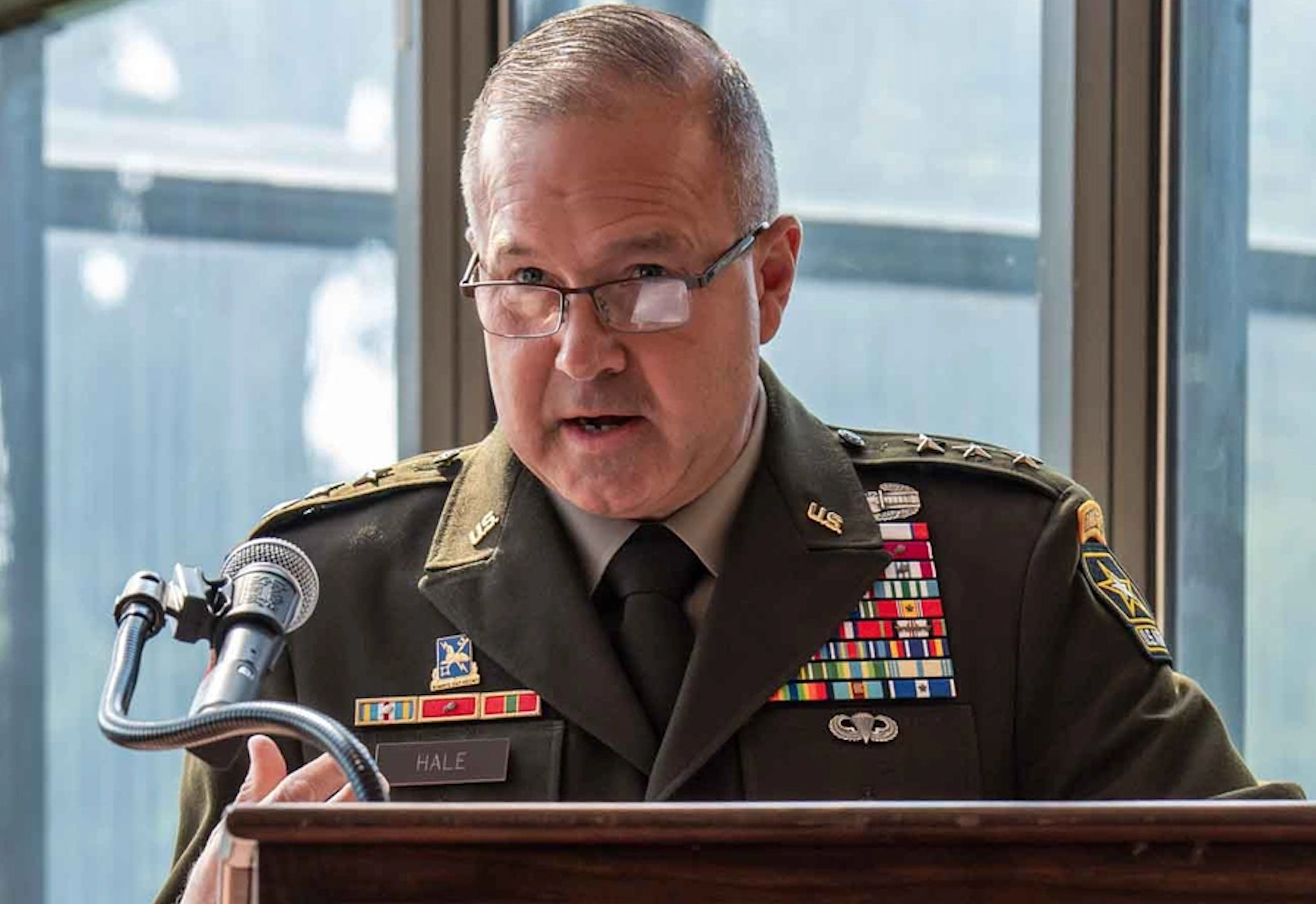
Lt. Gen. Anthony Hale, the Army’s Deputy Chief of Staff for Intelligence, warned that America’s enemies are seeking to exploit perceived disaffection in the ranks arising from the record 43-day government shutdown, which ended earlier this month but saw 750,000 federal employees furloughed without pay and personnel in uniform facing uncertainty over their paychecks and work orders.
“Foreign intelligence entities are online, posing as consulting firms, corporate recruiters, think-tanks, and other seemingly legitimate companies,” Hale wrote in a message dated November 13 but disseminated this week, according to MilitaryTimes.

open image in gallery
“Especially in the context of the recent lapse in appropriations and government shutdown, our adversaries are looking online to identify individuals seeking new employment opportunities, expressing dissatisfaction or describing financial insecurity.”
These overseas operatives, Hale said, may approach soldiers and veterans with job offers or promises of “easy” money in exchange for white papers or privileged information, with the intent to collect sensitive information for the benefit of their country at the cost of our own.”
Adam Lowe, a spokesperson for Army Counterintelligence Command, told MT that the service was seeing a “massive uptick” in such underhanded approaches, noting that Hale had issued a similar warning in May 2024.
“This latest one came at the very end of the shutdown when soldiers and Army civilians – many of whom have or had access to TS/SCI [Top Secret/Sensitive Compartmented Information] – were put in precarious financial situations,” he said.
“It’s also at a time when online political discourse [has] gotten worse, and adversaries take note of people with access expressing discontentment and look to exploit that.”


open image in gallery
Lowe indicated he could not say more because “active pursuit of the adversary” was underway, but did add that the Army had recorded 25 arrests and more than 650 national security investigations since Counterintelligence Command was activated four years ago, which he said represented a “significant increase” on earlier data.
Seven U.S. soldiers have been arrested and charged with crimes, including espionage and information sharing with foreign agents, so far this year.
Hale’s message offered the case of Korbein Schultz, a jailed 25-year-old intelligence analyst, as a warning to troops.
Schultz was sentenced to seven years in prison in April for “conspiring to collect and transmit national defense information, unlawfully exporting controlled information to China, and accepting bribes in exchange for sensitive, non-public U.S. government information,” according to the Department of Justice.
He was reportedly contacted by an alleged Chinese spy, known as “Conspirator A,” in 2022 through a freelance web-based work platform and ultimately persuaded to part with at least 92 documents on U.S. military capabilities regarding Taiwan and Russia for $42,000.
“Current and former federal employees must be aware of these approaches and understand the potential consequences of engaging,” Hale said in relation to Schultz’s fall from grace.
“If the offer seems flattering, urgent, exclusive, or too good to be true, it probably is.”