
Breaking News
Another ‘Big, Beautiful Bill’ may be coming to pay for the Iran war

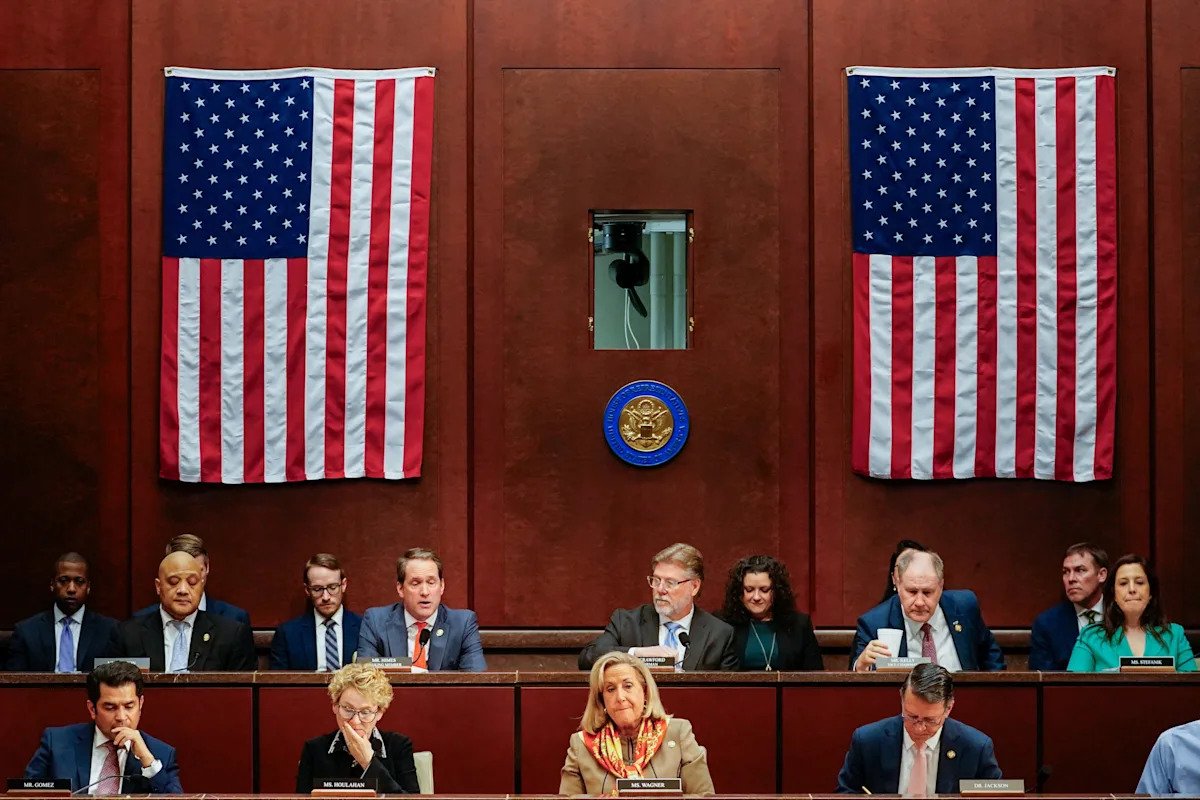
WASHINGTON − For weeks, speculation has grown on Capitol Hill about a second “Big, Beautiful Bill” as some Republicans push for another big legislative swing ahead of a midterm cycle that could cost them full control of Congress.
The talk is starting to get more serious, as lawmakers acknowledge that it may be the only way to pass as much as $200 billion in additional defense spending for the intensifying Iran war.
But the road through Congress for war cash is likely to be a tough one, with the GOP unable to afford losing few (if any) votes within already-thin margins in the Senate and House of Representatives. And it risks fracturing Republicans trying to present a unified party message as the November elections approach.
Read more: Trump says GOP lawmaker would have been ‘dead by June’ in awkward moment
While the politics of a Pentagon funding influx are complicated, the legislative logistics are relatively simple: Passing a big tax and spending law through a process known as “reconciliation” requires just a simple majority vote in the Senate.
That’s how the so-called Big, Beautiful Bill — a behemoth piece of legislation that slashed Medicaid, eliminated taxes on tips and overhauled student loans — came into being last year. Virtually everything else necessitates 60 votes, which requires support from Democrats.
Both strategies have pros and cons. The math for reconciliation, theoretically, is easier. Rep. Chip Roy, R-Texas, a hardline conservative, called it a “better approach” than wading into the territory of needing to court Democrats for votes.
He acknowledged the legislation could quickly balloon, complicating its feasibility of getting to President Donald Trump’s desk.

U.S. Rep. Chip Roy (R-TX) gets into an elevator as Republican lawmakers struggle to pass U.S. President Donald Trump’s sweeping spending and tax bill, on Capitol Hill in Washington, D.C., U.S., July 2, 2025.
“Obviously, that raises a lot of questions in terms of what would go along with it, and what we would do,” Roy told USA TODAY. “There are issues involving tax policy, health care policy. Everything starts opening up when you start going down the road of reconciliation.”
Another potential reconciliation push was a big topic of debate at House Republicans’ recent annual policy retreat in Doral, Florida. House Speaker Mike Johnson, R-Louisiana, told reporters on the trip that another such megabill would “not be as big, but it’d be just as beautiful.”
While lots of ideas were floated during lawmakers’ excursion to the Sunshine State, neither Republicans nor Democrats are as of yet entirely aware of what could end up included in another reconciliation package.
“Who would know?” Rep. Rosa DeLauro, D-Connecticut, the top Democrat on the House Appropriations Committee, told USA TODAY.
Republicans, she argued, “just continue to skirt the process, to fly in the face of how government does business.”
Read more: Trump may need billions for the Iran war. Congress stands in the way.
MAGA, Senate divisions

Rep. Lauren Boebert (R-CO), joined by Republican members of the House Oversight Committee walks outside for a media appearance prior to a closed-door deposition with former Secretary of State Hillary Clinton at the Chappaqua Performing Arts Center on Feb. 26, 2026 in Chappaqua, New York.
Two important Republican constituencies on Capitol Hill are already posing threats to another reconciliation bill’s success.
For one thing, at least one anti-interventionist conservative isn’t happy with the prospect of spending more money to support conflicts abroad instead of fixing problems at home.
“I am so tired of spending money on the industrial war complex,” Rep. Lauren Boebert, R-Colorado, a stalwart MAGA acolyte, told reporters last week. “I have folks in Colorado who can’t afford to live.”
Some pragmatists in the Senate are also hesitant to fully endorse such a plan. While some Republicans, such as close Trump ally Sen. Lindsey Graham of South Carolina, already are saying they’re “open” to approving war money through reconciliation, others don’t want to get on board yet.
“There’s no way to know actually what’s in it, and the likelihood of it actually moving anywhere, if we don’t have context,” Sen. James Lankford, R-Oklahoma, told USA TODAY.
Sen. Lisa Murkowski, R-Alaska, who cast the key vote last year for the “Big, Beautiful Bill,” has been increasingly skeptical of the war effort. She’s called in particular on the Trump administration to step up its communication with lawmakers before she can think about approving more Pentagon cash.
Read more: Murkowski skeptical about war cost estimates
The White House has “got to be able to provide us information as requested,” she said. “Don’t just take for granted that the Congress’ role is basically just to write a check.”
Zachary Schermele is a congressional reporter for USA TODAY. You can reach him by email at zschermele@usatoday.com. Follow him on X at @ZachSchermele and Bluesky at @zachschermele.bsky.social.
This article originally appeared on USA TODAY: What the Iran war means for talk of another ‘Big, Beautiful Bill’