US Politics
Active-duty Army troops prepare for Minnesota deployment, defense officials say: reports

Your support helps us to tell the story
From reproductive rights to climate change to Big Tech, The Independent is on the ground when the story is developing. Whether it’s investigating the financials of Elon Musk’s pro-Trump PAC or producing our latest documentary, ‘The A Word’, which shines a light on the American women fighting for reproductive rights, we know how important it is to parse out the facts from the messaging.
At such a critical moment in US history, we need reporters on the ground. Your donation allows us to keep sending journalists to speak to both sides of the story.
The Independent is trusted by Americans across the entire political spectrum. And unlike many other quality news outlets, we choose not to lock Americans out of our reporting and analysis with paywalls. We believe quality journalism should be available to everyone, paid for by those who can afford it.
Your support makes all the difference.
Read more
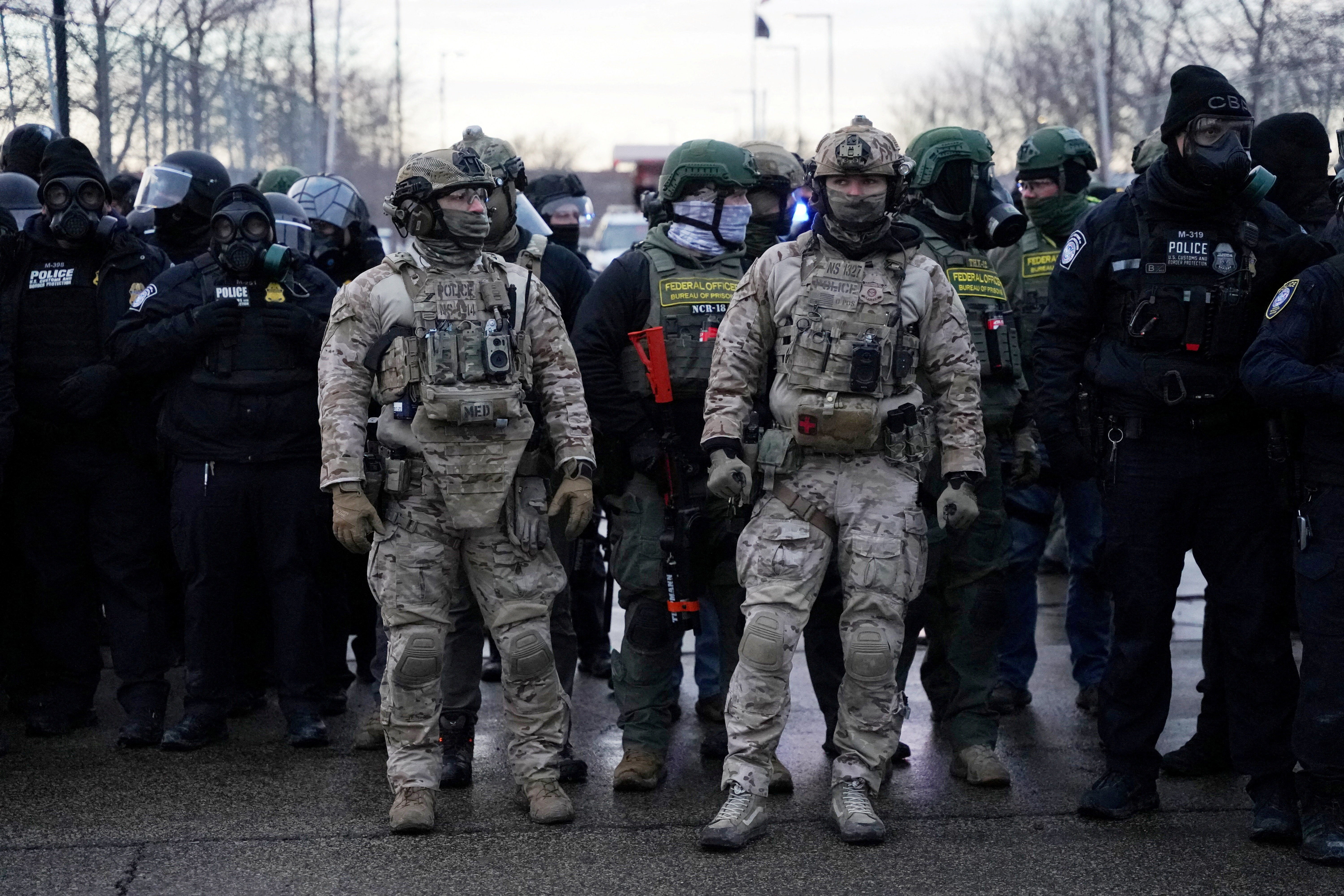
Roughly 1,500 active-duty soldiers are reportedly preparing for possible deployment in Minnesota following Donald Trump’s threats to invoke the Insurrection Act to crush protests against a surge of federal immigration officers in the state.
Service members are assigned to two infantry battalions with the Army’s 11th Airborne Division, which is based in Alaska and trained for cold-weather operations, according to The Washington Post, citing defense officials. ABC News first reported the move Saturday.
Pentagon officials said troops have been placed on alert to respond to potentially escalating violence in the Minneapolis area, describing the move as “prudent planning.”
The president has repeatedly suggested he could deploy active-duty military against Americans after demonstrations escalated in the wake of the killing of Renee Good, who was fatally shot by an Immigration and Customs Enforcement officer earlier this month. The president has labeled protesters “professional agitators and insurrectionists” in a state run by “corrupt politicians” his Department of Justice is also investigating over what critics have labeled spurious obstruction allegations.
The rarely invoked 19th century law would allow the president to dispatch active-duty troops and federalize National Guard service members to occupy a state and city led by Democratic officials and his political opponents.

open image in gallery
It was last invoked by former president George H.W. Bush to suppress Los Angeles riots in 1992 after the acquittal of four police officers over the beating of Rodney King.
The Independent has requested comment from the Pentagon and the White House.
In a statement shared with The Post, a spokesperson said that it was typical for the Department of Defense “to be prepared for any decision the president may or may not make.”
Last year, the president began ordering National Guard troops to several Democratic-led cities, an effort that one federal judge rebuked as “a national police force with the president as its chief.”
Legal challenges from state and local officials accused the administration of using American streets for political theater, and in December, the Supreme Court blocked the administration from sending the military into Chicago. Trump later announced the withdrawal of service members from other cities.

open image in gallery
Good’s death and the Trump administration’s allegations that she was a “violent rioter” who committed “terrorism” have sparked nationwide protests and outrage from elected officials across the country.
Administration officials argue Good “weaponized” her vehicle by making contact with the officer as she attempted to drive away from a group of agents who were swarming around her.
The president himself suggested that Good and her now-widow were “professional agitators” and White House press secretary Karoline Leavitt called her a “lunatic.”

open image in gallery
The Twin Cities are home to roughly 80,000 people of Somali ancestry, the vast majority of whom are legal residents or American citizens. But the president — seizing on a series of fraud cases involving government programs where most of the defendants have roots in Somalia — is surging federal law enforcement and Justice Department resources into the state as part of a nationwide mass deportation campaign.
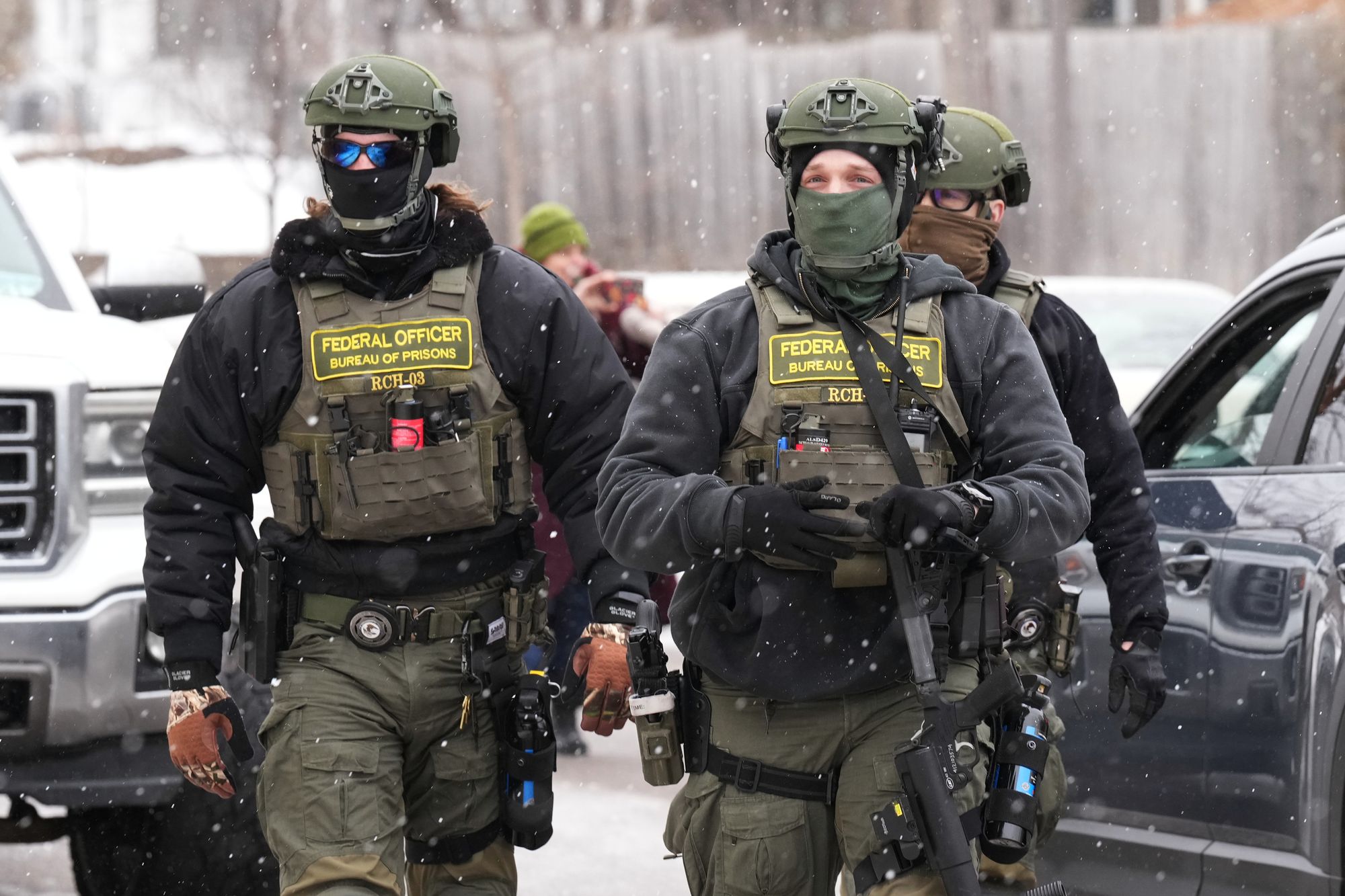
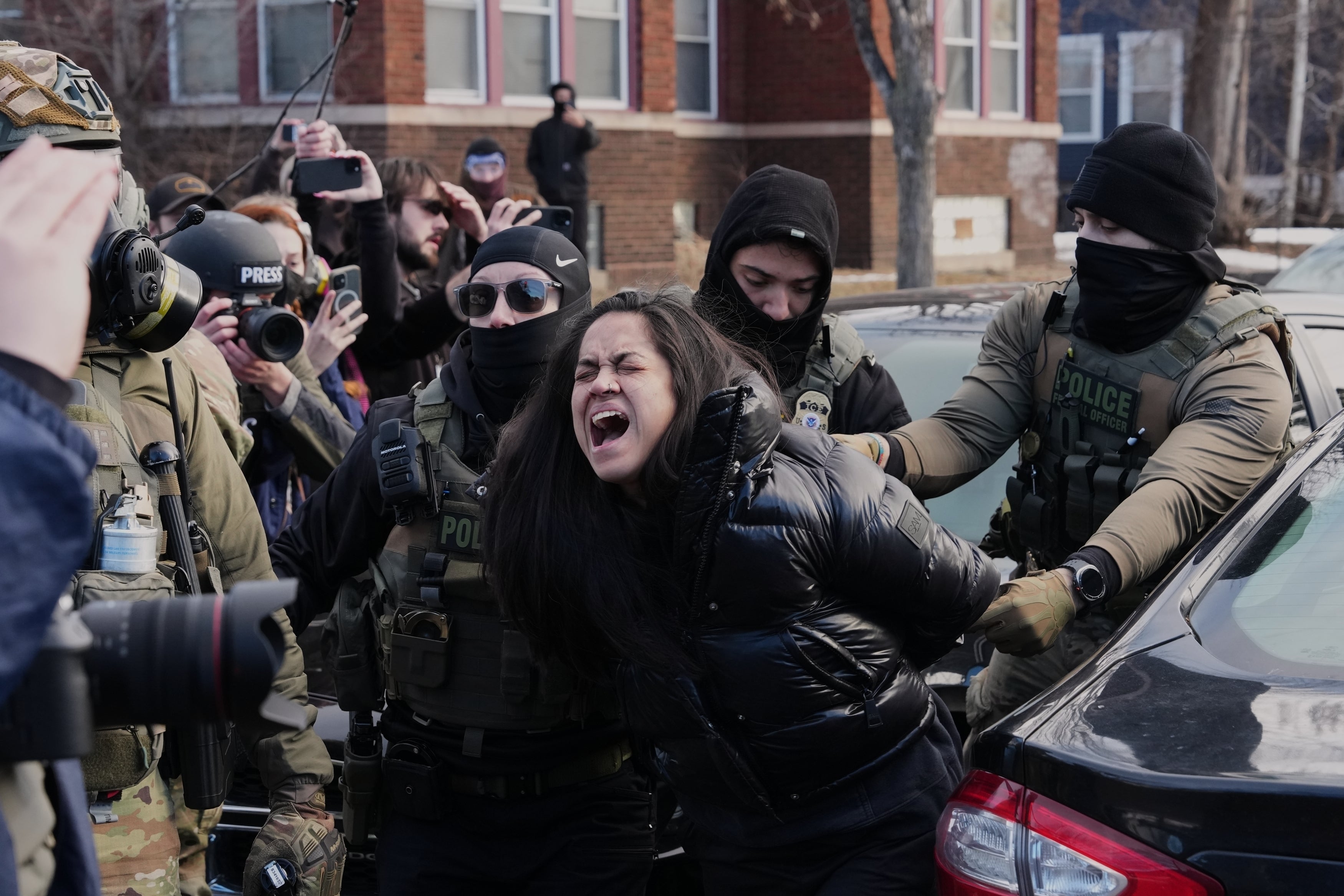
The surge is Homeland Security’s largest immigration enforcement operation yet, resulting in more than 2,500 arrests, with officers accused of violently targeting immigrants and citizens alike and facing off against protesters in violent clashes.
Minnesota officials have also sued the administration to stop the surge, alleging the operation is a politically motivated and unconstitutional attack on the state.
The Justice Department, meanwhile, has launched a criminal investigation into Governor Tim Walz and Minneapolis Mayor Jacob Frey, who have roundly rejected allegations and defended their response to what the mayor has called “chaos and danger” brought on the city by the Trump administration.
A federal judge has blocked federal officers from “retaliating” against protesters and firing riot control weapons into crowds demonstrating against the administration’s operations.
District Judge Kate Menendez, who was appointed by Joe Biden, has blocked federal agents during “Operation Metro Surge” from arresting anyone who is “engaging in peaceful and unobstructive protest activity” after a wave of complaints accusing officers of targeting peaceful demonstrators in violation of their First and Fourth Amendment rights.
Officers are barred from using “chemical irritants” and “intimidation, including by pointing firearms at them, detention, and arrest,” according to the judge’s Friday order.
They also are blocked from “stopping or detaining drivers and passengers in vehicles” when there is “no reasonable articulable suspicion that they are obstructing officers or roads, her order says.
A federal lawsuit accused federal officers of following demonstrators and observers home, firing chemical spray and rubber bullets and threatening them with arrest.