US Politics
Supreme Court preserves access to abortion drug mifepristone while legal battle continues

Your support helps us to tell the story
From reproductive rights to climate change to Big Tech, The Independent is on the ground when the story is developing. Whether it’s investigating the financials of Elon Musk’s pro-Trump PAC or producing our latest documentary, ‘The A Word’, which shines a light on the American women fighting for reproductive rights, we know how important it is to parse out the facts from the messaging.
At such a critical moment in US history, we need reporters on the ground. Your donation allows us to keep sending journalists to speak to both sides of the story.
The Independent is trusted by Americans across the entire political spectrum. And unlike many other quality news outlets, we choose not to lock Americans out of our reporting and analysis with paywalls. We believe quality journalism should be available to everyone, paid for by those who can afford it.
Your support makes all the difference.
Read more
The Supreme Court will continue blocking nationwide restrictions on mifepristone after a conservative appeals court cut off mail-order and telehealth access to the widely used abortion drug.
If the lower court’s decision was allowed to take effect, millions of patients across the country could be forced to travel to a health center to take the mifepristone pill in person — a journey that could be hundreds of miles for those living in states where abortion is banned altogether.
The Supreme Court has paused the appeals court ruling twice over the last week. The latest pause expired at 5 p.m. Thursday, but justices have now frozen the lower-court ruling entirely while the legal challenge continues.
Conservative Justices Clarence Thomas and Samuel Alito wrote dissenting opinions.
Advocates have warned that in-person requirements for mifepristone in a country with fragmented access to legal abortion could pose the biggest threat to abortion access since Roe v Wade was overturned. The latest fight for access to the commonly used drug will likely trigger another high-profile battle for abortion rights at the nation’s high court.
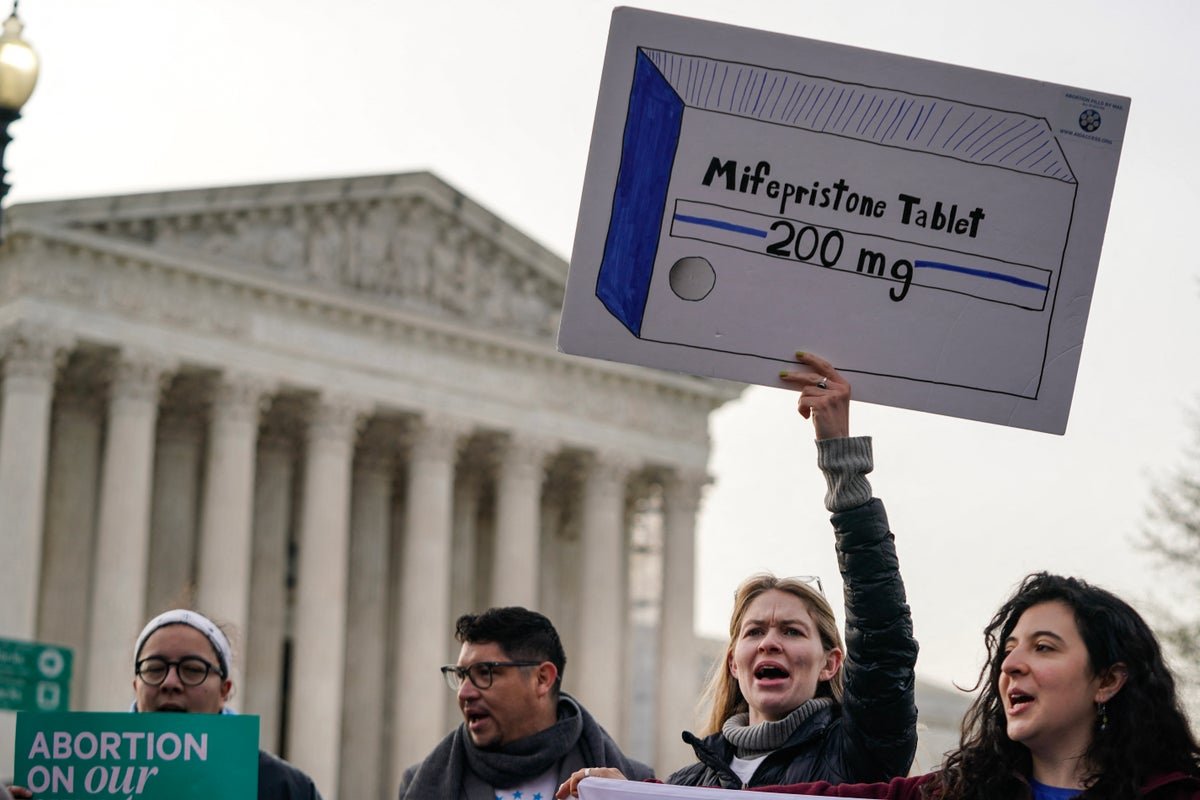
Medication abortion accounts for the vast majority of abortions. Roughly 63 percent of all abortions are medication abortions, according to the Guttmacher Institute, a reproductive health advocacy group.
Mifepristone, one of two prescription drugs used in medication abortions, is approved for use by the Food and Drug Administration up to 10 weeks of pregnancy. Nearly 93 percent of all abortions are performed before the 13th week, according to the CDC.
In 2021, the FDA under then-President Joe Biden permanently lifted the in-person requirement for mifepristone prescriptions, allowing patients to access the drugs via telehealth appointments and online pharmacies.
More than one in four people who have an abortion get their medication through telemedicine, according to Guttmacher.
Anti-abortion activists have urged President Donald Trump’s administration and the courts to revoke telehealth access while demanding the FDA strip mifepristone’s approval altogether — a campaign that critics have called a backdoor effort to ban abortion nationally.
The FDA first approved mifepristone more than 20 years ago but the Trump administration has pledged to revisit the drug’s approval process.
On May 1, the Fifth Circuit Court of Appeals in Louisiana reinstated a nationwide requirement that patients obtain the drug in person, briefly upending abortion access for millions of people across the country.
Drug manufacturers then turned to the Supreme Court to block the ruling.
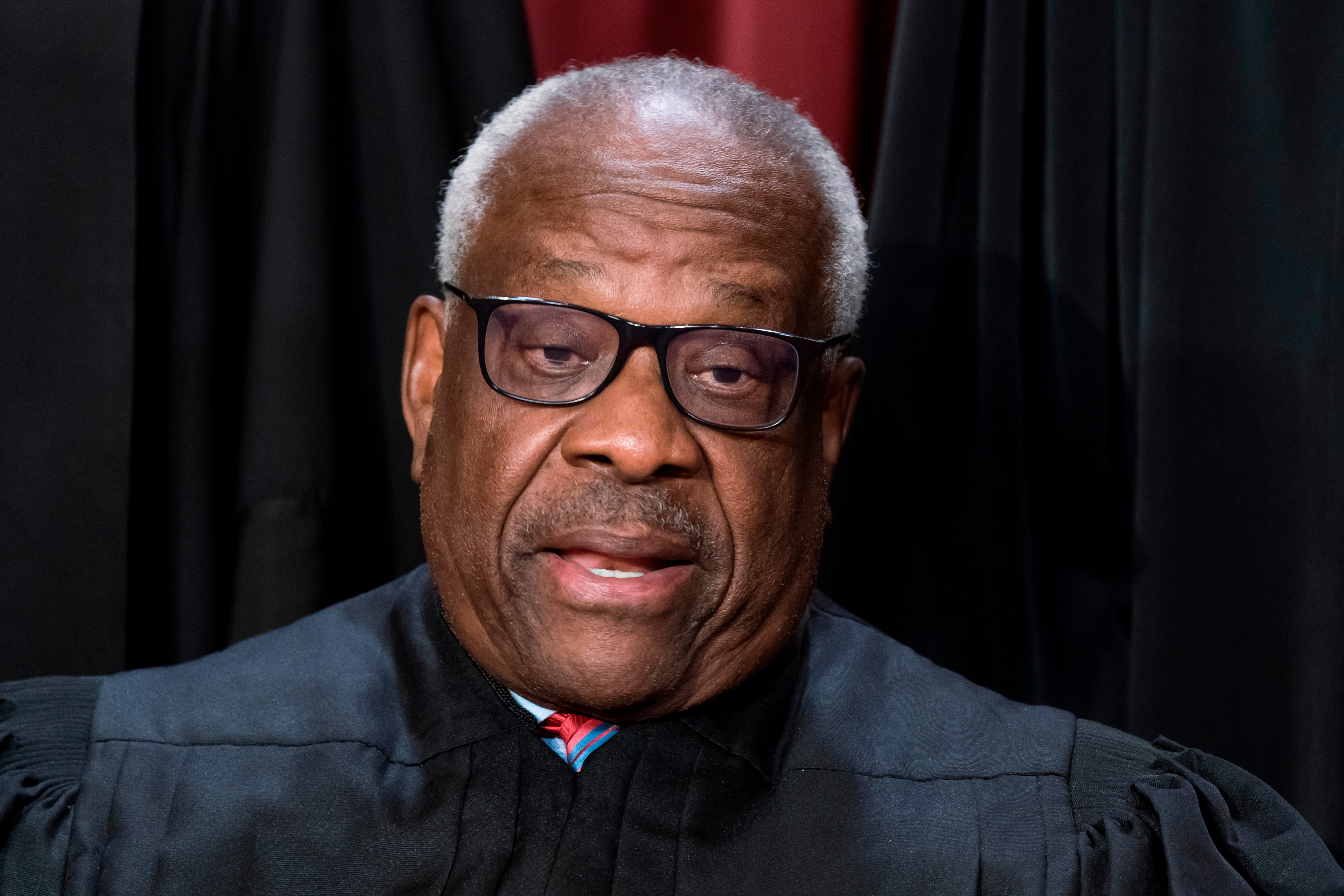
In his dissenting opinion, Justice Thomas noted that it is a “criminal offense” to ship mifepristone in Louisiana and cited the Comstock Act — a 150-year-old law that abortion rights advocates fear could be used to further strip access in the aftermath of the Supreme Court’s 2022 decision to revoke Americans’ constitutional right to abortion care.
The 1873 law targeted the mailing of contraceptives, pornography and any drug “intended for producing abortion, or for any indecent or immoral use.” It largely floundered under a series of congressional actions and the Supreme Court’s ruling in Roe v Wade 100 years later, but anti-abortion activists have repeatedly invoked the law during a decades-long crusade to end legal abortion.
Both Thomas and Alito have previously mentioned the law when discussing telehealth and mail-order access to abortion drugs.
Serra Sippel, executive director of The Brigid Alliance, which helps support abortion patients with travel and lodging for abortions, said the Supreme Court’s consideration of the case “should never have been on the table in the first place.”
“Patients and providers should not be forced to wait on court rulings to know whether people can access critical health care,” she said in a statement Thursday.
Abortion rights advocate Nourbese Flint with All* Above All said the “legal whiplash is exhausting, dangerous, and completely disconnected from science.”
“We know that mifepristone is safe and effective, and has been for over 25 years,” Flint said. “People should not have to navigate a week-to-week rollercoaster just to find out if they can still access basic health care and medication they need.”
Evan Masingil, CEO of GenBioPro, which is the generic manufacturer of the drub, said the company “is continuing to serve its customers and is committed to providing our evidence-based, essential medication to all who need it.”
The legal challenge will continue at the Fifth Circuit Court of Appeals in Louisiana.
“Today’s ruling buys time, but no peace of mind,” said Nancy Northup, president of the Center for Reproductive Rights. “Mifepristone access remains highly at risk as this case moves forward and the Trump administration conducts a politically motivated review of this pill with the hardly disguised aim of making it harder to get.”