US Politics
Keir Starmer deserves our thanks… but he won’t get it

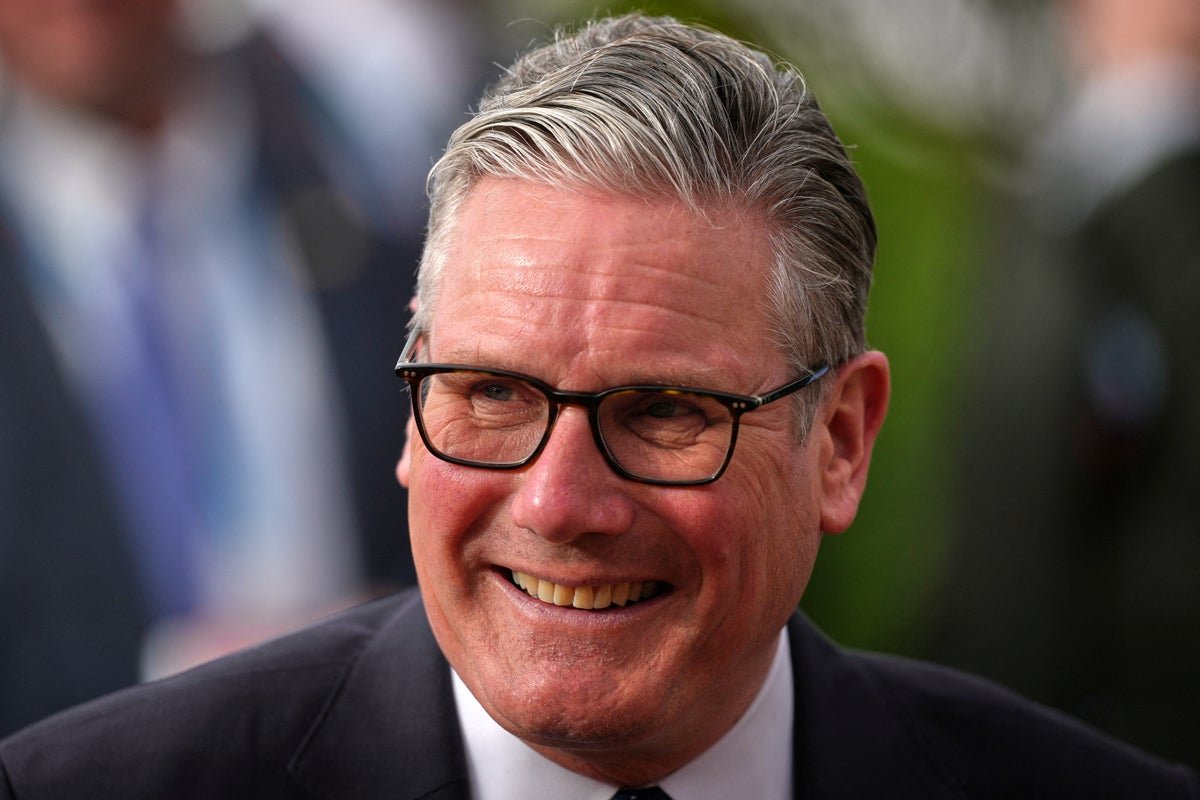
Keir Starmer was absent again for four days last week, when he managed to take time off with his family in Spain during the Easter holiday recess. Those critics who call him “Never Here Keir” inevitably jumped on this straight away. Now he is absent once more, because he is in the Gulf, speaking directly to our allies in the region, which is what a prime minister ought to be doing.
All of which is to say that you really feel for Starmer sometimes. He should be praised for making the right judgements about the Middle East conflict, but instead, the mood of the British public – not to mention that of the hostile press and the opposition parties – is one of unceasing negativity.
He was bang on the money first time, unlike Kemi Badenoch and Nigel Farage, who initially supported what is increasingly looking like Donald Trump’s Vietnam (although fortunately with fewer casualties). Starmer politely said that he disagreed with the US-Israeli attack on Iran, and remained calm as President Trump lashed out with insults, obscenities and wild threats.
Fortitude in the face of such red-faced bluster may have looked passive to some, but Starmer was wise not to get into a fight with the unpredictable and heavily armed hoodlum in the White House.
He has to do what he can to protect the interests of the British people, which is not easy when the leader of this country’s most important ally is behaving in a way that damages the economic interests of most of the world. We saw that first with tariffs, and now it’s happened again with the brilliant strategic achievement of closing the waterway through which one-fifth of the world’s oil supply passes.
Broadly, Starmer has got this right, too. He rapidly convened a coalition of countries that were prepared to work together to protect the Strait of Hormuz – which wasn’t a problem for thousands of years, until Trump and Benjamin Netanyahu made it one. Today, he joined a discussion in person with leaders from the region.
The crisis has exposed Britain’s lack of a functioning navy – not that it would be sensible for British warships to fight their way up and down the Gulf when even the US Navy is not prepared to do so. But it was outrageous of Ben Wallace, a recent Conservative defence secretary, to blame this on Labour’s cuts to the “day-to-day operating budgets at the Ministry of Defence” in The Telegraph yesterday. Labour has increased defence spending, and the blame for the depletion of the navy lies with governments of both parties going back to the end of the Cold War.
While it is embarrassing that Russian shadow tankers were escorted through the English Channel by one of Vladimir Putin’s warships yesterday, Starmer is one of the few people who cannot be blamed.
All the same, “it is not my fault” is not the most attractive posture in a crisis, and Starmer’s attempt to make political capital out of Badenoch and Farage’s initial support for Trump’s disastrous war has failed to gain traction. This is hardly surprising. Mark Carney and Anthony Albanese, Starmer’s centre-left allies in Canada and Australia, made the same mistake before rapidly adjusting their position.
Yet it is hard to see what Starmer should have done differently. It might have made some of the Green Party’s quasi-pacifists feel better if he had denied Americans the use of British bases altogether, rather than making a fine distinction between offensive and defensive purposes, but the case for protecting British allies in the Gulf from Iranian strikes is a strong one.
And Starmer is still right to send the King to smile and wave on his majesty’s much-trumpeted state visit to the US later this month, whatever Davey says, just as he was right to humour Trump to get a better deal for Britain from the economically illiterate tariffs.
As for Starmer managing to snatch a short holiday – even a prime minister is entitled to respect for his private and family life. That’s not simply my view, it’s the import of Article 8 of the European Convention on Human Rights. But it is also a basic requirement of government that decision-makers should avoid exhaustion, and be allowed time and space for reflection.
It is faintly ridiculous that his staff are forced to be so secretive about the arrangements. Especially when, as Yvette Cooper, the foreign secretary, put it this morning, “all ministers are in continual contact”.
The attack on Iran, with the attendant threat of global recession, was not Starmer’s plan. Nor, as Cooper made clear this morning, does he support Israel’s assault on Lebanon, which was the issue in 2006 that finally forced Tony Blair to set a date for his departure. But when British people’s living standards, already under pressure, are hit again, the prime minister will take the blame, while the Greens, Lib Dems and oppositionist Labourites will denounce him for failing to stand up more strongly to Trump and Netanyahu.
Starmer has done the right things, but history, which favoured him so blessedly before July 2024, is now conspiring against him.