
Breaking News
Worries grow about a ‘violent and destructive’ invasive fish

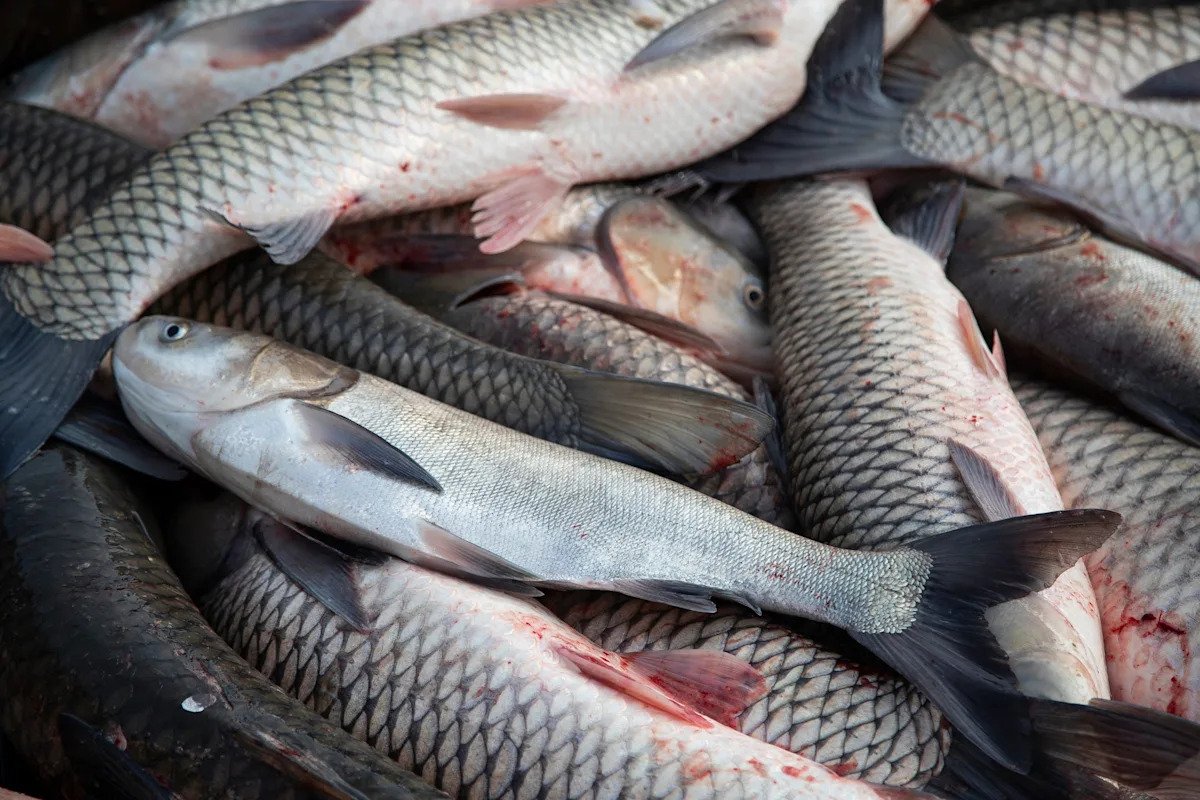
The behemoth exotic fish known as Asian carp have marched toward the Great Lakes for more than 25 years, but so far preventive efforts have kept the long-feared invasion of the prolific species at bay.
Officials in Michigan and Illinois would really love to keep it that way. But a standoff with the federal government is slowing plans down, while some urge immediate action to stay ahead of the fish.
The states are part of a multi-state and international coalition bent on keeping the voracious fish out of the region’s waterways. The fear is that the fish – weighing up to 100 pounds and eating 10% of their weight in algae every day – could alter ecosystems and collapse recreational and commercial fishing throughout the Great Lakes.
However, progress on a long-planned project to build an elaborate multi-layered system to prevent the advance of the invaders has slowed to a halt with no definite end in sight.
“If this fish ever becomes commonplace in the Great Lakes, it will destroy it as a fishery and change it forever,” Sen. Dick Durbin, D-Illinois, said on the Senate Floor on March 11.
The carp are just four of thousands of species of invasive plants and animals found in the U.S., including Hawaii and Alaska. The “pervasive and insidious threat” costs the nation an estimated $120 billion a year, according to the United States Register of Introduced and Invasive Species. They’ve come through intentional and accidental imports and releases as well as from the exotic wildlife trade.
What are Asian carp and why are they feared?
Asian carp is the umbrella term for four fish species from Asia. They’re a cause for concern because of their established potential to disrupt food chains and compete for resources with native species. The fish also pose concerns for navigation and boater safety. When startled, silver carp can leap several feet out of the water and injure boaters.
All four – bighead, silver, black and grass – were introduced to the U.S. in the 1960s and 1970s. But a series of floods in the Midwest washed the carp from fish farms into major rivers, where their populations have boomed.
With concern growing for what could happen if the carp reach the Great Lakes, the Army Corps of Engineers began operating an electric dispersal barrier in the Chicago Sanitary and Ship Canal in 2002, to prevent the fish from spreading into the channel and into the Great Lakes. Two additional barriers became operational in 2009 and 2012.
A carp has been collected on isolated occasions nearing the Great Lakes. Grass carp, the least troublesome of the group, have been found in Lake Erie, but so far the fish have not become established, according to the Great Lakes Fishery Commission, the binational treaty organization dedicated to promoting freshwater science and collaboration within the basin and controlling the exotic invasive sea lamprey.
No bighead or silver carp have ever been reported in Lake Michigan, said Greg McClinchey, the commission’s director of policy and legislative affairs. On isolated occasions a carp has been spotted on the wrong side of the electrical barrier. A detection involves varying levels of response. On at least one occasion, a flotilla of boats responded from the research group that monitors the Illinois River and the Chicago canal system, to make sure it was one lone fish.

Participants attempt to catch invasive Asian carp in nets as they compete in Betty DeFord’s Original Redneck Fishin’ Tournament in the Illinois River on August 03, 2024 in Bath, Illinois.
What is the Brandon Road Interbasin project?
The standoff centers on a joint project with a multi-layered set of deterrents and technological solutions being developed at the Brandon Road Lock and Dam – on the Des Plaines River in Joliet, Illinois – to keep the carp species from entering the Great Lakes.
The lock and dam complex is part of a waterway system that allows boats to move from the Mississippi River to Lake Michigan. It’s often referred to as a critical “pinchpoint” for keeping invasives out of the lake. The river and canal are part of a larger waterway dubbed “The Great Loop” by recreational boaters that includes The Atlantic Intracoastal Waterway and the Mississippi River.
The Army Corps worked with state governments and Congress to develop the project. It includes acoustic and electric deterrents, an air bubble curtain and a reengineered channel and flushing lock. It was authorized in the Water Resources Development Act of 2020 and supported by the Bipartisan Infrastructure Law with $272 million in support over two years. Illinois and Michigan agreed to chip in another $114 million.
Then shortly after the President Donald Trump’s second inauguration, the administration paused distribution of the infrastructure funds. That pause in funding prompted Illinois to delay buying a piece of property needed for the project.
In a May 2025 memorandum, President Donald Trump directed his administration to implement barriers/measures to keep invasive carp out of the Great Lakes, but singled out Illinois. The memo stated the federal government had started site preparation but blamed Pritzker for delaying the land purchase and a needed state permit.

Silver carp and grass carp caught by Dave Buchanan and Clint Carter on the Illinois River in Chillicothe, Ill., Feb. 3, 2021.
Carp control project delayed
In December 2025, the federal government paused the Brandon Road project for further review and has not released critical funds to get the project going, according to the offices of Pritzker and Michigan Gov. Gretchen Whitmer. Both governors and Durbin have pushed for the federal funding to be released so the project can move forward.
Whitmer met with the president on March 10. Afterward, her office released a statement saying she had reiterated Michigan’s commitment to the Brandon Road project to prevent invasive carp from entering the Great Lakes and damaging the region’s economy
“We need funding released so the Army Corps can begin construction as soon as possible,” said Stacey LaRouche, her press secretary.
On March 11, President Trump posted on Truth Social that he is working with the governor “on trying to save the Great Lakes from the rather violent and destructive Asian carp, which is rapidly taking over Lake Michigan.”
It wasn’t immediately clear what his post signaled, and Whitmer and Pritzker have asked for clarification. The White House referred USA TODAY to the Army Corps. The Corps has not yet responded to an email request.
The Fishery Commission was “very pleased to see the president’s post,” to show this is an important project, McClinchey said.
The delays need to stop, he said. “Hopefully the president’s post and the stated comments from the governors will allow this to go ahead.”
“The fish don’t care if you’re Republican or Democrat, state or federal. They are just continuing their march and we have to get ahead of them,” he said. The lock and dam have to stop the carp, “or it’s a catastrophe in the making.”
Dinah Voyles Pulver, a national correspondent for USA TODAY, covers climate change, weather, the environment and other news. Reach her at dpulver@usatoday.com or @dinahvp on Bluesky or X or dinahvp.77 on Signal.
This article originally appeared on USA TODAY: Giant, invasive Asian carp pose existential threat to Great Lakes