
Breaking News
The DOJ has been taking down Epstein files. Here’s what remains.

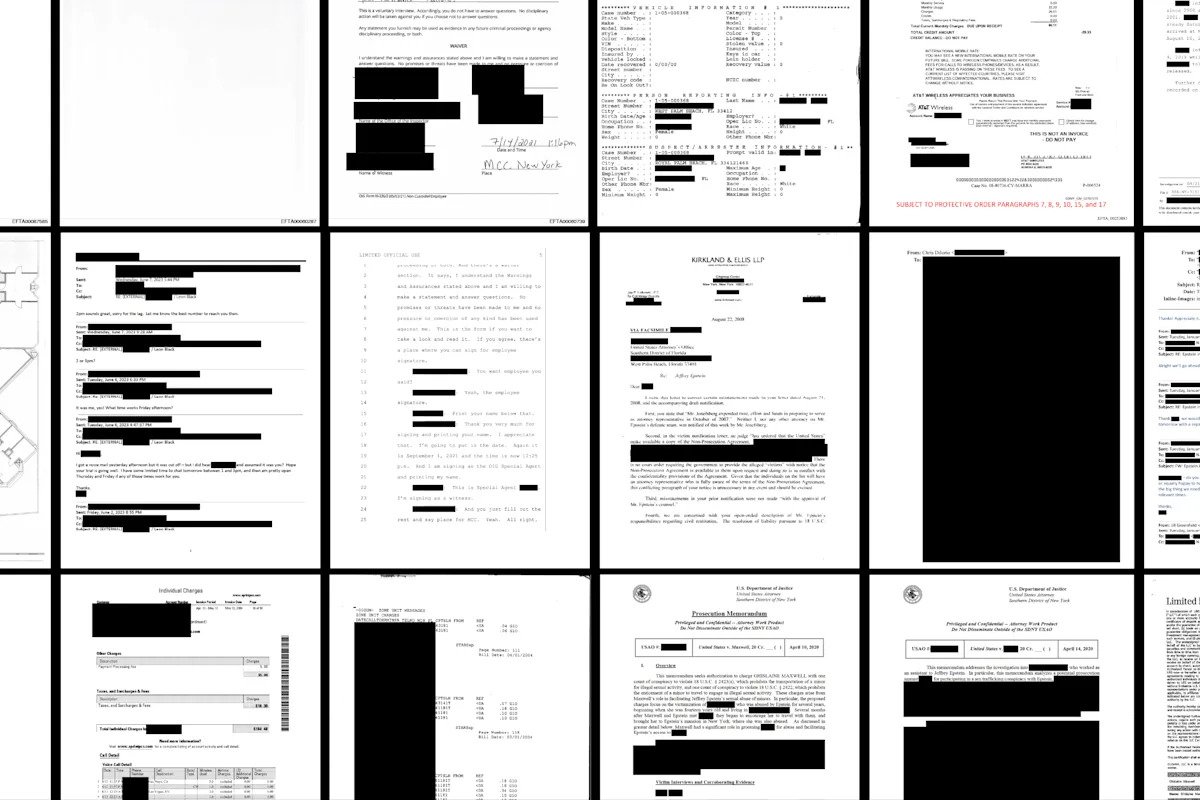
After removing tens of thousands of files, the Department of Justice currently makes public about 2.7 million pages of documents related to Jeffrey Epstein, a CBS News analysis found, a number below the Department’s initial claim of 3 million, and a total that continues to fluctuate.
The Justice Department initially said that its release, made in response to a law passed by Congress compelling the agency to disclose nearly all files related to Epstein, comprised more than 3 million pages. Combined with previously released materials, the Department put the total at 3.5 million pages.
And now, in part in response to widespread criticism and concern from survivors and their attorneys that the files contain nearly 100 survivors’ personal information and photos, the DOJ has scrambled to remove documents. A CBS News analysis found that as of late February, the Justice Department has taken down more than 47,000 files comprising about 65,500 pages. Links to those files now return a “page not found” error on the department’s website.
Some of those removed documents contained explicit images or survivor information — including one document with unredacted photos of 21 survivors along with most of their birthdates. But the reasons for other files’ removal is unclear, such as a call log with all names redacted and images of Epstein’s jail bunk where investigators say he hanged himself. The Justice Department appears to be putting some removed files back up.
Deputy Attorney General Todd Blanche said the department reviewed 6 million total pages, meaning what it initially released constitutes less than half of the total. He said the DOJ withheld files to protect survivors and ongoing investigations, but lawmakers, who have access to the unredacted trove, have criticized the redactions, arguing that some protect powerful men instead of survivors.
In response to inquiries from CBS News, Department of Justice spokesperson Natalie Baldassarre said that “CBS’s analysis appears to be fundamentally flawed” and that the department has “not deleted any files from the library.” But she also wrote that more than 47,000 files remain offline for further review, a file-count similar to what CBS News found had been removed. She added that the files will be ready for re-production by the end of the week.
“Our team is working around the clock to address victim concerns, redact personally identifiable information and any images of a sexual nature,” Baldassarre wrote. “All responsive documents will be repopulated online once proper redactions are made.”
The records that the Justice Department have released have led to international fallout and high-profile resignations. Journalists, investigators and online sleuths are continuing to uncover new details of Epstein’s sex trafficking operation and the figures that remained in his orbit even after his crimes were exposed.
But in many ways, the enormous tranche of files remains a black box due to its scale and lack of organization. The vast majority of the total pages the Justice Department released in response to the new law were made in a massive, three-part document dump on Jan. 30 that lacked chronology or categorization and was rife with duplicates. In addition to removing files, the Justice Department removed the ability to download the files en masse. Although it provided a search engine as mandated by law, the results it returns are inconsistent.
To help readers navigate the Epstein files, CBS News broke them down by their origin and release date. Click on any of the inner circles in the visualizations below to see details on a release and what the documents inside reveal.
Click here to read the full story.
3 U.S. jets shot down in “friendly fire incident” in Kuwait amid war with Iran
Watch: Kristi Noem’s opening statement at Senate Judiciary Committee on DHS
Key details on Iran war on Day 4 of conflict