US Politics
Vaccine advisers hand-picked by RFK Jr seemed confused about what they were voting for ahead of potential changes to Hep B shot

Your support helps us to tell the story
From reproductive rights to climate change to Big Tech, The Independent is on the ground when the story is developing. Whether it’s investigating the financials of Elon Musk’s pro-Trump PAC or producing our latest documentary, ‘The A Word’, which shines a light on the American women fighting for reproductive rights, we know how important it is to parse out the facts from the messaging.
At such a critical moment in US history, we need reporters on the ground. Your donation allows us to keep sending journalists to speak to both sides of the story.
The Independent is trusted by Americans across the entire political spectrum. And unlike many other quality news outlets, we choose not to lock Americans out of our reporting and analysis with paywalls. We believe quality journalism should be available to everyone, paid for by those who can afford it.
Your support makes all the difference.
Read more
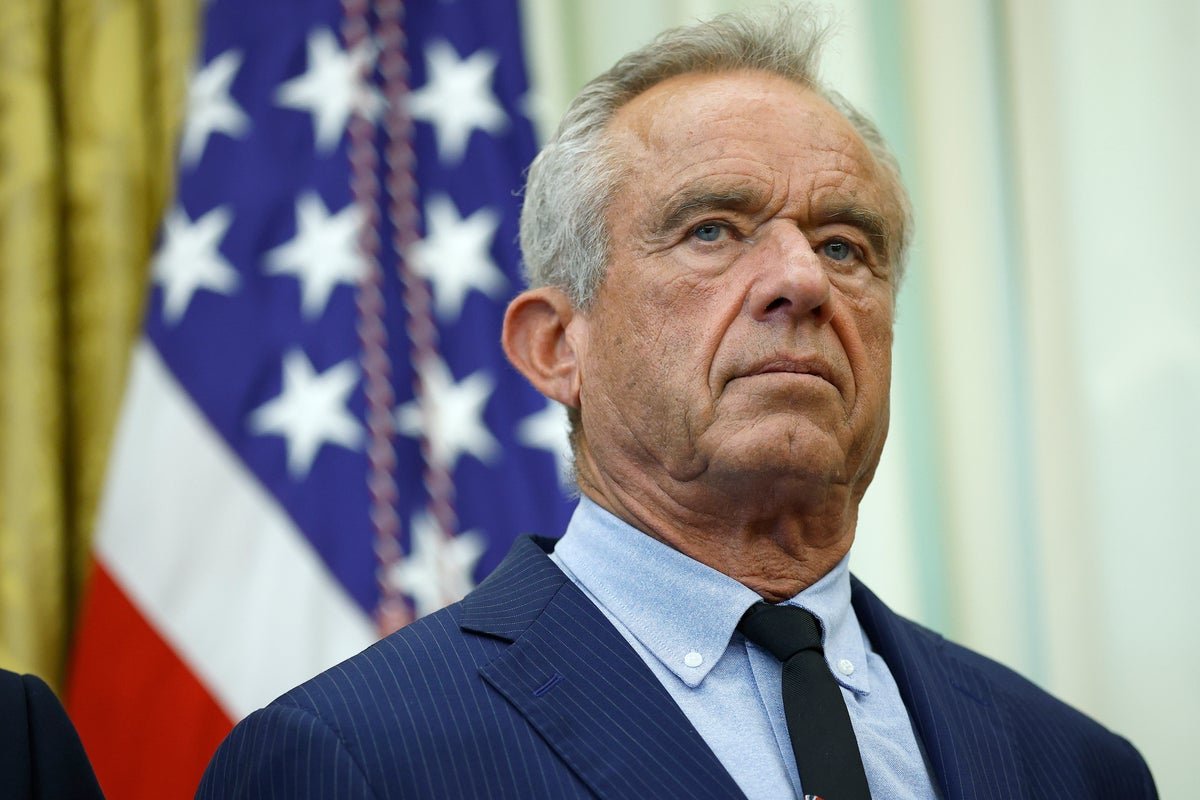
Vaccine advisers hand-picked by Health and Human Services Secretary Robert F. Kennedy Jr. expressed confusion about a vote that could reshape federal guidance on hepatitis B immunizations, according to a new report.
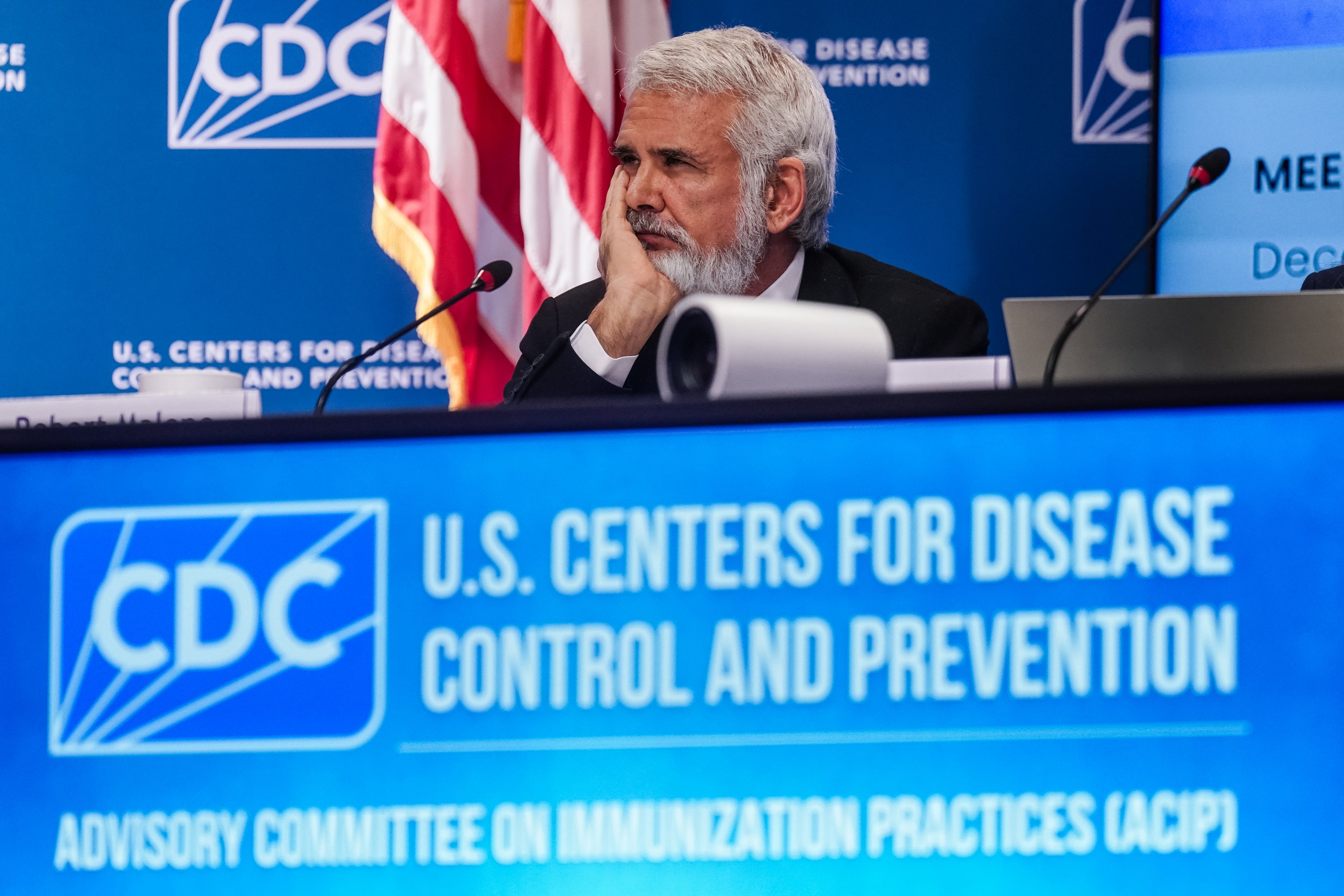
Members of the CDC’s Advisory Committee on Immunization Practices (ACIP) — who were appointed by Kennedy earlier this year — appeared puzzled about a vote scheduled for Thursday after the language was altered several times, CNN reported.
As a result, the vote was pushed back to Friday.
“This is the third version of the questions that most of the [ACIP] received in 72 hours,” Dr. Joseph Hibbeln, a member of the committee, said Thursday. “We’re trying to evaluate a moving target.”

open image in gallery
The hepatitis B vaccine helps guard against a virus that causes liver disease, and it is currently recommended by the CDC for all infants, children and adults up to age 59. Universal vaccination of infants has been recommended since 1991.
But, while medical experts emphasize its safety, vaccine skeptics have questioned the utility of administering the shot to everyone, according to Politico.
The confusion began when Dr. Robert Malone, the ACIP vice chair who ran Thursday’s meeting, read a proposal to end the recommendation of the vaccine for children whose mothers tested negative for the virus. His proposal also stated that newborns who do not receive the vaccine should wait a minimum of two months before beginning the series, which usually includes three shots.
Because this proposal conflicted with the language on the CDC’s own website, it led to perplexity among some members. They had been planning to vote on whether or not children born to mothers of unknown infection status should be vaccinated.
“We really need to know what we’re voting on,” an unidentified person said during a livestream as the committee met Thursday, per CNN.
Malone described it as an “audio/visual harmonization” problem, noting that updated voting language could not instantly be presented on slides. Eventually, a break was announced to “sort things out.”
open image in gallery
It’s not the first time a vote on hepatitis B vaccines has been delayed.
The committee was initially expected to cast votes on proposed changes to hepatitis B immunizations in September. But, it was rescheduled after there was not sufficient evidence to ensure a “confident evidence-based recommendation,” Malone said.
Kennedy, a longtime vaccine skeptic, fired all 17 members of the committee this summer. He replaced them with eight new members who he said were “committed to evidence-based medicine, gold-standard science, and common sense.” But, the move concerned some medical experts, who noted at the time that some new members have been critical of immunizations.
While the committee’s guidelines aren’t determinative, the CDC typically follows its recommendations. The guidelines influence doctors’ advice to patients, shape state vaccine policies and help determine insurance coverage.