Breaking News
Packages under $800 have been able to avoid tariffs for years. Not anymore.

Last week, the women’s shoe brand Zou Xou offered consumers a “pre-tariff” sale of 10% to 50% off, warning that prices were set to rise. Similarly, the activewear brand Girlfriend Collective said in an Aug. 21 email blast about a sale that “in nine days our prices get a little higher, but we still promise to make sustainable, high-quality clothes you can wear for years.”
The timing of the discounts hit as a loophole allowing cheaper imported packages to avoid steep levies comes to an end.
“I just framed it as an opportunity to save before the deadline,” said Katherine Theobalds, the Buenos Aires-based founder of Zou Xou. She manufactures and ships her artisanal leather shoes from Argentina, which has been hit with 10% tariffs.
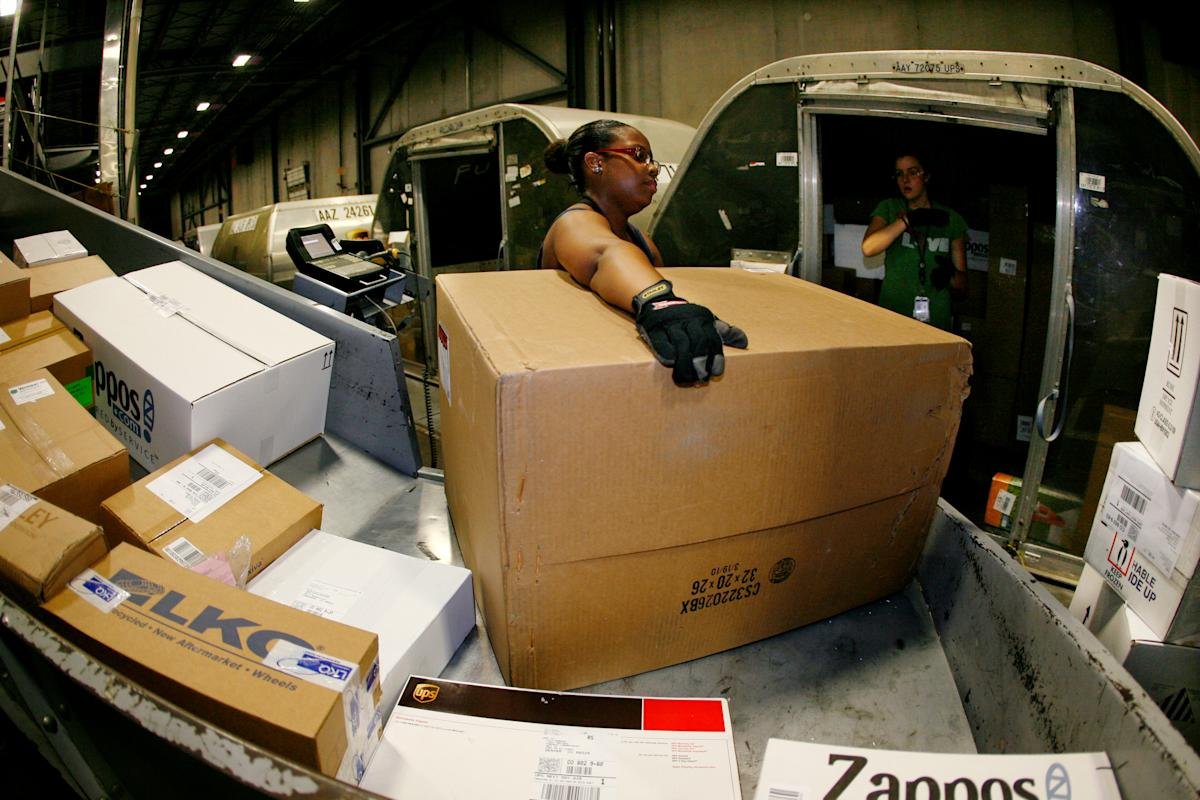
The de minimis exemption allowed millions of shipments into the US each day duty-free if they were valued at or below $800.
But President Trump announced in late July that he would eliminate the policy, effective Friday. That decision, which sent direct-to-consumer companies and small businesses scrambling, subjects smaller imported parcels to tariffs moving forward, though gifts of less than $100 between individuals will not be taxed.
Read more: How Trump’s tariffs affect your money
Depending on their country of origin, packages will now face levies of 10% to 50%. Carriers utilizing the international postal network can opt for a flat fee of $80 to $200 per package for the next six months, according to Trump’s announcement, though carriers are largely choosing to use the country-specific reciprocal tariff rates, said Angela Lewis, global head of customs at the logistics company Flexport.
Whether or not to pass that cost along to the consumer or shift strategies is up to companies.
“I do think retailers are going to have the advantage here — a company that does a mix of having stores or even just warehouses in the US where they do fulfillment from, versus a pure e-commerce, direct-to-consumer company,” Lewis said. “You’re going to have some small businesses that aren’t going to be able to handle this. The cost will be too much, given their margins today.”
E-commerce boom
The world has changed dramatically since the de minimis exemption was created in the 1930s to allow the government to waive taxes on packages that were so small it would be more inconvenient to regulate them, Lewis said. The exemption, which was raised from $200 to $800 in 2015, has persisted alongside an explosion in online shopping, and the government is now losing out on a significant amount of revenue.
Additionally, Trump said in his July 30 order that “the risks of evasion, deception, and illicit-drug importation are particularly high for low-value articles that have been eligible for duty-free de minimis treatment.”
Story Continues