
Breaking News
56% of Americans would oppose Trump winning the Nobel Peace Prize

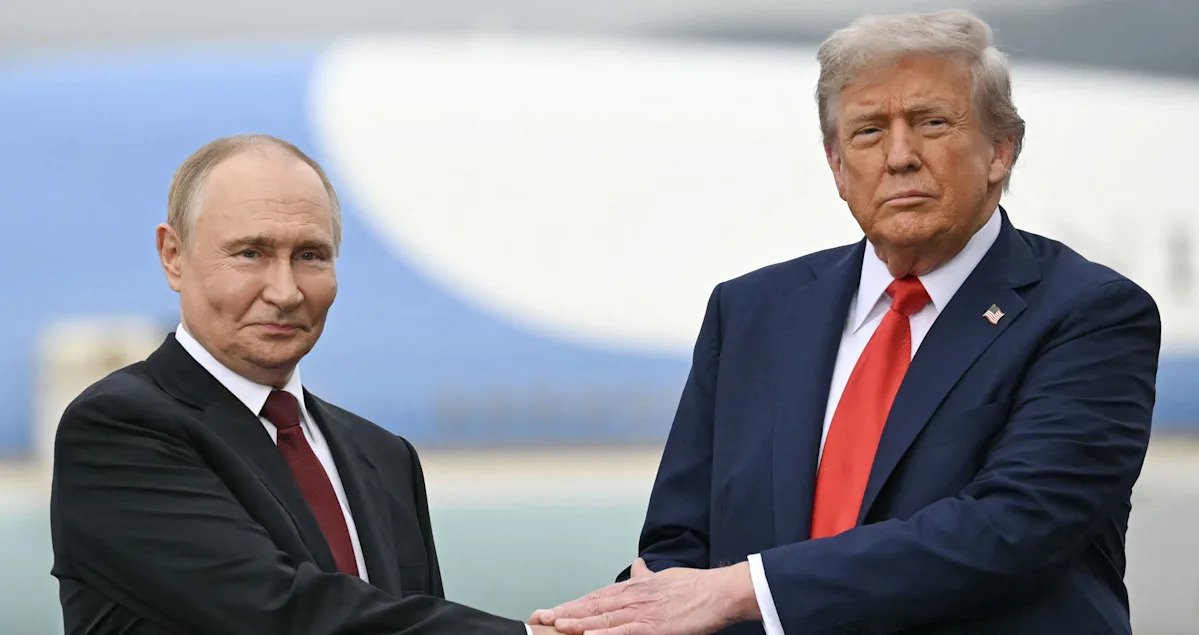
In recent months, President Trump has made no secret of his desire to win a Nobel Peace prize, saying he just wants “to be treated fairly” for “stopp[ing] seven wars.”
“They’re big ones too,” Trump told the Daily Caller last week.
But as the president continues his high-profile effort to end the fighting between Russia and Ukraine, a new Yahoo/YouGov poll shows that a majority of Americans (56%) would oppose his winning the award — while just 29% would favor it.
The survey of 1,690 U.S. adults was conducted from Aug. 29 to Sept. 2, shortly after Trump’s back-to-back meetings with Russian President Vladimir Putin and Ukrainian President Volodymyr Zelensky. Respondents were also asked which of two possible explanations would “come closest to the truth” if Trump doesn’t end up winning the 2025 Nobel Peace prize when it is announced next month.
About 58% said the reason Trump would not win is because “he doesn’t deserve it”; 24% said he would not win because “the Nobel Committee is biased against him.”
The latter seems to align with the president’s own opinion on the matter. “They will never give me a Nobel Peace Prize,” Trump predicted last month during a meeting with Israeli Prime Minister Benjamin Netanyahu in the Oval Office. “It’s too bad. I deserve it, but they will never give it to me.”
“If I were named Obama, I would have had the Nobel Prize given to me in 10 seconds,” Trump said in October, implying that the Nobel Committee will not recognize his peacemaking efforts for political reasons.
In response to a recent request from CBS News, a White House official provided a list of the seven conflicts that Trump is claiming to have “stopped”: Israel and Iran, Rwanda and Democratic Republic of the Congo, Armenia and Azerbaijan, Thailand and Cambodia, India and Pakistan, Egypt and Ethiopia, and Serbia and Kosovo.
“There has been more progress towards peace than ever before because of this President’s leadership,” the official wrote.
But a CBS News review of Trump’s record found that while the president “has helped broker ceasefires, including one between Israel and Iran, several of the foreign conflicts cited by the administration were not full-scale wars — and many remain unresolved.”
“Some of these peace efforts involved limited U.S. involvement,” CBS News added, “and in other instances, it remains unclear whether Mr. Trump’s role was decisive.”
Lack of progress in Russia-Ukraine talks
Trump’s efforts to pursue a Nobel prize may also be complicated by the fact that Americans seem mostly underwhelmed by the progress — or perceived lack thereof — following recent negotiations between Trump and Putin on the one hand and Trump, Zelensky and European leaders on the other, according to the new Yahoo/YouGov poll.
Since last month’s summits in Alaska and at the White House, the fighting between Russia and Ukraine has only ramped up — and there is no sign that Putin and Zelensky will meet to discuss peace anytime soon, as Trump initially predicted. NBC News reported earlier this week that Trump has grown “increasingly pessimistic about the chance of brokering an end to the Russia-Ukraine conflict,” citing two administration officials.
Reflecting these developments, just one in five Americans say they’ve seen either a lot (4%) or some (16%) “progress towards peace” coming out of the talks, while 20% say they’ve seen only a little — and 42% say they’ve seen none at all.
Republicans are more likely to report seeing at least some progress after the negotiations (39%) than independents (17%) or Democrats (6%). But even among Republicans, more say they’ve seen only a little progress or no progress at all (45%) than say they’ve seen a lot or some (again, 39%).
Perhaps as a result, a majority of Americans (52%) now disapprove of how Trump is handling the war between Russia and Ukraine, up from an average of 46% across three previous Yahoo/YouGov surveys conducted in March, April and May. Only 34% of Americans approve of how the president is handling the conflict (down from an average of 37%).
When asked which terms describe Trump’s approach to the recent Russia-Ukraine talks, Americans choose unsuccessful (43%), strategic (31%), chaotic (31%) and naive (29%) more often than cunning (11%) or successful (10%).
Unsurprisingly, Democrats gravitate toward negative terms such as unsuccessful (66%), chaotic (52%) and naive (47%). But while 62% of Republicans describe the president’s approach as strategic, far fewer say it has been successful (21%) or cunning (14%) — and 16% say it has been unsuccessful.
This combination — mixed feelings among Republicans; overwhelming negativity among Democrats — helps to explain Trump’s weak numbers on the Russia-Ukraine issue.
When asked who has the upper hand in negotiations, for instance, more Americans say Putin (37%) than say Trump (19%). (The rest say the two are “about equal” [18%] or that they’re not sure [26%].) This is because a majority of Democrats (56%) say Putin has the upper hand — and only 42% of Republicans say the same about Trump.
More Americans (39%) also say Trump has sided with Russia in the negotiations than say he has sided with Ukraine (10%) or been about equal (24%). Despite increasing opposition among Republicans to supporting Ukraine, this is still not a popular approach. Today only 3% of Americans think the United States should take Russia’s side in the war, while 48% still insist the U.S. should side with Ukraine and another 38% say the U.S. should side with neither country.
Likewise, far more Americans (53%) say Zelensky is serious about wanting a peace deal than say the same about Putin (11%). Nearly two-thirds (64%) say Putin is not serious about wanting peace, and just 7% rate him favorably.
In contrast, 80% of Americans rate Putin unfavorably — including 74% of Republicans.
And while Republicans are far more inclined to rate Trump (74%) as a stronger leader than Putin (6%) — and also to say Trump (84%) is a stronger leader than Zelensky (5%) — Democrats and independents disagree.
Among Democrats, the numbers are 3% Trump, 36% Putin, 46% neither and 8% Trump, 61% Zelensky, 20% neither.
Among independents, the numbers are 28% Trump, 28% Putin, 31% neither and 31% Trump, 45% Zelensky, 13% neither.
As a result, fewer than half of Americans overall — 34% vs. Putin; 41% vs. Zelensky — describe Trump as a stronger leader than his Russian and Ukrainian counterparts.
__________________
The Yahoo survey was conducted by YouGov using a nationally representative sample of 1,690 U.S. adults interviewed online from Aug. 29 to Sept. 2, 2025. The sample was weighted according to gender, age, race, education, 2024 election turnout and presidential vote, party identification and current voter registration status. Demographic weighting targets come from the 2019 American Community Survey. Party identification is weighted to the estimated distribution at the time of the election (31% Democratic, 32% Republican). Respondents were selected from YouGov’s opt-in panel to be representative of all U.S. adults. The margin of error is approximately 3.1%.