
Breaking News
World’s rarest primate has bounced back from brink of extinction

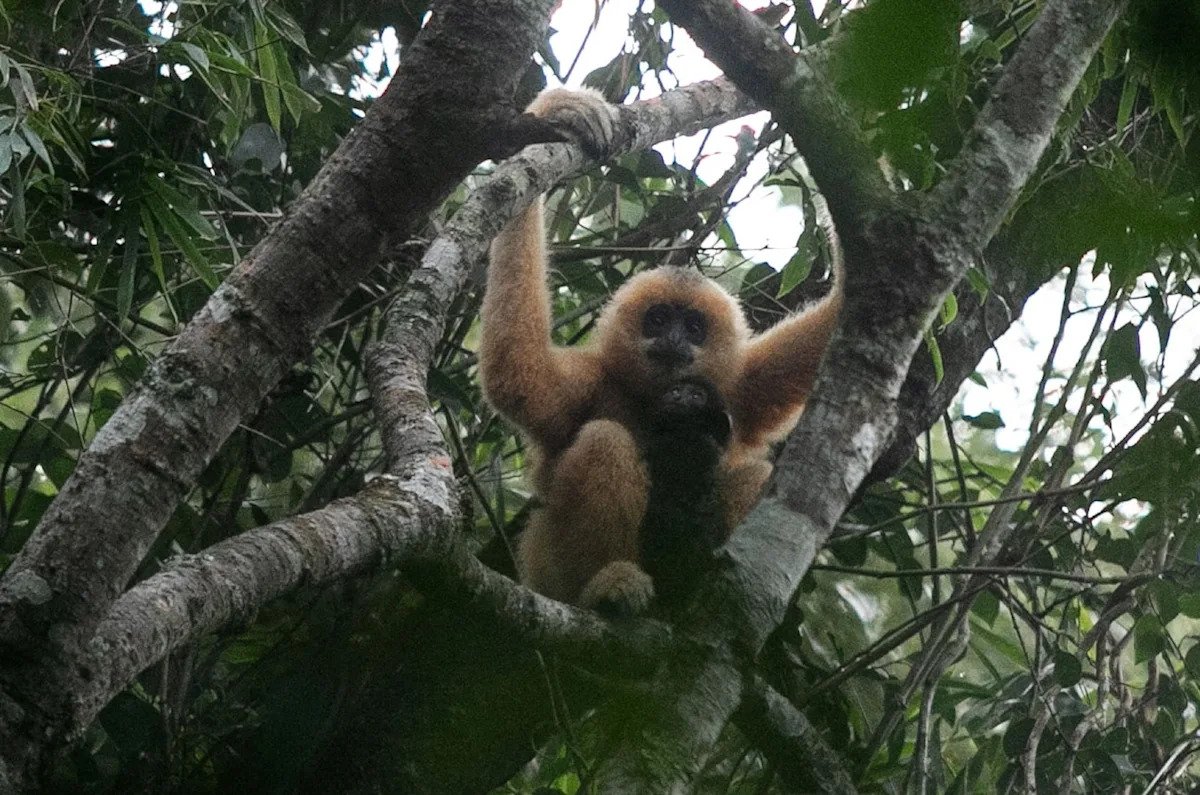
Scientists may have discovered why one of the most threatened species in the world has bounced back from the brink of extinction.
Populations of the Hainan gibbon – a critically endangered primate species found on the Hainan island on the South China Sea – dwindled to as low as 13 individuals by 2003. But the population experienced a “mysterious” rebound from near-extinction, nearly tripling in the two decades since, according to a paper published in Science Advances.
“In the past two decades, though, the primates have steadily regained ground,” the authors wrote.
MORE: How scientists confirmed the existence of 200-million-year-old species thought to be extinct
An estimated 42 individual Hainan gibbons now live on the island, according to the study, rebounding despite low genetic diversity.
Given the low population, the genomes within the species should reflect a high level of inbreeding and a resulting high number of harmful mutations, known as genetic load, since they have the smallest effective population size and low genetic diversity compared to other threatened primate species, the researchers wrote.

Xinhua News Agency/Getty Images – PHOTO: Photo taken on Oct. 25, 2019 shows a Hainan gibbon at the Bawangling nature reserve in south China’s Hainan Province.
But an analysis of fecal data from 18 wild gibbons and four museum specimens indicates the opposite, according to the paper. The modern population of Hainan gibbons display high local genomic recombination, beneficial functional variations and low genetic load, the researchers said.
Researchers believe this is because the species likely experienced a population expansion following a genetic bottleneck – that is, a period of significant decline in population size that results in loss of genetic diversity – during the Last Glacial Maximum, the coldest, most expansive phase of the last Ice Age that occurred between about 20,000 and 26,000 years ago.
MORE: Should we be bringing back extinct species? Ethical concerns raised after dire wolf allegedly resurrected
In the aftermath of the bottleneck, the gibbons expanded “for millennia,” which led to the remixing of two long-separated genetic lineages, the researchers said.
The remixing of the ancient lineages then supported the modern gibbons’ genetic health and enabled population regrowth.
There were as many as 2,000 Hainan gibbons living on the island in the 1950s, but deforestation and hunting led to a severe decline, according to the Zoological Society of London (ZSL), which is working to conserve the species. The last surviving population now lives in a single forest patch in the Hainan Tropical Rainforest within the Bawangling National Nature Reserve.
One gibbon family was spotted living outside the conservation park in 2019 and is thriving due to conservation efforts and community education, according to the New England Primate Conservancy.
MORE: Nearly a quarter of the world’s freshwater species are at risk of extinction: Report
Hainan gibbons are arboreal frugivores – tree-dwelling animals that consume mostly fruit – and are essential for forest ecosystems on the island because of their role in seed dispersal and canopy balance, according to the International Union for Conservation of Nature.
They were listed in 2015 as critically endangered IUCN’s Red List of Threatened Species but critically depleted as of 2023, and considered the world’s rarest ape and primate by the ZSL.
Long-term recovery for the Hainan gibbon will require “intensive” conservation management, including reducing potential conflicts of interest between local communities and gibbons, the ZSL said.