
Breaking News
When is the Artemis II launch? Date, time, and everything we know about NASA’s moon mission.

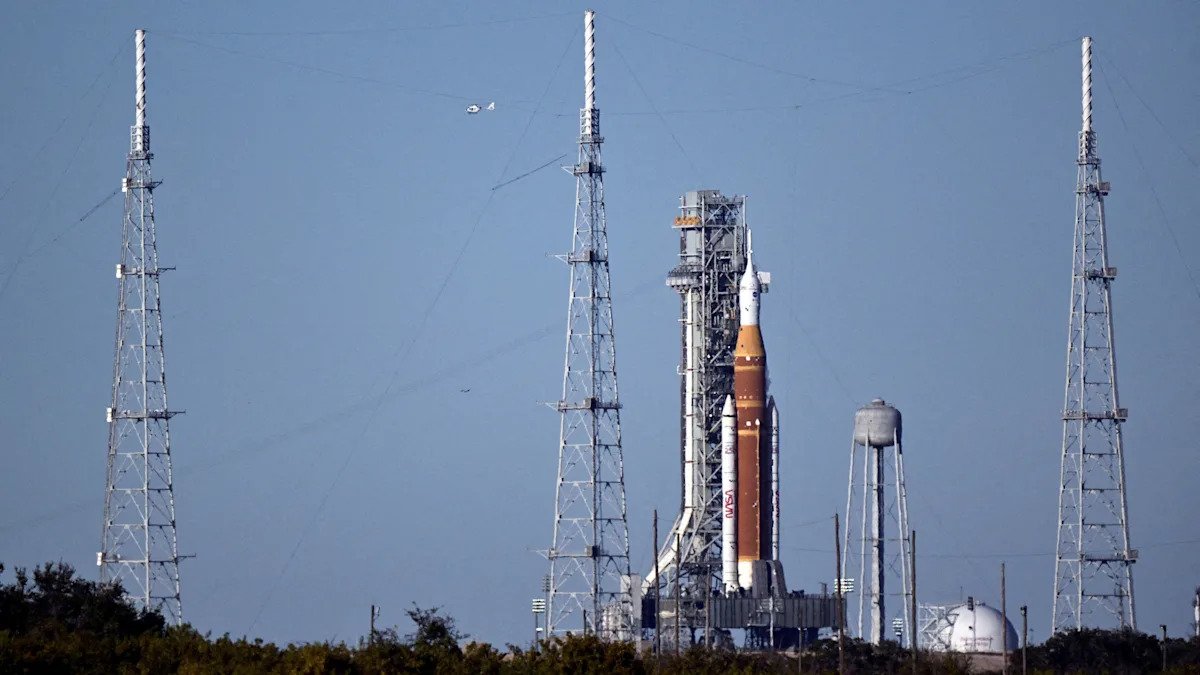
After weeks of delays, NASA is counting down to April 1 for the launch of its historic Artemis II lunar flyby mission.
The first two-hour launch window opens Wednesday at 6:24 p.m. ET, NASA said in a statement, with additional launch opportunities through Monday, April 6.
The weather forecast for launch at Kennedy Space Center in Cape Canaveral, Fla., shows an 80% chance of favorable conditions, according to NASA, “with primary concerns being cloud coverage and the potential for high winds in the area.”
During a press conference on Monday afternoon, NASA officials said the mission remains on track.
Launch director Charlie Blackwell-Thompson confirmed that NASA started its countdown clock at 4:44 p.m. ET on Monday — which indicates that liftoff is likely to take place about 50 hours later.
“All of our planned work is complete,” Blackwell-Thompson said. “All indications are, right now, we’re in excellent, excellent shape.”
Last month, NASA had to roll its massive Space Launch System rocket, weighing 11 million pounds, back to its hangar to repair an issue that would affect the proper flow of fuel into the rocket’s engines.
Engineers discovered the issue with the 322-foot-tall rocket less than 24 hours after a successful wet dress rehearsal, an hourlong test that involves fully loading the rocket with more than 700,000 gallons of cryogenic propellant and running through a simulated launch countdown.
The SLS rocket was successfully rolled back out to the launch pad — a 4-mile journey that took about 12 hours — on March 20.
Here’s what to know about the launch and mission:
What is the Artemis program’s mission?

A full moon is seen shining over NASA’s Space Launch System and Orion spacecraft at Kennedy Space Center on Feb. 1.
(ASSOCIATED PRESS)
The Artemis program is NASA’s long-term mission to return humans to the moon to establish a continuous human presence. The goal is to develop a lunar settlement on the south pole, a region where it’s believed water ice is abundant and could be used for drinking, breathing and as a source for rocket fuel.
Artemis’ long-term mission is to also lay the foundation for future crewed missions to Mars. The program is building on the legacy of the Apollo-era missions to the moon in the late 1960s and early ’70s. The Artemis program is aptly named after the ancient Greek goddess of the moon, twin sister of Apollo.
The program consists of a series of missions that started with Artemis I. The integrated flight test was successfully completed in November 2022, involving NASA’s deep space exploration systems. Those include the Orion spacecraft, the Space Launch System (SLS) rocket and upgraded systems at the Kennedy Space Center in Cape Canaveral, Fla.
What is the goal of the Artemis II mission?
The Artemis II mission will be the first U.S. human lunar spaceflight in over 50 years. It will also be the first time that NASA’s SLS rocket and Orion capsule will be crewed.
“Artemis II, the first crewed Artemis flight, marks a key step toward long-term return to the moon and future missions to Mars,” NASA says on its website.
The four astronauts on Artemis II won’t be landing on the moon, but instead, they’ll venture 600,000 miles around the moon and will return at 30 times the speed of sound, according to NASA. During their 10-day trip, they’ll test life support systems in the Orion capsule for future crewed missions to the moon’s surface. A moon landing would occur during Artemis III, which is targeted to launch sometime in 2027.
Who are the Artemis II crew members?

NASA astronauts, from right, Reid Wiseman, Victor Glover, and Christina Koch, and Canadian Space Agency astronaut Jeremy Hansen.
(Aubrey Gemignani/NASA)
NASA’s Reid Wiseman, Victor Glover and Christina Koch, and Canadian Space Agency astronaut Jeremy Hansen are the crew members for Artemis II. Koch is set to be the first woman to travel to lunar space, while Glover is the first person of color to do so.
Due to the delay in the launch of Artemis II in February, all four astronauts were able to come out of quarantine in preparation for the launch and attended President Trump’s State of the Union speech.
The crew members arrived at Kennedy Space Center on Friday.
“Hey, let’s go to the moon!” Wiseman told reporters. “I think the nation and the world has been waiting a long time to do this again.”