
Breaking News
What was in the East Wing of the White House before Trump demolished it?

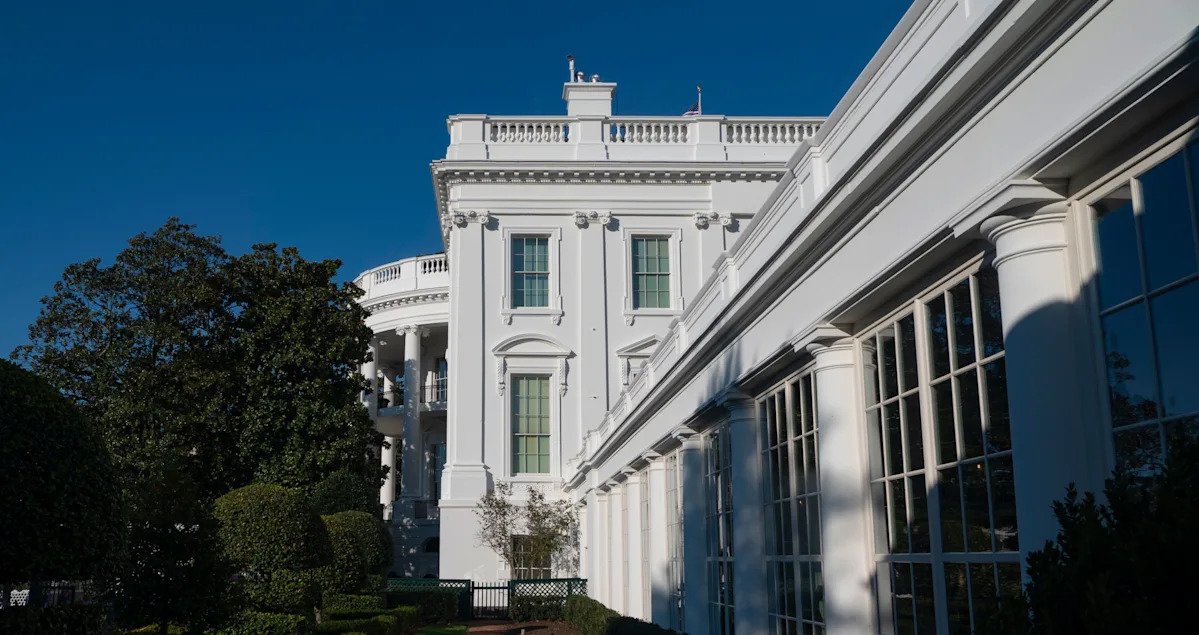
Despite previously vowing that construction of his new $300 million, 90,000-square-foot ballroom “won’t interfere with the current building,” President Trump started demolishing the White House’s East Wing on Monday — and finished the job on Thursday, reducing the entire 123-year-old edifice to rubble.
“In order to do it properly,” Trump said, “we had to take down the existing structure.”
The president added that “the East Wing is being fully modernized as part of this process, and will be more beautiful than ever when it is complete!” The old East Wing, he insisted, was “never thought of as being much” — and it made sense to tear it down “rather than allowing that to hurt a very expensive, beautiful building.”
But once the physical fabric of a historic building is gone — the wood and plaster, the steel and glass, the wires and pipes — that building is gone forever.

An excavator works to clear rubble after the East Wing of the White House was demolished on Thursday. (Eric Lee/Getty Images)
Here’s what was in the East Wing before Trump demolished it.
Originally built in 1902 under President Theodore Roosevelt to serve as an “East Terrace” entrance for formal and public visitors — then expanded to its familiar two-story footprint under President Franklin D. Roosevelt forty years later — the East Wing was primarily used as an office building.
But in contrast to the macho intensity of the West Wing — home to the president’s staff and the Oval Office itself — the East Wing always had a softer, calmer feel. That’s in part because the last half-century of first ladies (and their staffers) worked on the second floor alongside the calligraphers who prepared thousands of invitations for White House state dinners.
There have been exceptions. First lady Melania Trump “visited the East Wing so infrequently during her husband’s first term that her empty office there was converted into a gift-wrapping room,” according to the New York Times. Hillary Clinton had her primary office in the West Wing.
The East Wing’s ground floor, meanwhile, housed the White House visitors’ office and the Office of Legislative Affairs — the president’s main conduit to Capitol Hill.
Beneath the ground floor was a bunker — officially called the Presidential Emergency Operations Center — that was built to shelter FDR during World War II. That’s where Vice President Dick Cheney went on Sept. 11, 2001.
Recent visitors to the White House still entered through the East Wing, just like they did in Teddy Roosevelt’s day. Its neoclassical columns beckoned beyond the long outdoor lines where Secret Service agents would check for possible threats.
In bulldozing the East Wing, Trump also leveled the 122-year-old Jacqueline Kennedy Garden; two historic magnolia trees commemorating Presidents Warren G. Harding and Franklin D. Roosevelt; and the East Colonnade, which connected the East Wing to the Executive Residence.
Within the colonnade was a theater where presidents watched the Super Bowl and screened movies for friends and family before they debuted in theaters. During big events, the space doubled as a coat check.
According to the White House Historical Association, “a comprehensive digital scanning project” and photographic record of the East Wing and gardens was conducted after Trump announced his ballroom project in July.
The association told PBS that historic artifacts from the East Wing “have been preserved and stored.”